
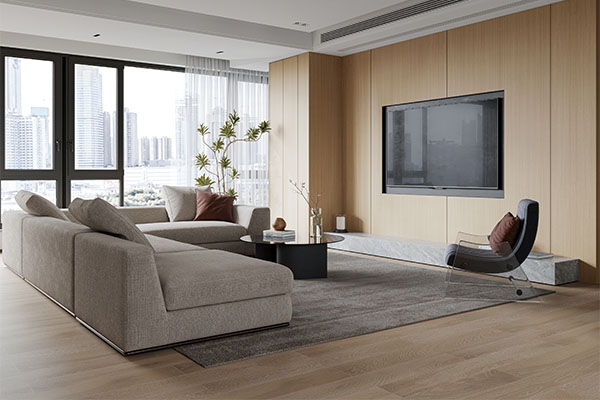
Stone Plastic Composite flooring offers high durability but carries specific drawbacks like limited design depth, heat sensitivity, and strict subfloor requirements. You are likely searching for a flooring solution that balances industrial strength with aesthetic appeal for your next commercial project. However, failing to account for technical limitations can lead to costly installation errors or dissatisfied clients. By understanding spc flooring disadvantages , you can mitigate risks and choose the right specifications from the start.

Why are texture limits common spc flooring disadvantages?
Texture limitations arise because the rigid stone-polymer core is less receptive to deep embossing compared to natural wood or flexible vinyl. While technology is improving, these spc flooring disadvantages mean you may find fewer options for authentic hand-scraped or distressed finishes.
The production process often prioritizes the stability of the core over the intricacy of the surface layer. This results in a product that is incredibly tough but sometimes lacks the tactile variety found in premium engineered hardwood.
Limited design depth compared to wood
Many B2B buyers find that the visual layer of SPC can look slightly “flat” in high-end environments. Because the wear layer is a separate film, the grain doesn’t always align perfectly with the texture.
Think about it:
- Natural wood has unique pore structures.
- Laminate offers deeper 3D textures.
- SPC focuses on high-traffic resilience over depth.
The repetition of patterns in large areas
In massive open-plan offices, you might notice the same plank pattern repeating every few feet. This pattern repeat is a common logistical hurdle in massive manufacturing runs.
Key Takeaway: To avoid a “stamped” look in large commercial spaces, request a higher number of unique plank patterns from your manufacturer.
| Disadvantage | Impact on Project | Recommended Mitigation |
|---|---|---|
| Texture Limits | Less authentic feel | Opt for high-definition film layers |
| Pattern Repeat | Visual monotony | Mix planks from multiple boxes during install |
Selecting the right embossing level is critical for balancing safety and aesthetics in professional settings.
Are heat marks major spc flooring disadvantages?
Heat marks are significant spc flooring disadvantages because the surface wear layer can suffer permanent discoloration when exposed to extreme temperatures. While the core is fire-resistant, the decorative film and UV coating remain vulnerable to localized high heat.
If a concentrated heat source touches the surface, it can leave a unsightly yellow or brown stain. This is particularly problematic in environments where smoking is permitted or where high-heat equipment is used.
What happens with cigarette burns?
A dropped cigarette won’t cause the floor to ignite, but it will melt the top layer. This results in a permanent mark that cannot be buffed out easily.
Here is the deal:
- The top UV layer is essentially a specialized plastic.
- High heat breaks down the chemical bonds in this layer.
- Replacement is often the only way to fix the spot.
Why does extreme heat cause yellowing?
Over time, prolonged exposure to intense sunlight through large windows can lead to surface yellowing. This happens because the stabilizers in the wear layer react to UV rays and thermal buildup.
Key Takeaway: Use window treatments or UV-resistant coatings in sun-drenched lobbies to prevent long-term thermal discoloration of your flooring.
| Disadvantage | Impact on Project | Recommended Mitigation |
|---|---|---|
| Cigarette Burns | Permanent visible scars | Implement strict no-smoking policies |
| UV Yellowing | Loss of color integrity | Install UV-protected window films |
Thermal stability is a core strength of SPC, but the surface aesthetics require careful environmental management.
Do quality gaps cause spc flooring disadvantages?
Quality gaps are dangerous spc flooring disadvantages because they often lead to issues like off-gassing and structural failure. In a market flooded with suppliers, the lack of universal manufacturing standards means some products use recycled filler materials that compromise safety.
Using inferior core materials can result in brittle planks that crack under pressure. Furthermore, low-end manufacturers may use adhesives containing formaldehyde, which impacts the indoor air quality of your facility.
Risks of using inferior core materials
When a factory uses too much recycled PVC, the planks lose their dimensional stability. You might see the edges curling or the click-lock system failing within months of installation.
But wait:
- High-quality SPC uses 100% virgin materials.
- Check for certifications like FloorScore.
- Ask for a Technical Data Sheet (TDS) before buying.
How to identify off-gassing issues?
Inferior products often emit a strong chemical odor upon unboxing, signaling high VOC levels. This is a major liability for healthcare or education projects where air quality is strictly monitored.
Key Takeaway: Always source from manufacturers with transparent certification histories to ensure your project meets modern environmental safety standards.
| Disadvantage | Impact on Project | Recommended Mitigation |
|---|---|---|
| Off-gassing | Health & safety risks | Specify low-VOC/Phthalate-free products |
| Brittle Core | Rapid floor failure | Verify virgin material content percentages |
Ensuring quality at the source is the only way to avoid the hidden costs of cheap, uncertified flooring.
Is high density among spc flooring disadvantages?
High density is a functional strength that creates spc flooring disadvantages in the form of increased shipping costs and labor intensity. Because the core is packed with limestone powder, a single box of SPC is significantly heavier than traditional LVT or laminate.
This weight makes the product harder to move around a job site, often requiring more manpower or specialized equipment. Additionally, the sheer mass can be a factor if the flooring is being installed on a structure with strict weight load limits.
Challenges in shipping and logistics
Higher density means fewer square meters can be loaded into a shipping container before hitting weight limits. This increases the per-unit transportation cost, especially for international B2B procurement.
The best part?
- The weight provides incredible stability once installed.
- It prevents the floor from “shifting” under heavy furniture.
- However, you must budget for higher freight expenses.
Why weight impacts installation labor?
Installers tire faster when handling heavy planks, which can slow down the completion timeline of large projects. Carrying boxes up multiple flights of stairs in a renovation project becomes a significant logistical hurdle.
Key Takeaway: Plan your site logistics carefully and ensure your subfloor can handle the additional 8-10 kg per square meter of weight.
| Disadvantage | Impact on Project | Recommended Mitigation |
|---|---|---|
| Shipping Weight | Increased freight costs | Optimize container loads with your supplier |
| Labor Fatigue | Slower installation speed | Use mechanical lifts for multi-story transport |
Density translates to durability, but the logistical trade-offs must be factored into your project’s initial budget.
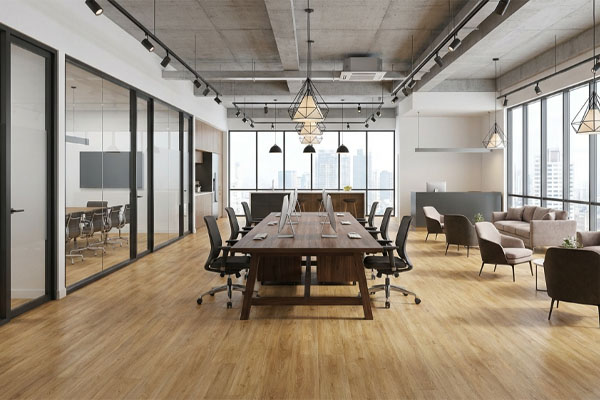
Analyzing the market share of various flooring types highlights the growing dominance of vinyl and SPC despite their technical challenges.
Why are subfloor needs spc flooring disadvantages?
Subfloor requirements are strict spc flooring disadvantages because the rigid core does not “bend” to accommodate bumps or dips. While flexible vinyl can hide minor imperfections, SPC demands a surface that is nearly perfectly flat.
If the subfloor is uneven, the click-lock joints will be under constant stress every time someone walks over them. This eventually leads to the joints snapping, causing the floor to separate or creak.
How strict is subfloor flatness?
Most manufacturers require a flatness tolerance of ±3mm over a 2-meter radius. This often necessitates the use of self-leveling compounds, which adds to the total project cost.
Bottom line:
- Rigid floors don’t “hug” the ground.
- Gaps under the plank lead to “hollow” sounds.
- Leveling is non-negotiable for warranty compliance.
Risks of floor telegraphing over time
While SPC resists telegraphing better than LVT, extreme peaks in the subfloor can still cause issues. Over years of heavy traffic, the rigid plank may begin to show stress marks where it rests on a high point.
Key Takeaway: Prioritize subfloor preparation and leveling to protect the integrity of the click-lock system and ensure a silent, stable walk.
| Disadvantage | Impact on Project | Recommended Mitigation |
|---|---|---|
| Flatness Needs | Higher prep costs | Budget for self-leveling underlayment |
| Joint Stress | Premature floor failure | Conduct a 10-point flatness check before install |
Investing in a proper base is the only way to prevent the most common mechanical failures of rigid core flooring.
Are repair limits critical spc flooring disadvantages?
Repair limitations are critical spc flooring disadvantages because the interlocking nature of the planks makes it difficult to fix a single damaged spot. Unlike carpet tiles or dry-back vinyl, you cannot simply peel up one piece and swap it out.
To replace a plank in the middle of a room, you often have to disassemble the floor starting from the nearest wall. This is a labor-intensive process that can disrupt business operations in a commercial setting.
Can you fix single planks easily?
Standard repairs involve cutting the damaged plank out and gluing in a replacement with the tongues removed. However, this creates a weak point in the floor’s structural integrity.
Here is the deal:
- Click-lock systems are designed for one-way assembly.
- Cutting out a plank breaks the waterproof seal.
- Color matching a new plank to an old floor is difficult.
Challenges in matching dye lots years later
If you didn’t order extra stock, finding a replacement plank that matches your floor five years later is nearly impossible. Manufacturers frequently update their designs and color batches.
Key Takeaway: Always order 5-10% extra material and store it on-site for future repairs to avoid mismatched dye lots.
| Disadvantage | Impact on Project | Recommended Mitigation |
|---|---|---|
| Difficult Repairs | High maintenance labor | Store surplus “attic stock” from the same lot |
| Joint Integrity | Weakened fix points | Use professional-grade adhesives for cut-ins |
Maintenance strategies for SPC must focus on prevention, as retroactive repairs are notoriously complex for interlocking systems.
Is coldness part of spc flooring disadvantages?
Coldness is frequently cited as one of the spc flooring disadvantages because the stone-based core naturally conducts heat away from the surface. In winter months or in basement applications, the floor can feel quite chilly underfoot.
This lack of thermal warmth can impact the comfort levels in residential-style commercial spaces like hotel rooms or senior living facilities. Without an integrated underlayment, the temperature of the floor will closely follow the temperature of the concrete slab beneath it.
How does the stone core feel underfoot?
The high density that makes it durable also makes it hard and cold, similar to ceramic tile but without the thermal mass. It lacks the natural “warmth” that cellular structures in wood provide.
Think about it:
- Hard surfaces reflect cold.
- Concrete subfloors act as a heat sink.
- Bare feet will notice the temperature difference instantly.
Can integrated underlayment solve the chill?
Many modern SPC products come with a pre-attached IXPE or cork backing. This layer provides a thermal break that significantly improves the “warmth” and comfort of the floor.
Key Takeaway: Specify SPC with a 1.5mm or 2mm IXPE backing to improve thermal comfort and acoustic performance in climate-controlled environments.
| Disadvantage | Impact on Project | Recommended Mitigation |
|---|---|---|
| Cold Surface | Reduced occupant comfort | Select planks with pre-attached IXPE backing |
| Thermal Loss | Slightly higher heating needs | Use area rugs in high-comfort zones |
Balancing the “cold” nature of stone with modern insulation layers is essential for creating an inviting interior atmosphere.
Why are expansion gaps spc flooring disadvantages?
Expansion gaps are necessary spc flooring disadvantages because even rigid core products expand and contract with temperature changes. You must leave a 1/4 inch to 1/2 inch gap around the entire perimeter of the room to allow for this movement.
If these gaps are missing or too small, the floor will buckle or “peak” at the seams when the temperature rises. This requirement can complicate the aesthetic design, especially when trying to achieve a seamless look without bulky baseboards.
What happens without proper spacing?
The pressure built up from expansion can actually lift the planks off the subfloor. In extreme cases, the pressure can even damage the surrounding drywall or door frames.
But wait:
- SPC is more stable than LVT.
- It still reacts to extreme -20°C to 60°C shifts.
- Perimeter gaps are the “lungs” of your flooring.
Constraints in massive open-plan spaces
For extremely large areas exceeding 15-20 meters in length, you may need “T-molding” transition strips. This can break the visual flow of a large office or retail showroom.
Key Takeaway: Factor expansion gaps and transition strips into your floor plan early to ensure they align with furniture or architectural features.
| Disadvantage | Impact on Project | Recommended Mitigation |
|---|---|---|
| Perimeter Gaps | Visual edge challenges | Use color-matched shoe molding or baseboards |
| Buckling Risk | Structural damage | Strictly follow manufacturer gap specifications |
Proper spacing is a technical necessity that ensures the long-term flat-lay performance of any rigid core installation.
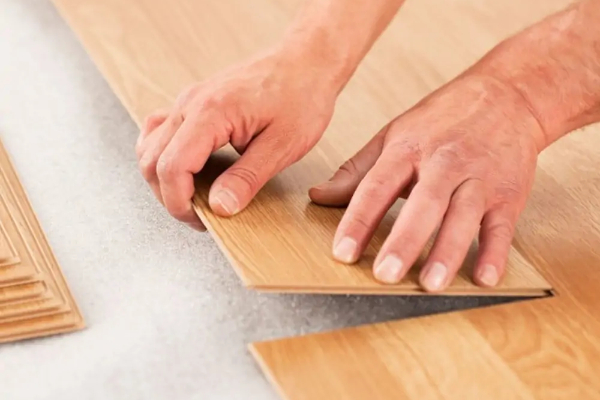
A close-up view of the installation process showing the essential tools and the precision required for a stable click-lock fit.
Do aesthetics count as spc flooring disadvantages?
Aesthetic limitations are considered spc flooring disadvantages when compared to the organic “soul” of natural timber or stone. While the visuals are high-resolution, the floor can sometimes feel “clinical” or overly uniform in high-luxury settings.
The “hard” feel underfoot, while great for durability, lacks the slight “give” or bounce found in high-end engineered wood. For projects where “prestige” and “luxury feel” are the top priorities, SPC might be seen as a budget-conscious compromise.
Does it feel like authentic hardwood?
Under shoes, it sounds and feels solid, but it lacks the natural resonance of a wood floor. The repetitive texture can sometimes reveal its synthetic nature under specific lighting conditions.
Here is the deal:
- Visuals are printed, not grown.
- Light reflectance values (LRV) are easier to control.
- Authentic wood has variations that SPC mimics but cannot fully replace.
Comparing visual depth to natural stone
While SPC can mimic marble or slate, it lacks the crystalline depth and varying opacity of real stone. For a high-traffic lobby, it is more practical, but for a luxury suite, the difference is noticeable.
Key Takeaway: Use SPC in high-traffic areas where durability is king, and save natural materials for low-traffic “prestige” zones.
| Disadvantage | Impact on Project | Recommended Mitigation |
|---|---|---|
| Lack of “Soul” | Lower luxury perception | Supplement with high-end decor and lighting |
| Hardness | Foot fatigue over time | Use anti-fatigue mats in standing work areas |
Understanding where SPC fits in the aesthetic hierarchy helps you manage client expectations for luxury-tier projects.
Are cost factors known spc flooring disadvantages?
Cost factors are often seen as spc flooring disadvantages because the initial purchase price is usually higher than traditional flexible LVT or laminate. B2B buyers must justify the higher upfront investment to stakeholders by focusing on the long-term lifecycle savings.
While you save money on subfloor prep compared to thin vinyl, the material itself carries a premium. Professional installation is also required to ensure the warranty remains valid, adding to the initial capital expenditure.
Is it more expensive than flexible LVT?
Generally, yes, due to the cost of the limestone and virgin PVC used in the core. However, the ROI is often better because SPC lasts significantly longer in harsh environments.
Think about it:
- Initial cost: High.
- Maintenance cost: Low.
- Replacement frequency: Very low.
Hidden costs of professional installation
Because the planks are rigid and the click-lock system is precise, you cannot cut corners with DIY labor. Professional installers who understand expansion gaps and subfloor tolerances are a necessary expense.
Key Takeaway: Conduct a Total Cost of Ownership (TCO) analysis to show stakeholders how the durability of SPC reduces long-term replacement costs.
| Disadvantage | Impact on Project | Recommended Mitigation |
|---|---|---|
| Higher Material Cost | Initial budget strain | Highlight the 10-20 year commercial warranty |
| Professional Labor | Increased setup cost | Hire certified installers to prevent rework costs |
View SPC as a long-term asset rather than a short-term expense to maximize the value of your flooring budget.
Conclusion
This article solved the challenge of identifying the hidden technical and aesthetic hurdles of Stone Plastic Composite flooring. We explored everything from subfloor flatness and repair complexities to thermal comfort and texture limitations. At Adasea Flooring, we can provide you with the high-specification, virgin-material SPC products that mitigate these common pitfalls through superior engineering and certified manufacturing.
If you are ready to balance durability with professional aesthetics for your next project, contact us today for a comprehensive quote and technical consultation. Adasea Flooring is committed to a vision of “Reliable Innovation,” where every plank we manufacture serves as a stable foundation for the world’s most demanding commercial environments.
FAQ
Can I install SPC flooring on an uneven subfloor?No, because the rigid core does not bend and will cause the click-lock joints to break under pressure. You must level the floor to a tolerance of ±3mm over 2 meters.
What’s the best way to prevent heat damage on SPC?Yes, but you must use UV-resistant window films and avoid placing high-heat equipment or cigarettes directly on the surface layer.
How do I know if SPC is the right choice for my project?Yes, if your priority is 100% waterproofing and extreme impact resistance in high-traffic areas where subfloor prep budget is available.
Can I repair a scratched SPC plank without replacing it?No, because deep scratches penetrate the wear layer, though minor scuffs can sometimes be disguised with specialized floor refreshers.
What’s the best thickness to minimize SPC noise?Yes, but you should select a 5mm or 6.5mm plank that includes a pre-attached 1.5mm IXPE underlayment to achieve a 20dB sound reduction.