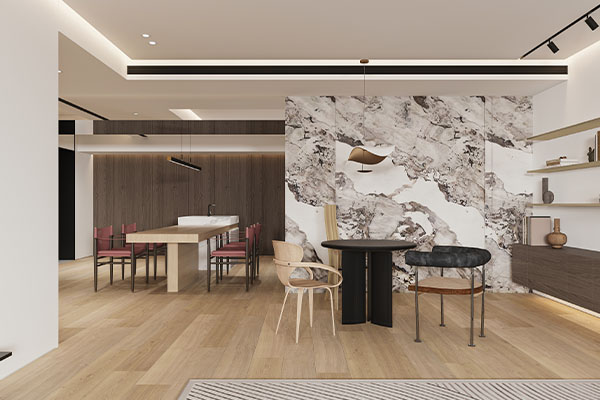
You should consider dry back LVT installation because it offers the most permanent, stable, and cost-effective flooring solution for high-traffic commercial environments. Imagine walking into your newly renovated office only to find the flooring shifting underfoot or creating echoing hollow sounds with every step. This common failure in floating floors leads to premature wear, trip hazards, and a poor professional image for your clients. By choosing dry back lvt , you eliminate these risks through a secure glue-down method that bonds the material directly to the subfloor.
What Is Dry Back LVT Flooring?
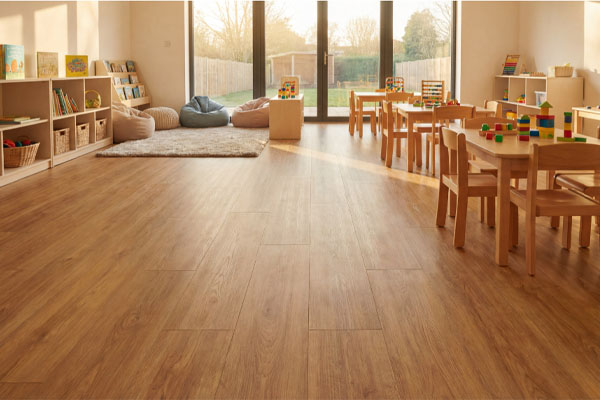
Dry back LVT is a traditional luxury vinyl tile that requires a separate adhesive for installation rather than relying on a click-locking mechanism. It is designed for professional environments where floor stability and long-term performance are the highest priorities. This product typically comes in flexible planks or tiles that are thin yet incredibly dense, providing a sleek profile that transitions easily between different room types.
Defining the Traditional Glue-Down Method?
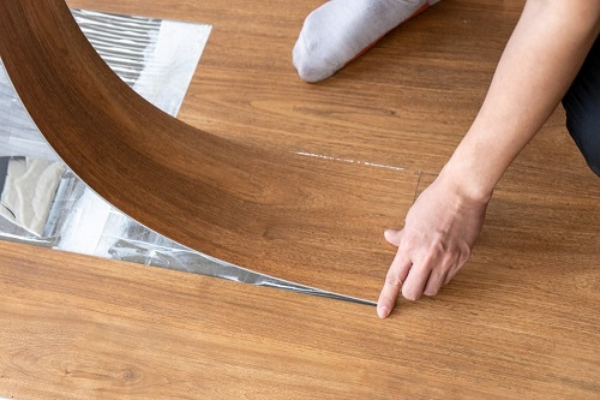
The glue-down method involves applying a specialist adhesive to a prepared subfloor before laying the vinyl planks. This process ensures that once the adhesive cures, the floor becomes an integral part of the building structure.
Think about it:
- The bond prevents any horizontal shifting.
- It eliminates the “hollow” sound often associated with click floors.
- Adhesives are formulated for high moisture or temperature resistance.
But that is not all. The permanent nature of this installation makes it the preferred choice for architects and developers who cannot risk floor failure in high-occupancy zones.
How Does It Differ From Click-System LVT?
Unlike click-system LVT which “floats” over the subfloor, dry back LVT is fixed and does not require a thick core for locking joints. This allow for a thinner overall profile which is often more affordable for large-scale procurement.
Here is the kicker:
- Dry back is more stable in temperature-fluctuating zones.
- Click floors can “unzip” if the subfloor isn’t perfectly level.
- Repairs are simpler as you only pull up the affected tile.
Key Takeaway: Dry back LVT provides a permanent, non-shifting surface that outperforms floating systems in heavy-duty settings.
| Feature | Dry Back LVT | Click LVT | |
|---|---|---|---|
| Installation | Glue-down | Floating/Locking | |
| Stability | Exceptional | Moderate | |
| Maintenance | High | High | |
| Thickness | 2.0mm – 3.0mm | 4.0mm – 7.0mm |
Professional installers favor the glue-down approach for its reliability and the ability to handle heavy rolling loads without joint separation.
What Is the Internal Structure of Dry Back LVT?
The internal structure of dry back lvt consists of multiple specialized layers engineered to provide a balance of flexibility, strength, and aesthetic appeal. These layers are fused under high pressure to create a single, cohesive unit that resists delamination even under heavy stress. You will find that this multi-layer approach allows the flooring to remain thin while delivering the durability of much thicker materials.
Understanding the Multi-Layer Construction?
Each plank is built from a base layer, a core, a fiberglass stability layer, a high-definition print layer, and a protective wear layer. This stack ensures the floor looks like natural wood or stone while performing like an industrial synthetic.
Look:
- The UV coating prevents fading from sunlight.
- The printing layer uses 4K imaging for realism.
- The core material provides the necessary density.
The result is a product that feels solid underfoot and maintains its visual integrity for decades.
The Crucial Role of the Fiber Glass Layer?
The fiberglass layer acts as the “skeleton” of the flooring, providing dimensional stability that prevents the planks from expanding or contracting. This is particularly important for dry back installations where the adhesive needs a stable surface to grip.
But wait, there’s more:
- It prevents “doming” or curling at the edges.
- It allows for tighter seams between planks.
- Fiberglass adds a layer of impact resistance.
Key Takeaway: A high-quality fiberglass layer is the secret to a dry back floor that remains perfectly flat throughout its lifespan.
| Layer Component | Primary Function | Benefit | |
|---|---|---|---|
| UV Coating | Stain/Scratch Resistance | Easy maintenance | |
| Wear Layer | Durability | Longevity in traffic | |
| Fiberglass | Dimensional Stability | No shrinkage | |
| Base Layer | Adhesive Bonding | Permanent grip |
A robust internal structure is what separates professional-grade vinyl from retail-level products that fail under commercial pressure.
Why Choose Dry Back LVT for Commercial Projects?
You should choose dry back LVT for commercial projects because it is specifically engineered to handle the extreme foot traffic and heavy equipment found in retail, healthcare, and hospitality sectors. While other flooring types might buckle or show wear paths within a few years, a glue-down installation remains resilient. It offers the professional finish and safety ratings required by modern building codes while keeping project costs within budget.
Superior Durability in High-Traffic Zones?
In environments like hospital corridors or shopping malls, the floor must withstand constant friction and rolling loads. Dry back LVT excels here because the adhesive bond prevents the tiles from lifting or sliding when heavy carts pass over them.
The best part?
- It resists indentation from heavy furniture.
- The tight seams prevent dirt buildup.
- It can be buffed or recoated in some instances.
You don’t have to worry about the “telegraphing” of movement that plagues floating floors in busy hallways.
Is It a Cost-Effective Solution for Large Areas?
For large-scale developments, dry back LVT is often the most economical choice per square meter due to its efficient manufacturing process. Since it doesn’t require a complex locking core, you pay primarily for the wear-resistant materials and design.
Consider this:
- Bulk shipping costs are lower due to the thinner profile.
- The long lifespan reduces the “total cost of ownership.”
- Maintenance is streamlined with standard cleaning protocols.
Key Takeaway: Investing in dry back LVT for large commercial spaces maximizes your ROI through lower material costs and extended durability.
| Economic Factor | Dry Back LVT | SPC/Click Vinyl | |
|---|---|---|---|
| Material Cost | Lower | Higher | |
| Shipping Efficiency | Excellent | Good | |
| Replacement Cost | Low (Per Tile) | High (Requires Unlocking) | |
| Life Expectancy | 20+ Years | 10-15 Years |
The cost benefits extend far beyond the initial purchase, especially when considering the ease of localized repairs over time.
What Are the Key Performance Benefits of Dry Back LVT?
The key performance benefits of dry back lvt include 100% waterproof capabilities and high fire-resistance ratings, making it a safe and versatile choice for almost any indoor application. Because the material is non-porous and glued firmly to the subfloor, there are no gaps for water to seep through and cause mold or adhesive failure. This level of performance ensures that your investment is protected against accidental spills, leaks, and high-humidity conditions.
Waterproof and Fire-Resistant Characteristics?
Dry back LVT is inherently resistant to moisture damage, which is a critical requirement for kitchens, bathrooms, and entryways. Furthermore, most commercial-grade vinyl meets strict B1 fire safety standards, providing peace of mind in public spaces.
Look:
- It does not swell or rot when exposed to water.
- It acts as a flame retardant in emergency scenarios.
- Cleaning involves simple damp mopping without damage.
This makes it an ideal “all-rounder” for mixed-use commercial developments where safety and hygiene are paramount.
Sound Reduction and Anti-Slip Features?
Safety is non-negotiable in B2B flooring, and dry back LVT provides excellent slip resistance even when wet. Additionally, because it is glued directly to the floor, it naturally dampens footfall noise compared to hard surfaces like laminate.
Here is the kicker:
- The textured surface provides better grip.
- It achieves high dB reduction ratings for multi-story buildings.
- No underlayment is needed to manage acoustics.
Key Takeaway: Dry back LVT combines essential safety features with acoustic performance to create a comfortable, secure environment.
| Performance Metric | Rating/Value | Commercial Benefit | |
|---|---|---|---|
| Water Resistance | 100% Waterproof | Kitchen/Lab safe | |
| Fire Rating | Class B1-S1 | Building code compliant | |
| Slip Resistance | R10 – R11 | Reduced liability | |
| Sound Impact | ~15-18dB | Quieter workspaces |
These performance metrics ensure that the flooring meets both the functional and legal requirements of modern commercial architecture.
Where Are the Best Places for Dry Back LVT Installation?
The best places for dry back LVT installation include areas with large open floor plans, regions with varying temperatures, and spaces that utilize underfloor heating systems. Because the tiles are glued down, they are not subject to the expansion and contraction issues that can cause floating floors to peak or gap. This makes it the most reliable choice for everything from high-end retail boutiques to sun-drenched office lobbies.
Compatibility With Underfloor Heating Systems?
Dry back LVT is one of the best flooring materials for underfloor heating because of its thin profile and high thermal conductivity. The direct bond to the subfloor allows heat to transfer efficiently and evenly into the room without getting trapped.
Think about it:
- It doesn’t expand excessively when the heat is on.
- The adhesive is designed to withstand thermal cycling.
- Energy efficiency is improved compared to thicker floors.
This compatibility allows you to offer premium comfort in residential developments or luxury hospitality suites without sacrificing durability.
Performance in Areas Exposed to Direct Sunlight?
Many floating floors will buckle or “crown” when exposed to the intense heat of direct sunlight through large windows. Dry back LVT remains stable in these conditions because the adhesive prevents the planks from moving as they warm up.
But that is not all:
- UV coatings protect the design from fading.
- No expansion gaps are needed around glass perimeters.
- It maintains a seamless look in glass-fronted offices.
Key Takeaway: For any space with high solar gain or underfloor heating, dry back LVT is the only technically sound vinyl option.
| Environment | Suitability | Reason | |
|---|---|---|---|
| Hospital Corridors | Excellent | Handles rolling gurneys | |
| Retail Showrooms | Excellent | No shifting under traffic | |
| Apartment Complexes | Good | Cost-effective and durable | |
| Sunrooms | Excellent | Thermal stability |
Its versatility allows it to transition from the breakroom to the boardroom without requiring different installation methods or specialized transitions.
What Are the Main Pros of Glue-Down Dry Back LVT?
The main pros of glue-down dry back lvt are its permanent dimensional stability and the incredible ease of localized plank replacement if damage occurs. Unlike click-together floors where you must dismantle half the room to reach a scratched plank, glue-down tiles can be removed individually. This feature alone saves facility managers thousands of dollars in maintenance costs and minimizes downtime during repairs.
Achieving Permanent Stability and Minimal Shifting?
The absolute greatest benefit of this flooring is that it stays exactly where you put it. In a commercial setting, “shifting” is the number one cause of floor failure and subsequent liability claims.
Look:
- Joints remain tight and waterproof for years.
- The floor can support heavy shelving and displays.
- It creates a “flat” feel that mimics solid wood.
The peace of mind that comes with a permanent installation is invaluable for long-term property management.
Can You Easily Replace Individual Planks?
If a plank is gouged by a heavy piece of equipment or stained by a chemical spill, the repair process is remarkably simple. You just heat the adhesive, lift the single damaged tile, and glue a new one in its place.
The best part?
- No need to move all the furniture out of the room.
- The repair takes minutes, not hours.
- The “seamless” look is perfectly preserved.
Key Takeaway: The ability to replace single tiles makes dry back LVT the most sustainable and manageable flooring for busy commercial hubs.
| Pro Factor | Benefit to Buyer | Long-term Value | |
|---|---|---|---|
| Zero Movement | No trip hazards | Reduced liability | |
| Easy Repair | Low maintenance cost | Extended floor life | |
| Thin Profile | Easy transitions | No door trimming | |
| Direct Bond | Quieter footfall | Improved UX |
These advantages make it the industry standard for professionals who prioritize operational efficiency and structural integrity.
What Are the Challenges of Dry Back LVT to Consider?
The primary challenges of dry back LVT involve the strict requirements for subfloor preparation and the necessity of professional labor for a successful installation. Unlike DIY-friendly click floors, any imperfections in the subfloor—like bumps, cracks, or moisture—will show through the thin vinyl material over time. You must ensure that the base is perfectly smooth, dry, and level before the first drop of adhesive is applied.
Strict Subfloor Preparation Requirements?
Because dry back LVT is relatively thin and flexible, it “telegraphs” the condition of the subfloor. If there is a grain of sand or a small dip in the concrete, it will eventually appear as a visible bump or depression on the finished surface.
But wait, there’s more:
- Moisture testing is mandatory for concrete slabs.
- Self-leveling compounds are often required.
- The subfloor must be cleaned of all dust and oil.
This preparation stage is the most time-consuming part of the project but is essential for the longevity of the glue bond.
Professional Labor vs. DIY Installation Complexity?
While the material cost is lower, the labor cost for dry back LVT is typically higher because it requires a skilled installer to spread adhesive and set tiles correctly. An amateur installation often results in messy glue lines, uneven gaps, or tiles that lift at the corners.
Think about it:
- Professional tools like 100lb rollers are needed.
- Adhesive “open times” must be strictly managed.
- Intricate cuts around door frames require precision.
Key Takeaway: To avoid floor failure, always budget for professional installers who understand the chemistry of modern adhesives and subfloor prep.
| Challenge | Solution | Impact | |
|---|---|---|---|
| Telegraphing | Use self-leveling compound | Perfectly smooth finish | |
| Glue Failure | Use premium, matched adhesives | Permanent bond | |
| Labor Cost | Offset by lower material price | Balanced budget | |
| Drying Time | Plan for 24-48 hours of no traffic | Secure curing |
Acknowledging these challenges allows you to plan your project timeline and budget more accurately, ensuring a result that lasts.
How Do You Select the Right Dry Back LVT Specs?
You select the right dry back lvt specs by matching the wear layer thickness and design aesthetic to the specific demands of your environment. For a residential apartment, a 0.3mm wear layer might be sufficient, but a high-traffic retail store requires a 0.5mm or even 0.7mm layer to ensure longevity. Understanding these specifications is crucial for distributors and B2B buyers who need to provide the best value-to-performance ratio for their clients.
Choosing Between Wood, Stone, and Marble Designs?
Modern manufacturing allows dry back LVT to replicate almost any natural material with stunning accuracy. Whether you want the warmth of oak or the clean look of polished concrete, the choice should be driven by the branding of the space.
Here is the kicker:
- Wood textures add warmth to hospitality settings.
- Stone and marble provide a “clean” look for clinics.
- Embossed-in-register (EIR) textures add realistic depth.
The versatility in design means you never have to compromise on style to get the technical performance of vinyl.
Residential vs. Heavy Commercial Wear Layers?
The “wear layer” is the clear top coating that protects the printed design from friction and scratches. Choosing the wrong thickness can lead to a floor that looks “worn out” far before its time.
Look:
- 0.3mm: Light commercial / Residential.
- 0.5mm: Standard commercial (Offices, Shops).
- 0.7mm: Heavy commercial (Malls, Airports).
Key Takeaway: Always specify a 0.5mm wear layer or higher for any B2B project to ensure the floor withstands commercial cleaning and traffic.
| Application | Recommended Wear Layer | Expected Traffic | |
|---|---|---|---|
| Office Lobby | 0.5mm – 0.7mm | Very High | |
| Hotel Room | 0.3mm – 0.5mm | Moderate | |
| Retail Store | 0.5mm | High | |
| Student Housing | 0.3mm | Moderate/High |
Selecting specs based on data rather than just price ensures the floor survives the full term of its warranty.
How Should You Maintain Dry Back LVT Surfaces?
You should maintain dry back LVT surfaces with a simple routine of regular sweeping and damp mopping using a pH-neutral cleaner to preserve the factory-applied UV coating. Unlike natural wood or stone, these floors do not require waxing, stripping, or sealing, which significantly reduces the ongoing maintenance budget for commercial facilities. By following a few basic protection steps, you can keep the floor looking “as new” for decades without intensive labor.
Daily Cleaning Tips for Long-Term Performance?
Dust and grit act like sandpaper under the feet of customers, so removing these particles daily is the most important maintenance task. A microfiber mop or a vacuum with a soft brush attachment is all that is required.
But that is not all:
- Avoid using steam mops which can weaken the adhesive.
- Use walk-off mats at every entrance to catch grit.
- Spills should be wiped up immediately to prevent slips.
A consistent, low-effort cleaning schedule is the most effective way to protect your flooring investment.
Protecting the UV Coating From Scratches and Stains?
While the wear layer is incredibly tough, it is not indestructible; the UV coating serves as the first line of defense against micro-scratches. Using felt protectors on furniture legs is a simple but vital step for commercial spaces.
Think about it:
- Furniture “glides” prevent deep gouges.
- Avoid dragging heavy equipment across the floor.
- pH-neutral cleaners prevent the coating from dulling.
Key Takeaway: Proper maintenance for dry back LVT is more about prevention than intensive cleaning, making it the most cost-efficient choice for facilities.
| Action | Frequency | Purpose | |
|---|---|---|---|
| Sweeping/Vacuum | Daily | Remove abrasive grit | |
| Damp Mopping | Weekly | Remove surface stains | |
| Mat Maintenance | Monthly | Ensure entrance hygiene | |
| Furniture Check | Quarterly | Prevent leg-drag damage |
Brief Analysis Sentence: Minimal maintenance requirements make this flooring ideal for high-occupancy buildings where cleaning staff time is a premium resource.
Is Dry Back LVT an Environmentally Friendly Choice?
Dry back dry back lvt is increasingly becoming an environmentally friendly choice as manufacturers transition to phthalate-free materials and incorporate recycled content into the core. Many modern products are FloorScore certified, meaning they meet strict indoor air quality standards and emit very low levels of Volatile Organic Compounds (VOCs). When you choose a high-quality dry back product, you are often selecting a floor that is fully recyclable at the end of its very long life cycle.
Sustainable Materials and Safety Certifications?
Sustainability in B2B flooring is no longer optional; it is a requirement for many green building certifications like LEED. Responsible manufacturers ensure their supply chains are transparent and their materials are safe for both installers and occupants.
Look:
- Phthalate-free plasticizers are now the industry standard.
- CE and FloorScore certifications prove safety.
- VOC emissions are strictly monitored during production.
Buying certified products protects the health of the people in the building and enhances your brand’s environmental credentials.
Evaluating Virgin vs. Recycled Core Options?
You will often have the choice between 100% virgin vinyl or cores that include recycled post-industrial waste. While recycled content is better for the planet, virgin vinyl often provides the best dimensional stability for glue-down applications.
Here is the kicker:
- Virgin vinyl ensures consistent quality and color.
- Recycled cores reduce the carbon footprint of the project.
- Some manufacturers offer a hybrid of both.
Key Takeaway: Choosing FloorScore certified dry back LVT ensures your project meets modern environmental and safety standards.
| Environmental Metric | Virgin Vinyl | Recycled Content | |
|---|---|---|---|
| Indoor Air Quality | Excellent (Low VOC) | Good | |
| Stability | Maximum | High | |
| Sustainability | Low | High | |
| Recyclability | 100% | 100% |
Sustainable flooring choices allow distributors to meet the growing demand for “green” materials in the commercial construction sector.
Conclusion
In the competitive world of commercial interiors, the floor is literally the foundation of your professional reputation. Choosing dry back LVT is a strategic decision that prioritizes long-term stability, safety, and cost-efficiency over short-term installation convenience. Whether you are outfitting a busy medical clinic or a high-end retail chain, the glue-down method ensures a permanent, waterproof, and easily maintainable surface that stands up to the rigors of modern business.
At our core, we believe in redefining commercial surfaces through precision engineering and a vision of sustainable durability. If you are looking for a reliable partner to supply high-performance flooring for your next project, contact us today to discuss custom specifications and wholesale distribution options. Let’s build a more stable future together.
FAQ
Can I install dry back LVT over existing tiles?Yes, provided the existing tiles are firmly bonded, level, and all grout lines are filled with a suitable patching compound. If the surface is uneven, the texture of the tiles will “telegraph” through the new vinyl over time.
What is the best adhesive for dry back LVT?The best choice is a pressure-sensitive or acrylic-based adhesive specifically recommended by the manufacturer. Using the wrong glue can lead to “oozing” at the seams or a complete failure of the bond in high-moisture areas.
How do I know if my subfloor is ready for glue-down installation?You must perform a moisture test and a “flatness” check using a 3-meter straight edge. If the subfloor has more than a 3mm deviation over 3 meters or shows high moisture readings, you must address these issues with leveling compounds or moisture barriers first.
Is dry back LVT suitable for heavy rolling loads like hospital beds?Absolutely, this is one of its primary strengths. Unlike click-locking systems which can snap under localized pressure, the direct bond of dry back LVT distributes the weight across the entire subfloor, preventing damage.
How long after installation can I walk on the floor?Typically, you should wait 24 hours for light foot traffic and 48 to 72 hours before moving heavy furniture or performing wet maintenance. This allows the adhesive to reach its full bonding strength without being disturbed.