
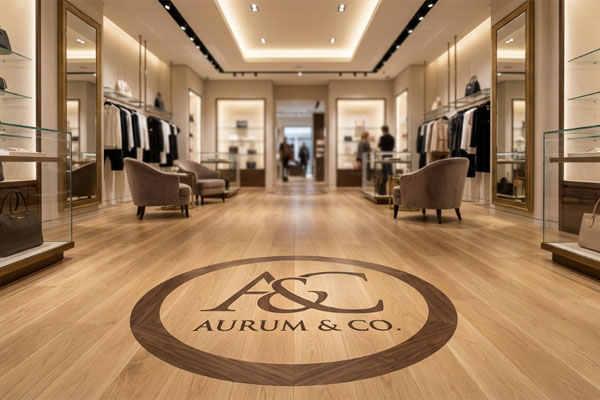
Achieving a professional finish in a renovation requires following expert Grease-resistant LVT maintenance guides to ensure longevity and safety. In the high-pressure environment of a commercial kitchen, standard floors often succumb to stubborn oil buildup and dangerous slip hazards. This damage leads to skyrocketing janitorial bills and potential legal liabilities that can jeopardize your business’s reputation. Fortunately, Adasea’s specialized Grease-resistant LVT provides a high-performance solution that repels oils and streamlines the cleaning process.
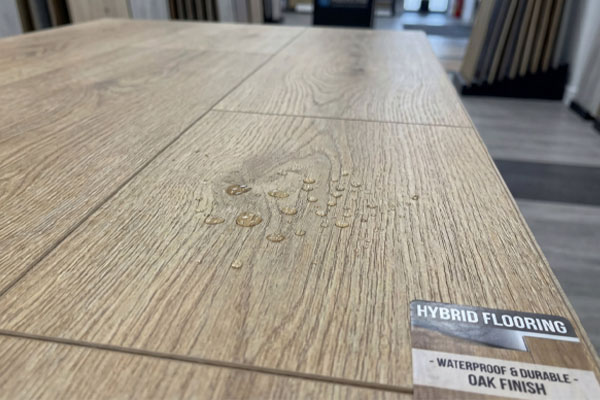
Why is grease-resistant LVT essential for high-traffic restaurant renovations?
Selecting Grease-resistant LVT is essential because it provides a non-porous barrier that prevents kitchen oils from penetrating the subfloor. During a renovation, you need a material that balances modern aesthetics with the extreme durability required for 24/7 operations. This Grease-resistant LVT technology ensures your floor remains stable even under heavy foot traffic.
Ending the battle against slippery spills
Think about this: most restaurant accidents occur due to invisible grease films on traditional tile. Our Grease-resistant LVT features a specialized top coat that maintains high traction even when liquids are present.
- Prevents oil absorption into the core material.
- Maintains slip resistance ratings (P3-P5).
- Resists staining from food dyes and acids.
Why traditional wood fails in commercial kitchens
Here is the kicker: natural wood absorbs moisture and grease, leading to warping and bacteria growth. By choosing Grease-resistant LVT, you eliminate these biological hazards entirely while keeping the beautiful wood-look aesthetic.
- 100% waterproof construction.
- Non-organic materials that do not harbor mold.
- High-definition prints for a realistic appearance.
Key Takeaway: Grease-resistant LVT offers a non-porous, slip-resistant surface that outperforms traditional materials in both safety and hygiene.
| Feature | Traditional Wood | Grease-Resistant LVT |
|---|---|---|
| Porosity | High (Absorbs Grease) | Non-Porous |
| Water Resistance | Low | 100% Waterproof |
| Slip Resistance | Variable/Poor when wet | P3-P5 Ratings |
The data confirms that LVT provides superior moisture protection compared to organic flooring options.
How does grease-resistant LVT improve commercial kitchen safety?
Using Grease-resistant LVT improves safety by providing a consistent, high-traction surface that minimizes the risk of staff injuries. Because the material is engineered to repel grease, it prevents the formation of “slick spots” that are common with porous ceramic tiles. This makes Grease-resistant LVT the gold standard for high-volume food prep areas.
Enhancing slip resistance for staff safety
But that’s not all. The specialized wear layer on this flooring is designed to work with standard commercial footwear to maximize grip.
- Advanced micro-texture technology.
- Reliable performance in high-humidity zones.
- Reductions in workplace insurance claims.
Meeting health and hygiene standards
Look at it this way: a cleaner floor is a safer floor for food preparation. Grease-resistant LVT lacks the deep grout lines of traditional tile, which means there is nowhere for dangerous bacteria to hide.
- Seamless or tight-fit installations.
- Easy-to-sanitize surface.
- Compliance with strict health department codes.
Key Takeaway: By eliminating grout and repelling oils, this flooring significantly reduces accident risks and simplifies health code compliance.
| Safety Factor | Ceramic Tile | Grease-Resistant LVT |
|---|---|---|
| Grout Lines | Deep (Traps Grease) | None (Seamless/Tight Fit) |
| Bacteria Risk | High in Gaps | Minimal |
| Traction | Slick when greasy | High-Traction Wear Layer |
LVT effectively removes the structural hiding places for grease and bacteria found in traditional tiled floors.
What daily cleaning routines work best for grease-resistant LVT?
The best daily routine for Grease-resistant LVT involves a simple sweep and damp mop with a pH-neutral cleaner. Unlike other materials that require heavy scrubbing, Grease-resistant LVT releases surface oils quickly with minimal effort. Consistent maintenance ensures the protective layer stays intact for the long haul.
The power of pH-neutral cleaners
You might be wondering: what is the secret to a long-lasting shine? Using pH-neutral cleaners ensures that you break down grease without stripping the factory finish from the Grease-resistant LVT.
- Removes surface film without leaving residue.
- Safe for daily use in high-traffic areas.
- Environmentally friendly options available.
Microfiber mopping for maximum oil removal
Here’s the deal: traditional string mops often just move grease around the floor. Switching to microfiber flat mops on your Grease-resistant LVT allows you to physically lift and remove contaminants.
- Lifts grease particles from the texture.
- Uses less water for faster drying times.
- Reduces physical strain on janitorial staff.
Key Takeaway: A simple routine of pH-neutral cleaning combined with microfiber technology keeps LVT looking new while minimizing labor.
| Cleaning Step | Frequency | Recommended Tool |
|---|---|---|
| Dust Removal | Twice Daily | Soft Bristle Broom/Vacuum |
| Damp Mopping | Daily | Microfiber Mop |
| Oil Spot Check | Hourly (Kitchen) | pH-Neutral Spot Cleaner |
Standardizing your cleaning tools ensures that grease is actually removed rather than spread across the surface.
How can grease-resistant LVT reduce long-term restaurant overhead?
Installing Grease-resistant LVT reduces overhead by eliminating the need for expensive professional waxing and chemical stripping services. Over a five-year period, the labor savings alone can often pay for the initial cost of the flooring. This makes Grease-resistant LVT a highly profitable choice for smart restaurant owners.
Cutting janitorial labor costs by 30%
Let’s get down to business. Because the surface is so easy to maintain, your staff will spend significantly less time on their hands and knees.
- Reduced cleaning time per shift.
- Fewer specialized cleaning chemicals required.
- Simplified training for new maintenance staff.
Eliminating the need for waxing and stripping
Best of all: you never have to shut down your dining room for a weekend of floor waxing. Grease-resistant LVT maintains its luster without the need for periodic mechanical buffing or hazardous chemical strippers.
- No ongoing wax material costs.
- Reduced downtime for the facility.
- Constant aesthetic appeal without “yellowing.”
Key Takeaway: The “no-wax” nature and easy-clean surface of LVT drastically lower the total cost of ownership compared to other commercial floors.
| Expense Category | Traditional VCT | Grease-Resistant LVT |
|---|---|---|
| Waxing/Stripping | Required Monthly | Never Required |
| Labor Hours | High | Low |
| Lifespan | 5-7 Years (High Traffic) | 10-15+ Years |
Reducing maintenance frequency directly translates to higher profit margins and lower operational stress.
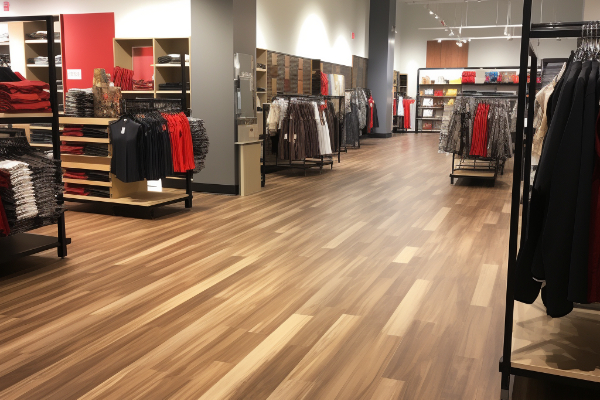
Which chemicals should you avoid on grease-resistant LVT surfaces?
To protect your investment, you must avoid harsh solvents and abrasive tools on your Grease-resistant LVT surfaces. While the material is incredibly tough, certain chemicals can chemically bond with the top coat and dull its appearance. Knowing what not to use is just as important as the cleaning routine itself for Grease-resistant LVT.
The danger of abrasive scouring pads
Keep this in mind: scratching the surface creates microscopic valleys where grease can hide. You should never use steel wool or green scouring pads on your Grease-resistant LVT.
- Prevents permanent dulling of the finish.
- Maintains the integrity of the wear layer.
- Extends the lifespan of the floor’s slip resistance.
Why bleach is an enemy to vinyl surfaces
It sounds crazy, but: frequent use of undiluted bleach can actually turn your floor brittle over time. Stick to specialized vinyl cleaners to keep your Grease-resistant LVT flexible and resilient.
- Prevents discoloration of the print layer.
- Protects the adhesive bond under the planks.
- Maintains the manufacturer’s warranty coverage.
Key Takeaway: Avoid abrasives and harsh chemicals to prevent damaging the protective top coat that makes the LVT grease-resistant.
| Avoid These | Why? | Recommended Alternative |
|---|---|---|
| Bleach/Ammonia | Dulls and damages finish | pH-Neutral Vinyl Cleaner |
| Steel Wool | Scratches the wear layer | Soft Nylon Brush |
| Oil-Based Soaps | Leaves a slippery film | Water-based degreasers |
Using the correct chemicals preserves the factory-cured protective layer and ensures long-term slip safety.
How do you handle stubborn oil stains on grease-resistant LVT?
Managing stubborn stains on Grease-resistant LVT requires localized treatment with a soft cloth and a gentle degreaser. For the best results, spills should be addressed as soon as they occur to prevent any heat-related bonding. Even if a stain has dried, Grease-resistant LVT is designed to release the mark without permanent damage.
Immediate response techniques for hot grease
Want to know a secret? Blotting is always better than rubbing when it comes to hot oil on Grease-resistant LVT.
- Use an absorbent powder for large spills.
- Blot with a clean paper towel immediately.
- Clean the residue with a damp, warm cloth.
Using specialized degreasers without damaging the finish
Here is the best part: you don’t need industrial-strength acid to clean these floors. A simple, water-based degreaser designed for vinyl will lift even the most stubborn spots from your Grease-resistant LVT.
- Target only the affected area.
- Let the solution sit for 30 seconds.
- Wipe away in a circular motion.
Key Takeaway: Prompt attention and the right localized degreasers can remove even the toughest stains from grease-resistant LVT without a trace.
| Stain Type | Treatment | Tool |
|---|---|---|
| Fresh Oil | Blot/Absorb | Paper Towel/Absorbent |
| Dried Grease | Targeted Degreaser | Soft Cloth |
| Scuff Marks | Tennis Ball or Rubber Pad | Manual Buff |
Quick intervention prevents chemical reactions between hot oils and the floor’s surface textures.
Why is the wear layer critical for grease-resistant LVT durability?
The wear layer is the most critical component of Grease-resistant LVT because it acts as the primary shield against physical damage. In a restaurant, heavy equipment and chair movement can easily scratch inferior materials. A thick, high-quality wear layer on your Grease-resistant LVT ensures that the decorative design remains protected from the elements.
Understanding the 20mil+ standard
The facts are clear: restaurant environments require a minimum 20mil wear layer for commercial success. This thickness on Grease-resistant LVT provides enough “meat” to withstand constant abrasion without wearing through to the pattern.
- Protects the high-definition print film.
- Provides the base for grease-resistance.
- Resists heavy static and rolling loads.
Protecting the high-definition print from scuffs
Believe it or not: the aesthetic of your dining room depends entirely on this transparent layer. Grease-resistant LVT keeps your wood or stone patterns looking fresh even after years of heavy scrubbing.
- Maintains the biophilic design appeal.
- Prevents fading from UV light exposure.
- Allows for aggressive cleaning without pattern loss.
Key Takeaway: A thick wear layer is the “insurance policy” for your floor’s aesthetics, protecting it from mechanical wear and chemical exposure.
| Component | Function | Benefit |
|---|---|---|
| UV Coating | Stain/Grease Resistance | Easy Cleaning |
| Wear Layer | Physical Protection | Scratch Resistance |
| Print Film | Aesthetics | Design Versatility |
A robust wear layer ensures that the floor’s visual appeal matches its industrial-strength performance.
How does grease-resistant LVT withstand industrial dishwashing spills?
Handling the high-humidity environment of a dish pit is easy for Grease-resistant LVT due to its waterproof core. Standard floors often swell or delaminate when exposed to constant steam and hot water leaks. In contrast, Grease-resistant LVT maintains its dimensional stability regardless of the moisture levels in the back-of-house.
Waterproofing that goes beyond the surface
You might think: all vinyl is waterproof, right? But Grease-resistant LVT goes further by ensuring the joints and core do not absorb any moisture that could lead to subfloor rot.
- 100% moisture-proof from top to bottom.
- Resistant to delamination in high-heat zones.
- Provides a hygienic barrier against dirty water.
Managing high-humidity zones in the back-of-house
Here’s the interesting part: LVT expands and contracts less than natural materials when the kitchen heats up. This means your Grease-resistant LVT won’t buckle or create trip hazards during the dinner rush.
- Stable in temperatures up to 85°F.
- Minimizes gap formation between planks.
- Easy to install in steam-prone areas.
Key Takeaway: LVT provides a stable, waterproof platform that thrives in the humid, spill-prone “wet zones” of a restaurant.
| Zone | Condition | LVT Performance |
|---|---|---|
| Dish Pit | High Humidity/Steam | Dimensionally Stable |
| Prep Station | Frequent Spills | 100% Waterproof |
| Dry Storage | Heavy Loads | Impact Resistant |
Waterproof properties allow LVT to transition seamlessly from the dining area into the most demanding kitchen zones.
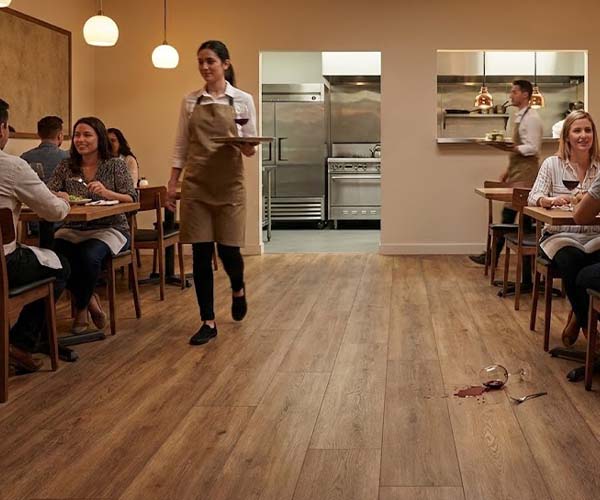
What are the installation requirements for grease-resistant LVT in dining areas?
For optimal performance, Grease-resistant LVT in dining areas should be installed using a high-quality, permanent adhesive. While some residential products use click systems, a glue-down Grease-resistant LVT provides the most stable surface for heavy tables and constant chair movement. This method also prevents grease from migrating underneath the planks.
Glue-down vs. Loose lay for kitchen environments
Think of it this way: a permanent bond is your best defense against moisture. For commercial kitchens, we always recommend glue-down Grease-resistant LVT to ensure a watertight seal.
- Prevents plank shifting under heavy traffic.
- Eliminates “hollow” sounds when walking.
- Makes individual plank replacement much easier.
Achieving a seamless transition from kitchen to dining
The beauty of this system is that you can use the same Grease-resistant LVT throughout the entire restaurant. This creates a unified look that simplifies your maintenance protocols and inventory.
- Uniform cleaning supplies for all areas.
- Consistent slip resistance across transitions.
- Enhanced aesthetic flow for open-concept designs.
Key Takeaway: Choosing the right installation method (Glue-down for kitchens) ensures that your grease-resistant LVT remains a permanent, waterproof barrier.
| Installation Method | Best For | Benefit |
|---|---|---|
| Glue-Down | Kitchen/High Traffic | Maximum Stability |
| Loose Lay | Dining Room/Quick Reno | Fast Installation |
| SPC Click | Multi-purpose | Rigid Core Support |
The installation method is just as important as the product itself for preventing grease-related subfloor damage.
How do you maintain the aesthetic appeal of grease-resistant LVT over time?
Maintaining the aesthetic appeal of Grease-resistant LVT requires a balance of daily care and periodic deep cleaning. Over time, microscopic grease particles can settle into the embossed texture of the floor. By using a walk-behind scrubber once a quarter, you can keep your Grease-resistant LVT looking as vibrant as the day it was installed.
Preserving realistic wood-grain textures
You’ll be surprised: even the most realistic textures can be kept clean with a soft nylon brush. This prevents “graying” of the wood-grain patterns on your Grease-resistant LVT.
- Removes dirt from the deep embossing.
- Restores the original color and luster.
- Prevents the floor from looking “flat” or dull.
Periodic deep-cleaning strategies
Bottom line: an ounce of prevention is worth a pound of cure. Scheduling a quarterly deep clean for your Grease-resistant LVT removes any biofilm that regular mopping might leave behind.
- Uses professional-grade, LVT-safe surfactants.
- Reinvigorates the slip-resistant properties.
- Extends the overall service life of the floor.
Key Takeaway: While daily care is simple, quarterly deep cleaning preserves the high-end look of your LVT for years to come.
| Maintenance Type | Frequency | Goal |
|---|---|---|
| Daily Routine | Every Shift | Grease Removal |
| Deep Clean | Quarterly | Restore Luster |
| Inspection | Bi-Annually | Check Seams/Edges |
Consistent deep cleaning ensures that your restaurant’s “first impression” remains impeccable for every guest.
Conclusion
At Adasea Flooring, we understand that your restaurant renovation is a major investment that deserves the best protection. By choosing our specialized Grease-resistant LVT, you are opting for a floor that prioritizes safety, eases the burden on your cleaning staff, and provides unmatched durability in the face of commercial kitchen demands. Proper maintenance isn’t just about cleaning; it’s about protecting the ROI of your business.
Are you ready to transform your restaurant with high-performance flooring? Contact us today to discuss your project requirements and receive a factory-direct quote.
FAQ
Can I use a steam mop on my grease-resistant LVT?No, you should avoid steam mops because the extreme heat can weaken the adhesive bond. A damp microfiber mop with warm water and a pH-neutral cleaner is a much safer and more effective choice for daily maintenance.
What’s the best way to prevent furniture scratches on grease-resistant LVT?The best way is to apply high-quality felt or rubber floor protectors to all chair and table legs. In a busy restaurant, you should inspect and replace these protectors every few months to prevent abrasive scuffs from ruining the finish.
How do I know if my LVT is truly grease-resistant?True grease-resistant LVT features a specialized UV-cured urethane coating that causes oils to bead up rather than soak in. You can test this by placing a small drop of oil on a sample; it should wipe away cleanly without leaving a dark spot or “shadow.”
Can I install grease-resistant LVT over existing ceramic tile?Yes, you can install it over tile as long as the surface is level and the grout lines are filled with a patching compound. This is a popular option for renovations because it saves significant time and demolition costs.
What’s the best degreaser for Adasea grease-resistant LVT?The best degreaser is a water-based, non-abrasive solution specifically labeled as “LVT-safe.” You should always avoid solvent-based degreasers (like those with citrus oils or turpentine), as they can dissolve the protective UV coating.