

Selecting the right spc floor thickness depends on your subfloor condition, expected foot traffic, and the specific level of acoustic insulation you require for your space. Many homeowners face the frustration of planks that feel hollow or joints that break just months after installation because they chose a thin product to save on upfront costs. This choice often leads to expensive repairs or a total floor replacement, causing more stress than the original renovation itself. By understanding the technical differences between 4mm, 5mm, and 6mm planks, you can make a strategic investment that ensures your floors remain stable and beautiful for decades.
Why does spc floor thickness matter for your project?
The spc floor thickness determines the overall structural integrity and the longevity of your flooring under daily stress. While the wear layer protects against scratches, the thickness of the rigid core provides the “backbone” that prevents the floor from flexing over minor subfloor imperfections.
Choosing the correct thickness ensures that your floor feels solid underfoot rather than bouncy. It acts as a critical barrier that maintains the floor’s shape regardless of temperature fluctuations or heavy furniture placement.
Does thickness impact the walking experience?
A thicker plank typically provides a much more substantial feel that mimics the density of traditional hardwood. Look. When you walk on a 6mm plank, the sound is muffled and the impact is absorbed more effectively than on thinner alternatives.
- Enhanced sound dampening properties.
- Increased resistance to heavy impact.
- Better thermal insulation for cold feet.
- Superior stability across large open areas.
Key Takeaway: You benefit from a quieter, more comfortable home environment when you prioritize core thickness over just the surface appearance.
| Metric | 4mm Impact | 6mm Impact | |
|---|---|---|---|
| Walking Sound | Higher Pitch | Deep Thud | |
| Foot Comfort | Rigid/Firm | Substantial | |
| Flexibility | Higher | Lower |
Use this comparison to decide if your family’s comfort justifies the transition to a thicker core material.
How is spc floor thickness measured in rigid planks?
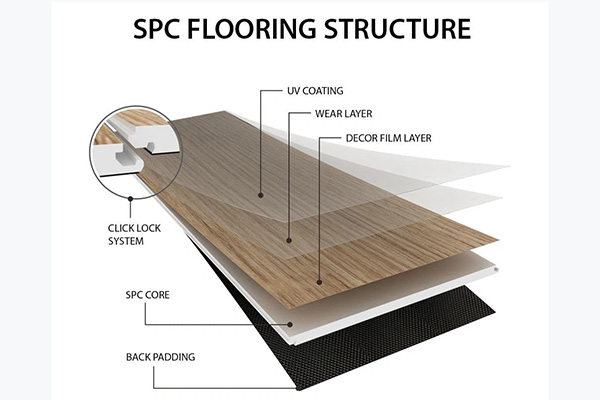
Total spc floor thickness is calculated by adding the wear layer, the decorative film, the rigid core, and the attached underlayment. Most manufacturers provide a “total thickness” measurement, which is vital to check because a thin core with a thick pad might not offer the stability you expect.
Understanding these layers helps you differentiate between a high-quality product and a budget-tier imitation. The rigid core, usually made of limestone and stabilizers, represents the majority of the plank’s height.
Are the layers balanced correctly?
It is important to ensure that the core itself is thick enough to support the locking system regardless of the padding height. Think about it. If you have a 1.5mm pad on a 4mm total thickness plank, your actual rigid core is quite thin and potentially fragile.
- UV coating for fade resistance.
- Wear layer for scratch protection.
- High-definition decorative film.
- Stone plastic composite rigid core.
Key Takeaway: You get a more durable floor when the rigid core makes up the highest percentage of the total plank thickness.
| Component | Average Range | Purpose | |
|---|---|---|---|
| Rigid Core | 3.0mm – 5.0mm | Structural Stability | |
| Attached Pad | 1.0mm – 1.5mm | Sound Absorption | |
| Wear Layer | 0.3mm – 0.7mm | Surface Protection |
Examine the technical specifications of your chosen plank to confirm the actual core-to-pad ratio before buying.
Is 4mm the best spc floor thickness for home renovations?
A 4mm spc floor thickness is widely considered the entry-level standard for residential projects where the subfloor is perfectly level. This thickness offers a cost-effective solution for homeowners who want the waterproof benefits of SPC without the premium price tag of thicker commercial grades.
However, 4mm planks require a very high level of precision during subfloor preparation. Any dip or bump in the concrete or plywood can cause these thinner planks to stress at the seams.
Where should 4mm planks be installed?
These thinner planks are ideal for guest rooms, home offices, or areas where foot traffic is relatively light and predictable. Here is the deal. If you are renovating a rental property on a tight budget, 4mm provides a clean, modern look that is easy to maintain.
- Best for small, low-traffic rooms.
- Most affordable price point per square foot.
- Easy to cut and install for DIYers.
- Requires professional-grade subfloor leveling.
Key Takeaway: You save money on material costs with 4mm planks, provided you are willing to invest time in perfect subfloor preparation.
| Criteria | 4mm Performance | Suitability | |
|---|---|---|---|
| Cost | Lowest | Budget Projects | |
| Durability | Moderate | Light Residential | |
| DIY Ease | High | Simple Layouts |
Consider 4mm only if your subfloor is as smooth as glass to prevent future joint separation issues.
When is 5mm the ideal spc floor thickness for high traffic?
A 5mm spc floor thickness is the “sweet spot” for most active households, offering the perfect balance between price, stability, and comfort. This thickness is robust enough to handle the weight of heavy appliances in kitchens and the constant activity of pets and children.
At 5mm, the locking mechanism is significantly stronger than in 4mm versions. This extra millimeter of core material allows for a deeper groove and a more resilient tongue that resists snapping under pressure.
Is 5mm enough for an open-concept living room?
For large areas without transition moldings, a 5mm core provides the necessary rigidity to prevent the floor from shifting. The best part? You gain extra peace of mind knowing that the floor can withstand minor subfloor variations without telegraphing imperfections through the surface.
- Ideal for kitchens and busy hallways.
- Stronger click-lock click-lock joints.
- Better resistance to heavy furniture indents.
- Enhanced sound dampening over 4mm.
Key Takeaway: You achieve professional-grade durability in your main living spaces by choosing the 5mm thickness standard.
| Application | 5mm Rating | Recommendation | |
|---|---|---|---|
| Kitchens | Excellent | Highly Recommended | |
| Living Rooms | Very Good | Standard Choice | |
| Bathrooms | Excellent | Waterproof & Stable |
Analysis shows that 5mm planks offer the most reliable performance for standard residential use without overspending on commercial specs.
Why choose a 6mm spc floor thickness for premium spaces?
Investing in a 6mm spc floor thickness provides the ultimate luxury experience, offering the highest level of sound insulation and structural density available. This thickness is often the preferred choice for high-end residential renovations and commercial environments where the floor must perform flawlessly under extreme conditions.
The heavy core of a 6mm plank significantly reduces the “clicky” sound often associated with thinner vinyl floors. It feels the most like real wood or stone when walked upon.
Does 6mm thickness hide subfloor flaws?
While no floor can hide major damage, a 6mm core is much more forgiving of minor subfloor dips and unevenness. Let’s be honest. Most older homes have imperfect subfloors, and the 6mm thickness acts as a bridge that keeps the floor surface level and secure.
- Superior acoustic performance (IIC rating).
- Maximum joint strength for heavy loads.
- Feels most like authentic hardwood.
- Highest resale value for your home.
Key Takeaway: You enjoy the quietest and most stable flooring experience possible by selecting the premium 6mm thickness option.
| Feature | 6mm Benefit | User Experience | |
|---|---|---|---|
| Sound | Silent | No “Hollow” Noise | |
| Stability | Maximum | No Plank Shifting | |
| Life Span | 20+ Years | Long-term Security |
Opt for 6mm if you want your flooring to be a “one-and-done” investment that survives heavy use and changing trends.
Does spc floor thickness influence the click-lock system?
The spc floor thickness directly impacts the physical size and strength of the interlocking mechanism that holds your floor together. A thicker plank allows for a more complex and robust tongue-and-groove design, which is the most critical factor in preventing gaps between boards.
Thin planks have very little vertical space for the locking profile. This often results in “thin” joints that can shear off if the floor expands or if someone drops a heavy object near a seam.
How does thickness prevent joint failure?
Thicker planks utilize the extra core material to create a vertical “lock” that is much harder to disengage or break. In other words. The mechanical strength of your floor is a direct byproduct of the core’s height.
- Deeper grooves allow for more secure engagement.
- Thicker tongues resist snapping during installation.
- Greater surface area for the lock to grip.
- Reduced risk of “tenting” at the seams.
Key Takeaway: You reduce the risk of floor failure and unsightly gaps by choosing a thickness that supports a stronger locking system.
| Joint Type | 4mm Strength | 6mm Strength | |
|---|---|---|---|
| Vertical Load | Low | High | |
| Horizontal Pull | Moderate | Superior | |
| Ease of Lock | Delicate | Secure |
Always check the locking profile of a sample plank; thicker samples will almost always feel more “locked in” than thin ones.
Can spc floor thickness improve the acoustics of a room?
A thicker spc floor thickness significantly enhances the acoustic properties of a room by absorbing sound waves rather than reflecting them. In multi-story homes or apartments, the density of a 5mm or 6mm core is essential for reducing “impact noise” that travels to the rooms below.
The stone-based core of SPC is naturally dense, but the more mass you have, the better the sound deadening becomes. This makes thicker planks the ideal choice for upstairs bedrooms and playrooms.
Why is sound absorption important?
Reducing ambient noise creates a more peaceful home environment and prevents the annoying “echo” often found in modern, minimalist interiors. Believe it or not. The difference between 4mm and 6mm can be the difference between hearing every footstep and enjoying near silence.
- Lower decibel levels from falling objects.
- Reduced “hollow” sound when walking in heels.
- Better privacy in multi-story living.
- Less echo in large, open spaces.
Key Takeaway: You create a quieter, more private living environment by investing in the acoustic mass of a thicker SPC plank.
| Sound Type | 4mm Performance | 6mm Performance | |
|---|---|---|---|
| Impact Noise | High Transfer | Low Transfer | |
| Airborne Noise | Moderate Reflection | High Absorption | |
| Echo Level | Noticeable | Minimal |
Choose a 6mm plank with an attached IXPE pad if your primary goal is to achieve the best sound ratings in your building.
Is spc floor thickness critical for uneven subfloors?
Using a greater spc floor thickness is a strategic way to mitigate the risks associated with subfloors that are not perfectly flat. While you should always aim for a level surface, the rigidity of a 5mm or 6mm plank allows it to span tiny variations without bending into the dips.
Thin 4mm planks are highly flexible, meaning they will follow the contour of an uneven subfloor. This leads to “telegraphing,” where every bump and valley in the concrete becomes visible on your finished floor.
Can a thicker plank save on prep costs?
While a thicker floor costs more per square foot, it can sometimes save you money on extensive subfloor grinding or self-leveling compounds. Check this out. The structural stiffness of a thicker core allows it to remain flat even when the ground beneath it isn’t 100% perfect.
- Spans minor grout lines in existing tile.
- Resists “dipping” into low spots.
- Prevents the locking system from over-flexing.
- Masks small subfloor debris or imperfections.
Key Takeaway: You protect the visual beauty of your renovation by using thickness as a shield against subfloor inconsistencies.
| Subfloor Issue | 4mm Solution | 6mm Solution | |
|---|---|---|---|
| Minor Dips | High Risk of Gap | Bridges the Gap | |
| Grout Lines | Must Fill | Often Spans | |
| Concrete Bumps | Visible | Hidden |
Analysis suggests that for older homes with settled foundations, 6mm SPC is the safest bet to ensure a flat finished surface.

How does spc floor thickness affect long-term ROI?
A higher spc floor thickness usually yields a much better return on investment by extending the life of the floor and maintaining its aesthetic appeal for years. While 4mm floors might need replacement after 5–7 years of heavy use, a 6mm floor can easily last 20 years or more.
The long-term ROI is calculated by dividing the total cost (material + installation) by the number of years the floor remains in top condition. Thicker floors almost always have a lower “cost per year.”
Why do thicker floors increase home value?
Homebuyers recognize the quality of substantial flooring that doesn’t creak or feel “cheap” under their feet. Bottom line. High-quality finishes suggest that the rest of the home has been maintained to a high standard, making it easier to sell.
- Longer manufacturer warranties.
- Higher resistance to wear and tear.
- Better perceived quality for potential buyers.
- Fewer maintenance issues over time.
Key Takeaway: You maximize your property’s value by choosing a thickness that provides decades of worry-free performance.
| Timeframe | 4mm Value | 6mm Value | |
|---|---|---|---|
| Year 1 | High | High | |
| Year 5 | Potential Wear | Like New | |
| Year 15 | Likely Replaced | Still Functional |
Invest more today to avoid the labor and material costs of a second installation in the near future.
What is the best spc floor thickness for commercial use?
For commercial environments, an spc floor thickness of 5mm or 6mm is the industry requirement to handle heavy rolling loads and constant pedestrian traffic. Retail stores, offices, and healthcare facilities require the extreme stability that only a thick, rigid core can provide.
In commercial settings, floors are subjected to moving furniture, heavy carts, and rigorous cleaning schedules. A 4mm residential-grade floor would likely fail under these intense conditions within months.
Does thickness prevent commercial damage?
Thicker cores are far less likely to dent or crack when heavy equipment is moved across them. Here is the kicker. Even in a high-traffic hallway, a 6mm core ensures that the floor remains locked tight and level, preventing trip hazards.
- Withstands heavy office furniture.
- Ideal for high-traffic retail spaces.
- Compatible with commercial-grade cleaning.
- Supports heavy rolling loads (carts/chairs).
Key Takeaway: You ensure your business remains safe and professional by installing the highest thickness grade available for your industry.
| Business Type | Recommended Thickness | Traffic Level | |
|---|---|---|---|
| Boutique Shop | 5mm | Moderate | |
| Busy Office | 6mm | High | |
| Hospital/Clinic | 6mm | Extreme |
Select 6mm for any space where you expect rolling chairs or heavy equipment to be used daily to ensure structural survival.
Conclusion
Choosing the right spc floor thickness is the most important decision you will make for the longevity and comfort of your new space. While 4mm offers a budget-friendly entry point, it requires meticulous subfloor preparation that many DIYers overlook. 5mm serves as the ideal versatile standard for busy homes, and 6mm represents the pinnacle of luxury, stability, and acoustic performance. At Adasea Flooring, we understand that your floor is more than just a surface; it is the foundation of your daily life. Our brand vision is centered on providing high-performance, aesthetically stunning SPC solutions that solve the real-world problems of durability and noise. By choosing the thickness that matches your specific environmental needs, you are investing in a future where your home remains a quiet, stable sanctuary. To find the perfect match for your next project, contact us today and let our experts guide you to the right choice.
FAQ
Can I install 4mm SPC over existing ceramic tile?It is not recommended unless the grout lines are filled and the surface is perfectly flat. A 5mm or 6mm plank is much better for this application as it is less likely to “telegraph” the pattern of the old tile through the new surface.
What is the best spc floor thickness for a kitchen?A 5mm SPC plank is generally the best choice for kitchens. It provides a robust core that can support heavy appliances like refrigerators while remaining completely waterproof and easy to clean.
Does a thicker SPC core mean it is more waterproof?No, all SPC flooring is 100% waterproof regardless of thickness. The thickness strictly influences stability, strength, and sound insulation rather than the material’s resistance to water damage.
Will a 6mm SPC floor feel warmer than a 4mm one?Yes, thicker planks provide slightly better thermal insulation from a cold concrete subfloor. While it won’t replace underfloor heating, the extra mass helps maintain a more consistent surface temperature.
Is it harder to cut 6mm SPC during installation?It requires slightly more effort but can still be cut using the “score and snap” method with a heavy-duty utility knife. However, for a 6mm core, using a professional laminate floor cutter can result in cleaner edges and faster installation.