
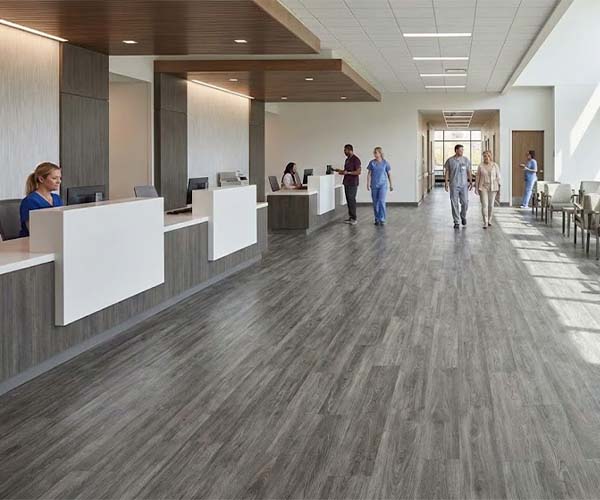
Anti-bacterial coatings in Dry Back LVT provide a permanent microbial barrier that actively inhibits the growth of pathogens on high-traffic surfaces. Healthcare environments face a relentless battle against Hospital-Acquired Infections (HAIs), where standard flooring materials often harbor pathogens in seams or porous surfaces. This leads to compromised patient safety and astronomical sanitation costs that burden facility budgets. Adasea’s specialized Healthcare Flooring Solutions utilize advanced anti-bacterial UV coatings integrated into high-performance Dry Back LVT to provide a seamless, non-porous barrier that reduces long-term maintenance overhead.
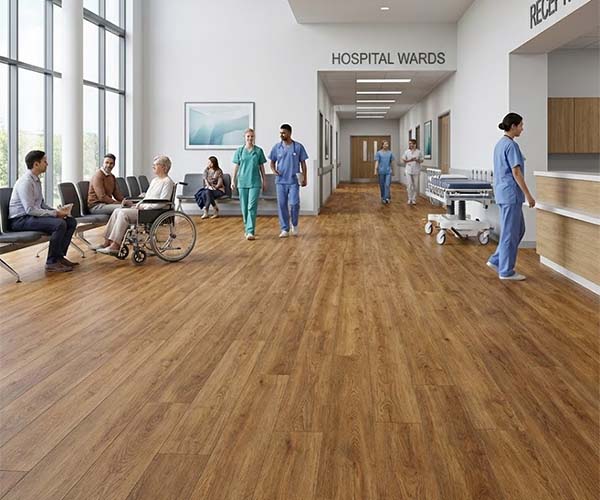
Why is anti-bacterial coating essential for medical clinics?
Anti-bacterial coatings are vital because they provide 24/7 active protection against the proliferation of dangerous microbes like MRSA and E. coli. Utilizing advanced Healthcare Flooring Solutions ensures that the floor surface remains a hostile environment for bacteria even between scheduled cleanings. This secondary line of defense is crucial in waiting rooms and treatment areas where cross-contamination risks are highest.
Think about this: hygiene is not just about cleaning; it is about the material’s inherent resistance.
Disrupting Microbial Cellular Walls
The specialized silver-ion or UV-cured coatings work by physically disrupting the cellular structure of bacteria. This process prevents the microbes from metabolizing or reproducing, effectively neutralizing them on contact.
- Inhibits 99.9% of common hospital bacteria.
- Provides constant protection without chemical reapplication.
- Reduces the reliance on aggressive topical biocides.
- Improves overall indoor air quality by reducing organic decay.
Key Takeaway: Anti-bacterial coatings transform a passive surface into an active participant in infection control protocols.
| Feature | Impact on Clinic Hygiene | |
|---|---|---|
| Active Bio-Inhibition | Stops bacteria from reproducing on the floor surface | |
| Seamless UV Coating | Leaves no pores for pathogens to hide in | |
| Silver-Ion Tech | Provides long-lasting efficacy against resistant strains |
The integration of active microbial resistance directly into the wear layer ensures a safer environment for vulnerable patients and medical staff.
What makes Dry Back LVT the top choice for hospital floors?
Dry Back LVT is preferred because its glue-down installation creates a permanent, stable bond that prevents the shifting or “gapping” common in floating floors. When sourcing Healthcare Flooring Solutions , facility managers prioritize this dimensional stability to accommodate the heavy rolling loads of hospital beds and diagnostic machinery. The lack of an air gap beneath the planks also eliminates the potential for moisture to trap and mold to grow.
The truth is, stability equals safety in a medical setting.
Superior Durability for Rolling Loads
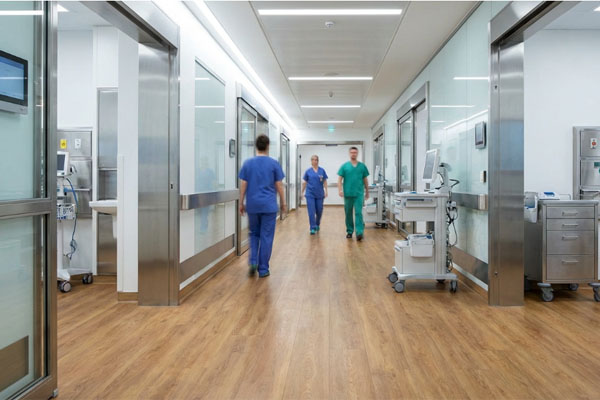
Hospital corridors see constant traffic from heavy equipment, stretchers, and trolleys. Dry Back LVT distributes this weight directly to the subfloor, preventing damage to the locking systems found in other floor types.
- Enhanced dimensional stability under temperature fluctuations.
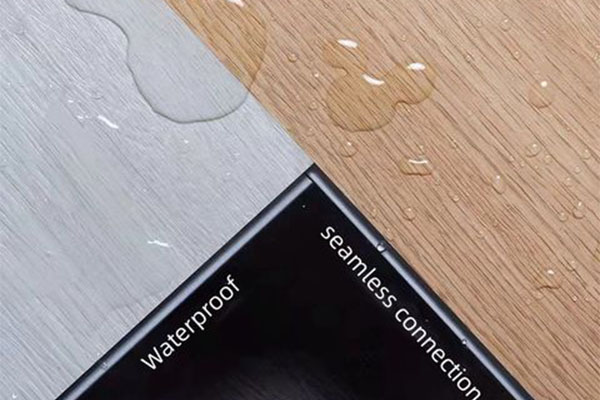
- Waterproof construction prevents delamination in wet areas.
- High-density PVC core absorbs impact from dropped medical tools.
- Flexible material provides superior underfoot comfort for nurses.
Key Takeaway: The permanent adhesion of Dry Back LVT ensures that hygiene barriers remain intact even under extreme physical stress.
| Performance Metric | Dry Back LVT Benefit | |
|---|---|---|
| Load Bearing | Withstands heavy hospital beds and machinery | |
| Moisture Resistance | 100% waterproof for easy wet-mopping | |
| Sound Absorption | Reduces footfall noise in patient recovery zones |
Glue-down LVT provides the most reliable foundation for a sterile facility by removing the physical vulnerabilities of click-lock alternatives.
How does the anti-bacterial UV layer physically function?
The anti-bacterial UV layer functions as a molecular shield that is permanently bonded to the wear layer during the factory curing process. Implementing high-quality Healthcare Flooring Solutions means the protection is not a temporary spray but a structural component of the plank. This layer creates a smooth, hydrophobic surface that repels liquids and prevents bacterial adhesion.
But wait, there’s more to the science than just a smooth surface.
The Chemistry of Surface Protection
During manufacturing, anti-microbial agents are dispersed throughout the UV-curable resin. When the floor is exposed to UV light in the factory, these agents become locked into a high-density polymer matrix.
- Permanent integration into the 0.5mm or 0.7mm wear layer.
- Scratch-resistant finish maintains the barrier’s integrity.
- Stain-resistant properties prevent medical fluids from penetrating.
- Easy-clean surface reduces the need for heavy scrubbing.
Key Takeaway: Factory-applied coatings ensure that the floor’s defensive properties remain consistent across every square meter of the installation.
| Layer Component | Technical Function | |
|---|---|---|
| UV Resin | Creates a hard, non-porous top barrier | |
| Anti-Microbial Agents | Disruption of bacterial DNA and protein synthesis | |
| Wear Layer | Protects the design film while hosting the coating |
This molecular integration ensures that the anti-bacterial efficacy does not wear off even after years of industrial-grade cleaning.
Does this flooring meet international health and safety codes?
Yes, these products are rigorously tested to meet global standards such as ISO 22196 for anti-bacterial activity and CE certifications for safety. Our Healthcare Flooring Solutions undergo independent laboratory verification to ensure they are phthalate-free and emit low Volatile Organic Compounds (VOCs). This compliance is essential for government tenders and private hospital certifications where material safety is non-negotiable.
Here is why certifications matter for your procurement: they prove performance.
Verification of Slip and Fire Resistance
Beyond hygiene, medical flooring must prevent accidents and withstand emergencies. Our LVT meets R9 or R10 slip resistance ratings and Bfl-s1 fire classification standards.
- Phthalate-free composition for pediatric ward safety.
- Low formaldehyde emissions to protect respiratory health.
- Proven reduction in bacterial counts over 24-hour periods.
- High abrasion resistance (AC4/AC5) for commercial longevity.
Key Takeaway: Certification documentation provides the necessary evidence to satisfy stringent healthcare regulatory audits and safety inspections.
| Certification | What it Measures | |
|---|---|---|
| ISO 22196 | Measurement of antibacterial activity on plastics | |
| CE Mark | Compliance with European health and safety standards | |
| FloorScore | Indoor air quality and low chemical emissions |
By meeting these benchmarks, facility managers can guarantee that their flooring investment supports a healthy, compliant recovery environment.
Why is Dry Back LVT more cost-effective for medical tenders?
Dry Back LVT is more cost-effective because it eliminates the need for periodic waxing, stripping, and buffing required by traditional vinyl sheets or VCT. Choosing the right Healthcare Flooring Solutions allows for a significantly lower Total Cost of Ownership (TCO) over the life of the building. Furthermore, the modular nature of LVT allows for “surgical” repairs where only damaged planks are replaced instead of an entire room.
It gets better: the savings extend far beyond the initial purchase price.
Lowering Long-Term Maintenance Costs
Traditional hospital floors often require labor-intensive chemical treatments every six months to maintain their appearance and hygiene. Dry Back LVT with a UV coating only requires simple damp mopping with neutral cleaners.
- 30-40% reduction in annual maintenance labor costs.
- No need for expensive waxing equipment or chemicals.
- Fast installation reduces facility downtime during renovations.
- High durability means fewer replacement cycles over decades.
Key Takeaway: The modular design and low-maintenance finish provide the best return on investment for large-scale healthcare projects.
| Cost Factor | Dry Back LVT | Traditional VCT | |
|---|---|---|---|
| Initial Install | Moderate | Low | |
| Annual Waxing | $0 (Not Required) | High Cost | |
| Life Expectancy | 15-25 Years | 5-10 Years |
Strategic procurement focused on LVT reduces operational expenses while simultaneously improving the facility’s hygiene profile.
Can these surfaces withstand harsh medical-grade cleaners?
Yes, the specialized UV-cured surfaces are engineered to be chemically resistant to the most common disinfectants used in hospitals, including alcohol and quaternary ammonium. Many Healthcare Flooring Solutions fail because aggressive cleaners cloud the finish or degrade the material. Our Dry Back LVT maintains its visual clarity and structural integrity even under rigorous daily sterilization cycles.
The fact is, medical floors must be tough enough for the strongest chemicals.
Chemical Stability and Stain Resistance
Hospital floors are frequently exposed to iodine, blood, and various acidic or alkaline cleaners. The high-density surface prevents these substances from staining or eating into the decorative layer.
- Resistant to 70% Isopropyl Alcohol cleaning.
- No yellowing or clouding from UV-based sterilization.
- Repels common medical stains like Betadine.
- Maintains slip resistance even when wet with cleaning agents.
Key Takeaway: Chemical resistance ensures that your disinfection protocols do not accidentally damage your facility’s infrastructure.
| Chemical Type | Resistance Level | |
|---|---|---|
| Alcohols | High – No surface degradation | |
| Bleach Solutions | Excellent – No color fading | |
| Hand Sanitizers | Superior – No sticky residue or pitting |
Ensuring that the wear layer can withstand industrial-strength sanitization is the only way to maintain a truly sterile medical environment.
How does glue-down installation improve ward hygiene?
Glue-down installation improves hygiene by creating a seamless surface that prevents fluids and bacteria from seeping into the subfloor. In the context of Healthcare Flooring Solutions, the use of specialized pressure-sensitive or waterproof adhesives ensures that every plank is hermetically sealed. This eliminates the “micro-voids” found in click-lock systems where moisture can accumulate and breed pathogens.
Think about the perimeter: that is where most hygiene failures occur.
Integral Coving for Sterile Perimeters
Dry Back LVT can be easily coved—meaning the flooring continues up the wall for several inches. This creates a bathtub-like seal that makes the corners of the room as easy to clean as the center.
- Prevents moisture seepage during heavy wet-mopping.
- Eliminates the need for porous baseboards or wall moldings.
- Simplifies corner cleaning where dust and germs hide.
- Provides a smooth transition for wheeled equipment.
Key Takeaway: The permanent bond between the plank and subfloor creates a unified, sterile barrier across the entire room.
| Installation Detail | Hygiene Benefit | |
|---|---|---|
| Full-Spread Adhesive | No gaps for liquid penetration | |
| Flush Joint Fitting | Reduces areas for bacterial accumulation | |
| Flash Coving | Creates a seamless floor-to-wall transition |
A properly glued LVT floor acts as a single, continuous shield that protects both the subfloor and the patients above it.
What biophilic design options support patient recovery?
Biophilic design uses natural patterns, such as wood and stone textures, to reduce patient stress and speed up recovery times. Advanced Healthcare Flooring Solutions no longer look like sterile, clinical plastic; they mimic the warmth of Nordic Oak or the calm of natural marble. This aesthetic shift helps transform cold clinical spaces into “healing environments” that improve the overall experience for patients and families.
You might be surprised: the look of the floor can actually influence health outcomes.
Using Color and Texture for Wayfinding
Different wood tones or stone patterns can be used to delineate different zones, such as public corridors versus sterile treatment rooms. This helps staff and visitors navigate complex hospital layouts intuitively.
- Wood-look planks provide a residential, comforting feel.
- Stone-look tiles offer a clean, high-end surgical appearance.
- Custom colors allow for clear “safe zones” and pathways.
- Low-glare finishes reduce eye strain for medical professionals.
Key Takeaway: High-fidelity design layers allow hospitals to achieve a premium, hospitality-like aesthetic without sacrificing medical-grade performance.
| Design Style | Psychological Impact | |
|---|---|---|
| Oak/Natural Wood | Warmth, comfort, and stress reduction | |
| Light Grey/Concrete | Modernity, cleanliness, and professionalism | |
| Soft Blue/Green Tones | Calmness and peace for recovery areas |
Visual appeal and technical performance are no longer mutually exclusive when selecting modern luxury vinyl products for healthcare.
Is the manufacturing process for LVT eco-friendly?
Yes, modern LVT manufacturing focuses on using 100% virgin PVC and sustainable stabilizers to ensure the highest indoor air quality. Responsible Healthcare Flooring Solutions avoid recycled content in medical-grade products to eliminate the risk of heavy metal contamination. Adasea’s production lines prioritize energy efficiency and zero-waste initiatives to reduce the carbon footprint of large-scale hospital projects.
The truth is, a healthy floor starts with healthy raw materials.
Maintaining Pure Material Standards
In sterile environments, knowing exactly what is inside your flooring is non-negotiable. Virgin PVC ensures consistent density and chemical purity that recycled materials simply cannot match.
- Phthalate-free and lead-free material sourcing.
- 100% recyclable at the end of its 25-year life cycle.
- Low carbon footprint compared to ceramic or stone.
- Compliance with green building standards (LEED).
Key Takeaway: Choosing flooring with low VOC emissions and pure raw materials directly supports the “do no harm” mission of healthcare.
| Environmental Metric | Adasea LVT Standard | |
|---|---|---|
| Recyclability | 100% Post-consumer recyclable | |
| VOC Emissions | Ultra-low (A+ Rating) | |
| Material Purity | No heavy metals or hazardous stabilizers |
Sustainability in healthcare flooring ensures that the facility is safe for the planet while remaining safe for the most sensitive patients.
Can distributors order custom specs for healthcare projects?
Yes, global distributors can leverage our five production lines to customize wear layers, anti-bacterial concentrations, and branding. When partnering with a manufacturer for Healthcare Flooring Solutions , you can request 0.7mm wear layers for extreme traffic or private-label packaging for your local market. This flexibility allows distributors to meet the specific technical requirements of regional government tenders or private hospital chains.
Here is the best part: you get factory-direct control over your inventory.
OEM and Private Label Support
We help our partners build their own brands by offering tailored designs and packaging. From custom plank sizes to unique embossing textures, our engineering team supports your vision.
- Custom wear layer thickness (0.3mm to 0.7mm).
- Private label branding on every box.
- Flexible MOQ for specialized medical projects.
- Technical support for certification documentation.
Key Takeaway: Customization allows you to differentiate your product offering and win more healthcare tenders in your local market.
| Customization Option | Business Benefit | |
|---|---|---|
| 0.7mm Wear Layer | Perfect for heavy-use trauma centers | |
| Private Labeling | Build your own local brand authority | |
| Custom Colors | Match the specific branding of hospital chains |
Direct factory partnership gives you the agility to solve complex flooring challenges for even the most demanding medical clients.
Conclusion
Securing the right flooring for healthcare facilities requires more than just aesthetics; it demands a fusion of durability, chemical resistance, and proactive anti-bacterial protection. Adasea’s Dry Back LVT provides the technical foundation necessary to meet these high-stakes requirements while maintaining the cost-efficiency that B2B buyers demand. We are committed to advancing the standards of global healthcare environments through innovative manufacturing and rigorous quality control. To explore our full catalog of medical-grade flooring or to request technical data sheets for your next project, please contact us .
FAQ
- Can I install Dry Back LVT directly over old hospital linoleum?No, it is not recommended. For a permanent medical installation, the old flooring should be removed to ensure a smooth, level subfloor and a perfect adhesive bond that prevents bacterial growth.
- How do I clean the anti-bacterial surface without damaging the coating?Use pH-neutral cleaners and standard hospital disinfectants. The UV-cured coating is industrial-grade and designed to withstand common medical chemicals like diluted bleach and alcohol.
- Is the anti-bacterial coating permanent or does it need reapplication?Yes, it is permanent. The coating is integrated during the manufacturing process and cured into the wear layer, meaning it will remain effective as long as the wear layer is intact.
- How do I get the specific ISO certifications for a government tender?Directly contact our technical team. We provide full SGS and CE certification reports with every shipment to ensure you meet all legal and safety requirements.
- What is the lead time for a custom anti-bacterial LVT order?Standard production takes 20-25 days. Depending on your location, shipping adds another 10-30 days, but we can expedite urgent medical projects through our high-capacity production lines.