
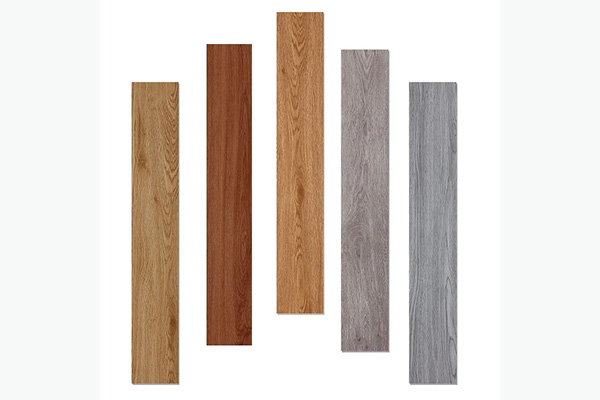
The top 10 SPC flooring manufacturers for commercial projects are industry-leading factories that utilize high-density stone plastic composite technology, precision-engineered click systems, and rigorous quality control protocols to ensure structural integrity in high-traffic environments. You are likely searching for a supplier because your current procurement process faces challenges with inconsistent product quality, rising material costs, or delayed shipping timelines that threaten your project deadlines. These frustrations can lead to significant financial losses, damage to your professional reputation, and the installation of inferior flooring that fails under commercial stress. This guide provides a definitive roadmap to sourcing from elite spc flooring manufacturers who deliver the durability, compliance, and aesthetic variety your upscale developments demand.
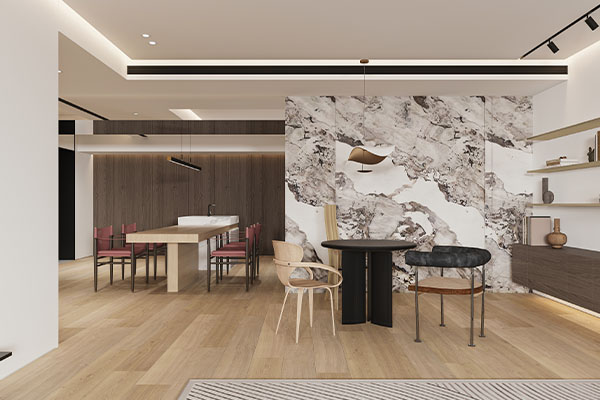
Who are the top spc flooring manufacturers for 2026?
The top spc flooring manufacturers for 2026 are those who have successfully integrated automated production lines with sustainable material sourcing and advanced digital printing technologies. You need to look for industry leaders who invest heavily in R&D to provide the next generation of rigid core solutions. These manufacturers distinguish themselves by offering 100% virgin materials and patented locking mechanisms that reduce installation time and post-purchase claims.
Key players in the global commercial market
The global market for rigid core flooring is dominated by manufacturers who possess massive production capacities and the ability to fulfill high-volume orders for skyscrapers and hotels. You should focus on factories that maintain at least 5 to 10 active extrusion lines to ensure they can scale with your project phases.
Think about this:
- Large-scale factories offer better pricing due to economies of scale in raw material procurement.
- Automated QC systems in these facilities catch defects that human inspectors might miss.
- International shipping expertise is a hallmark of top-tier global suppliers.
What makes a manufacturer lead the industry?
A true leader in the flooring sector is defined by their commitment to technical innovation and rigorous testing standards. You will find that the best partners provide transparent access to their testing facilities and share detailed performance data for every batch.
The truth is: Reliable manufacturers do not just sell a product; they provide a comprehensive technical ecosystem that supports your architectural specifications. They ensure that every plank meets the exact density and peel strength requirements for long-term commercial use.
| Sourcing Factor | Commercial Requirement | Strategic Benefit |
|---|---|---|
| Production Scale | >10 Extrusion Lines | Guaranteed supply for large developments |
| Material Purity | 100% Virgin Powder | Exceptional dimensional stability |
| Tech Support | Direct Engineering Access | Fast resolution of site-specific issues |
The table above highlights the critical metrics you must evaluate when identifying a premier manufacturing partner for your 2026 project pipeline.
Key Takeaway: To secure a top-tier manufacturer, you must look beyond the price tag and evaluate their technological infrastructure and ability to maintain consistent quality across massive production volumes.
How to choose reliable spc flooring manufacturers?
Choosing reliable spc flooring manufacturers requires a deep dive into their manufacturing processes, financial stability, and their ability to provide verifiable technical documentation for every product line. You should begin your search by requesting factory audit reports and checking their history of supplying large-scale international projects. A reliable partner will always be transparent about their raw material sources and their internal quality management systems.
Assessing factory production capacity
You must verify that the factory can handle the specific volume required for your commercial contracts without compromising on delivery windows. A factory with limited capacity may prioritize smaller orders, leaving your large-scale project at risk of costly delays and logistics bottlenecks.
Here is the kicker:
- Inquire about the number of monthly containers the factory currently exports.
- Ask for a breakdown of their extrusion, UV coating, and clicking system machinery.
- Request a production schedule to see how they manage concurrent large-scale orders.
How to verify technical data sheets?
Verifying technical data is the only way to ensure the flooring you purchase will withstand the heavy foot traffic of a commercial lobby or retail space. You need to look for specific metrics like the wear layer thickness, indentation resistance, and the specific gravity of the core.
But wait: Do not simply take the manufacturer’s word for it when reviewing technical specifications. You must cross-reference their internal lab results with third-party testing reports to ensure absolute compliance with international safety and performance standards.
| Evaluation Metric | Verification Method | Warning Sign |
|---|---|---|
| Daily Output | Site Video or Audit | Frequent stockouts or long lead times |
| Technical Data | SGS/Intertek Reports | Generic or outdated PDF documents |
| Reference List | Past Project Photos | Vague descriptions of previous clients |
Effective verification requires a combination of physical evidence, third-party validation, and direct communication with the factory’s technical department.
Key Takeaway: Reliability is built on transparency, so you should prioritize manufacturers who proactively provide detailed capacity data and third-party verified technical specifications.
Why work with direct spc flooring manufacturers?
Working with direct spc flooring manufacturers eliminates the middleman, allowing you to capture significant cost savings while gaining direct control over product customization and quality standards. You will find that factory-direct relationships lead to faster problem-solving and a clearer understanding of the product’s lifecycle from raw material to finished plank. This direct line of communication is invaluable when you are managing complex commercial builds with specific design requirements.
Cost savings of factory-direct sourcing
By bypassing distributors and wholesalers, you can reduce your material costs by 20% to 30%, which significantly improves your project’s bottom line. These savings can then be reinvested into higher-quality wear layers or integrated underlayments that enhance the overall value of your property.
Here is the truth:
- Direct sourcing removes the markup applied by multiple layers of regional resellers.
- You gain access to “factory-direct” pricing that is typically reserved for the largest wholesalers.
- Bulk purchasing agreements with factories often include volume-based discounts and loyalty incentives.
Streamlined communication and logistics
Direct interaction with the production team ensures that your specific needs are understood and implemented without the risk of translation errors through a third party. You can speak directly to the engineers who design the click profiles and the designers who curate the film patterns.
It gets better: When a logistics issue arises, you have a direct point of contact at the factory who can expedite shipping or adjust production priorities. This level of responsiveness is rarely available when working through a traditional retail or distribution network.
| Procurement Route | Pricing Structure | Communication Flow |
|---|---|---|
| Direct Factory | Wholesale/EXW Pricing | Real-time and Technical |
| Middleman | Retail + Markup | Delayed and General |
| Local Retailer | Premium + Delivery | Limited to Stock Availability |
The choice between direct and indirect sourcing fundamentally changes the financial and operational dynamics of your flooring procurement strategy.
Key Takeaway: Direct factory partnerships provide the highest level of fiscal efficiency and operational agility, making them the preferred choice for sophisticated commercial developers.
What defines quality spc flooring manufacturers?
Quality spc flooring manufacturers are identified by their uncompromising use of premium raw materials and their investment in high-precision finishing equipment. You should look for manufacturers who use a high ratio of calcium carbonate to PVC resin to create a core that is truly rigid and dimensionally stable. A quality-focused manufacturer will also use multi-layered UV coatings that provide superior scratch and stain resistance for demanding commercial environments.
The importance of rigid core stability
The core is the heart of the plank, and its stability determines whether your floor will buckle or gap when temperatures fluctuate. You must ensure your manufacturer uses a high-density formula that prevents the core from becoming brittle or overly flexible.
Look at this:
- A density of 1900-2100 kg/m³ is the industry gold standard for commercial SPC core.
- Virgin PVC resin ensures the core remains stable and free from harmful impurities.
- Properly annealed cores exhibit less than 0.1% dimensional change under extreme heat.
Wear layer thickness and commercial durability
For commercial applications, the wear layer is your primary defense against heavy traffic and rolling loads. You should specify a minimum of 20 mil (0.5mm) or 22 mil (0.55mm) for any project involving retail, hospitality, or healthcare settings.
Keep this in mind: The quality of the wear layer is just as important as its thickness. Top manufacturers use specialized coatings infused with ceramic beads or aluminum oxide to create a surface that is virtually impenetrable to everyday wear and tear.
| Quality Component | Commercial Standard | Performance Impact |
|---|---|---|
| Core Density | >2000 kg/m³ | Prevents telegraphing and gapping |
| Wear Layer | 20 mil+ (0.5mm) | Resists heavy commercial scuffing |
| UV Coating | Double-Cured | Enhances stain and fade resistance |
The interplay between core density and surface protection is what separates commercial-grade flooring from standard residential products.
Key Takeaway: Quality is a measurable metric; you must demand high-density cores and thick, treated wear layers to ensure your flooring survives the rigors of commercial use.
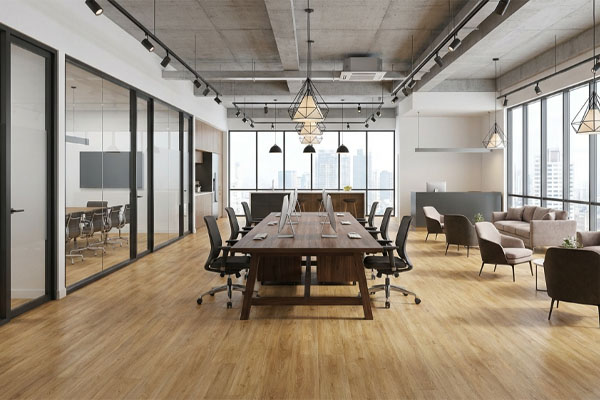
Are overseas spc flooring manufacturers better?
Overseas spc flooring manufacturers , particularly those based in major Asian manufacturing hubs, often provide a superior balance of cost, innovation, and production speed. You will find that these regions have developed a massive infrastructure dedicated specifically to stone plastic composite technology, which local manufacturers in other regions often cannot match. Sourcing from these specialized hubs allows you to tap into a mature supply chain that delivers the latest design trends and technical advancements at a competitive price point.
Benefits of sourcing from China-based factories
China remains the global epicenter for SPC production, offering the most advanced machinery and a deep pool of technical expertise. You can benefit from their integrated supply chains, where everything from the limestone powder to the decorative films is produced in close proximity to the factory.
Here is the truth:
- Advanced extrusion technology in these hubs allows for thinner yet stronger boards.
- The variety of available film patterns is significantly larger than in domestic markets.
- Turnaround times for custom orders are often faster due to the sheer volume of material flow.
Evaluating shipping costs and import tariffs
While the unit price from an overseas manufacturer is lower, you must account for the total landed cost, including ocean freight and any applicable customs duties. You need to work with a manufacturer who understands the logistics landscape and can help you optimize container loading to maximize your investment.
The best part? Many top overseas manufacturers now offer DDP (Delivered Duty Paid) services, which simplifies the process by handling all customs and domestic transport for you. This allows you to focus on your project while the factory manages the complexities of international trade.
| Sourcing Origin | Pricing Advantage | Innovation Level |
|---|---|---|
| Overseas Hubs | High (20-40% lower) | Leading Edge |
| Domestic Plants | Low (Higher labor) | Standard/Conservative |
| Small Regional | Moderate | Limited |
The decision to source overseas is often a trade-off between lead times and significant cost-efficiency, provided you have a reliable logistics plan.
Key Takeaway: Overseas manufacturing offers unmatched scalability and pricing, making it the strategic choice for large-scale developments that require high-end finishes on a strict budget.
Can spc flooring manufacturers offer customization?
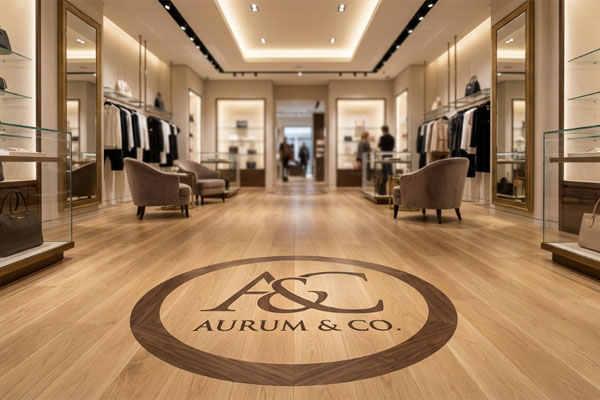
Many spc flooring manufacturers provide extensive customization options through OEM and private label programs that allow you to create a unique brand identity. You can specify everything from the plank dimensions and core thickness to the specific texture of the EIR (Embossed-in-Register) surface. This level of flexibility enables you to match existing design schemes or create a proprietary flooring line for your own distribution network.
Options for OEM and private label branding
Custom branding is a powerful way for developers and wholesalers to differentiate themselves in a crowded market. You can request custom-printed cartons, branded underlayment, and even proprietary click systems that are exclusive to your company.
Believe it or not:
- OEM partnerships allow you to leverage the factory’s R&D while owning the brand.
- Private labeling is an excellent strategy for large property management firms.
- Customization extends to the technical specs, allowing for “over-built” boards for specific needs.
Can you request custom colors and textures?
You are not limited to the standard catalog of wood or stone patterns when working with a flexible manufacturer. You can submit your own design files or work with the factory’s design team to create custom film prints that mimic rare hardwoods or unique concrete textures.
Think about this: Modern digital printing allows for virtually infinite pattern repeats, ensuring your large-scale installation looks natural and organic. You can also customize the gloss level and the depth of the embossing to achieve the perfect tactile feel for your interior space.
| Customization Area | Standard Option | Custom Capability |
|---|---|---|
| Surface Finish | Standard Wood Grain | EIR / Hand-scraped / Stone |
| Branding | Factory Generic | Private Label / Custom Logo |
| Dimensions | 7″ x 48″ Planks | XL Planks / Herringbone / Tiles |
Customization allows you to bridge the gap between functional flooring and high-end interior design, providing a bespoke solution for every project.
Key Takeaway: Customization transforms a commodity product into a unique design asset, giving you the power to dictate the exact look and performance of your flooring.
What certifications do spc flooring manufacturers need?
Reputable spc flooring manufacturers must hold a comprehensive suite of international certifications that prove their products are safe, durable, and environmentally responsible. You should never finalize a contract without seeing valid certificates for ISO 9001 quality management and CE marking for European safety standards. These certifications are your insurance policy against product failure and legal liability in regulated commercial sectors.
Understanding ISO and CE compliance
ISO 9001 certification ensures that the factory follows a consistent and documented quality management process throughout production. CE marking is equally vital, as it indicates that the flooring meets essential health, safety, and environmental protection standards required for the European Economic Area.
The bottom line:
- ISO compliance reduces the risk of batch-to-batch quality variance.
- CE marking is a mandatory requirement for many international building codes.
- Certified factories are subject to regular audits by independent third parties.
Why FloorScore and SGS certifications matter?
Indoor air quality is a major concern in modern commercial design, particularly for schools and hospitals. You must look for FloorScore certification, which guarantees that the flooring meets strict VOC emission standards to ensure a healthy indoor environment for building occupants.
But wait: SGS reports provide an unbiased technical audit of the product’s physical properties, such as fire resistance and slip ratings. These independent lab tests are often more reliable than internal data sheets when presenting specifications to project stakeholders.
| Certification | Focus Area | Why You Need It |
|---|---|---|
| FloorScore | Indoor Air Quality | Ensures low-VOC and health safety |
| ISO 9001 | Quality Management | Guarantees consistent production |
| SGS/Intertek | Physical Testing | Verifies fire and slip resistance |
Valid certifications are the only way to verify that a manufacturer’s claims about safety and quality are grounded in reality.
Key Takeaway: Certification is non-negotiable for commercial projects; always demand up-to-date documentation to ensure compliance with health and safety regulations.
How do spc flooring manufacturers handle bulk orders?
Large-scale spc flooring manufacturers are experts in managing high-volume production schedules and complex international shipping arrangements. You need a partner who can maintain a steady flow of material for multi-phase projects, ensuring that the flooring for the first floor matches the flooring for the tenth floor perfectly. Their ability to manage raw material inventory and production windows is what allows them to meet the tight deadlines of commercial construction.
Minimum order quantities for commercial projects
For direct factory sourcing, you will typically encounter minimum order quantities (MOQs) based on container loads. You should expect an MOQ of at least one 20-foot container, which usually holds between 1,500 and 2,500 square meters depending on the plank thickness and underlayment.
Here is the truth:
- Higher MOQs allow factories to dedicate a specific production run to your project.
- Ordering in full containers reduces the risk of damage during transit.
- MOQs can often be split between several different colors or patterns to provide variety.
Inventory management for large-scale distribution
A professional manufacturer will assist you in planning your inventory flow to prevent on-site storage issues while ensuring material is available when needed. You can work with them to schedule “just-in-time” deliveries that align with your construction milestones and installation windows.
The best part? Some manufacturers offer warehousing services in key logistics hubs, allowing you to pull stock as needed without tying up all your capital in a single massive shipment. This flexibility is a hallmark of a truly service-oriented manufacturing partner.
| Order Factor | Typical Bulk Scale | Management Strategy |
|---|---|---|
| MOQ | 1 x 20ft Container | Batch-based production |
| Shipping | FOB / CIF / DDP | Phase-aligned logistics |
| Batch Control | Single Run Priority | Ensures color consistency |
Managing bulk orders requires a collaborative approach to logistics and production planning to ensure seamless project execution.
Key Takeaway: Scalability and logistics expertise are critical for bulk procurement, so you must choose a partner who can align their production with your project’s specific timeline.
Where to find eco-friendly spc flooring manufacturers?
You can find eco-friendly spc flooring manufacturers by targeting factories that have committed to “green” manufacturing processes and the use of sustainable raw materials. As environmental regulations become stricter, sourcing from a manufacturer who prioritizes low-VOC emissions and recyclable materials is no longer just an option—it is a business necessity. These manufacturers use advanced filtration systems to reduce factory waste and ensure that their stone plastic composite formula is free from harmful phthalates and heavy metals.
Sustainable sourcing of limestone and PVC
The environmental footprint of SPC flooring is largely determined by the sourcing of its primary ingredients: limestone and PVC. You should look for manufacturers who source their limestone from sustainable quarries and use high-grade PVC that is free from recycled waste containing lead or cadmium.
Think about this:
- Sustainable factories often recycle their own production off-cuts back into the core.
- The use of 100% virgin materials ensures the product is fully recyclable at the end of its life.
- Eco-conscious manufacturers often hold LEED-contributing certifications for their products.
Low-VOC emissions and indoor air quality
Indoor air quality is paramount in commercial spaces like offices and clinics where people spend many hours a day. You must verify that your manufacturer uses formaldehyde-free adhesives and that their finished planks pass the most stringent emission tests.
Here is the kicker: A floor that looks great but off-gasses harmful chemicals can lead to “sick building syndrome” and significant legal liabilities for developers. Choosing a low-VOC manufacturer protects the health of the occupants and the long-term value of your investment.
| Eco-Metric | Sustainable Standard | Benefit to Project |
|---|---|---|
| Phthalate Content | 100% Phthalate-Free | Safe for schools and hospitals |
| VOC Level | < 0.5 mg/m³ | Better indoor air quality |
| Recyclability | 100% Recyclable | Supports green building goals |
Eco-friendly manufacturing is a holistic process that encompasses material sourcing, production efficiency, and the final impact on the indoor environment.
Key Takeaway: Prioritizing eco-friendly manufacturers ensures your projects meet modern environmental standards and provide a healthy space for all end-users.
What is the lead time for spc flooring manufacturers?
The lead time for spc flooring manufacturers typically ranges from 15 to 30 days for production, followed by the time required for international shipping and customs clearance. You must account for this total timeline when planning your project schedule to avoid the stress of having a construction site ready for flooring but no material on hand. Understanding the nuances of production cycles and shipping windows allows you to build a buffer into your timeline and ensure a smooth installation process.
Average production schedules for wholesale
Production speed is often determined by the complexity of your order and the current backlog at the factory. You should expect that custom colors or special embossing textures will add at least a week to the standard production window.
The truth is:
- Peak seasons, such as the months leading up to the Lunar New Year, can double lead times.
- Standardized colors and sizes are often available for faster dispatch.
- Confirming your order well in advance allows the factory to lock in your production slot.
How to expedite sample delivery?
Samples are the first step in the procurement process, and waiting weeks for them can stall your decision-making. You should work with a manufacturer who utilizes express international couriers to deliver physical samples to your office within 3 to 5 business days.
But wait: Do not rely solely on digital photos; the tactile feel and the way the surface reflects light in your specific project environment are critical factors that can only be judged by holding a physical sample in your hand.
| Timeline Stage | Estimated Duration | Influencing Factor |
|---|---|---|
| Sample Prep | 2-5 Days | Inventory availability |
| Production | 15-30 Days | Order volume and customization |
| Shipping | 20-40 Days | Port congestion and ocean route |
By understanding each stage of the fulfillment process, you can create a realistic procurement calendar that avoids the risks of last-minute rushes.
Key Takeaway: Efficient timeline management requires early planning and a clear understanding of both production and logistics windows to ensure on-time delivery.
Selecting a manufacturing partner is the most consequential decision you will make for your commercial flooring project. By prioritizing factory-direct relationships, technical transparency, and verified certifications, you solve the chronic problems of inconsistent quality and unpredictable costs that plague the industry. We specialize in providing high-performance, rigid core solutions that meet the exacting standards of architects and developers worldwide. Whether you are outfitting a luxury hotel or a massive retail complex, we can provide the technical expertise and production scale needed to bring your vision to life. The future of commercial interiors belongs to those who demand excellence from their supply chain—let us help you build that future together. To start your next project with a reliable partner, please contact us today .
Frequently Asked Questions
Can I request a custom wear layer for a high-traffic area?Yes, because most professional manufacturers allow you to specify the wear layer thickness, such as 22 mil or even 28 mil, to provide extra protection for areas like airport terminals or busy shopping malls.
What is the best way to verify if a manufacturer uses virgin materials?Directly requesting a density test report and a chemical composition analysis is best, as virgin SPC cores will typically have a higher density and a more uniform, lighter color compared to those containing recycled scrap.
How do I know if the click system will hold up in a commercial setting?You should only source from manufacturers who use licensed, patented locking technologies like Uniclic or I4F, as these systems are rigorously tested for tension and shear strength to prevent gapping under heavy loads.
Is it possible to get a custom texture on a small order?Generally no, because setting up the specialized embossing rollers for custom textures is a high-cost process that typically requires a much larger minimum order quantity to be economically viable for the factory.
Can SPC flooring be installed over existing commercial tiles?Yes, because the rigid core construction of SPC is designed to resist telegraphing, meaning it can be installed directly over most hard, level surfaces including ceramic tile or polished concrete, provided the substrate is sound.