

Optimizing container weight for 2mm versus 3mm LVT is achieved by calculating the specific gravity of the material against the 28-ton payload limit of a standard 20ft container to maximize square footage per shipment. When you are managing the Logistics of LVT, understanding that a 1mm difference in thickness can reduce your total shippable volume by nearly 30% is critical for maintaining healthy profit margins. Many distributors struggle with the “weight vs. volume” dilemma, where they either hit the weight limit too early or pay to ship air. By mastering the Logistics of LVT , you can engineer your orders to ensure every cubic inch of your container is generating revenue rather than incurring dead-freight costs.
How does LVT thickness impact total container capacity?
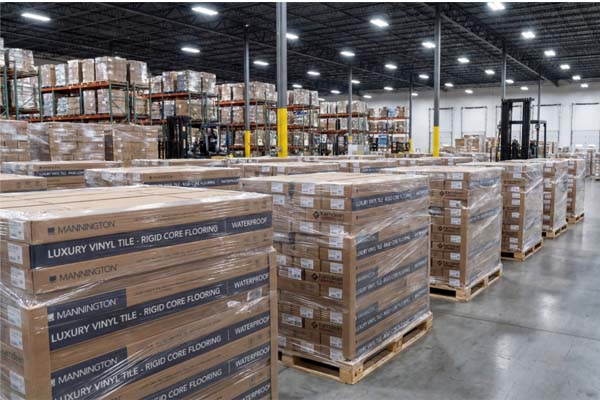
The Logistics of LVT dictate that thickness is the primary variable in determining how many pallets fit into a standard shipping vessel. Because 2mm LVT is significantly thinner than its 3mm counterpart, you can theoretically stack more layers per pallet without exceeding height restrictions. However, this increased density often pushes the container toward its maximum weight capacity long before the floor space is fully utilized.
Effective planning requires a deep understanding of the volumetric displacement of your specific flooring products. If you overlook the relationship between product gauge and pallet count, your landed cost per square meter will inevitably rise.
Calculating Volumetric Displacement
When you evaluate the square meter capacity of a 20ft container, you must look at the height of the carton stacks. 2mm products allow for approximately 15% more cartons per pallet compared to 3mm products while maintaining a safe center of gravity.
- 2mm LVT typically allows for 60-72 cartons per pallet.
- 3mm LVT generally restricts pallets to 45-54 cartons.
- Standard 20ft containers accommodate 10 to 12 pallets depending on configuration.
- Height limits in containers are usually capped at 2.3 meters for safe loading.
Maximizing The Stack Height
The real question is: how high can you go before the stack becomes unstable? In the world of LVT distribution, the answer depends on the structural integrity of your export-grade pallets and the compression strength of the cardboard packaging.
Think about it this way. If you stack 3mm LVT too high, the bottom cartons may buckle under the sheer weight of the dense vinyl above. This is why 2mm products are often preferred for long-haul maritime routes where stability is a concern.
Total Area Comparison
The square footage difference between a container filled with 2mm LVT versus one with 3mm LVT is staggering. For a typical B2B distributor, this difference represents thousands of dollars in potential sales volume that could be lost to inefficient packing.
Key Takeaway: 2mm LVT offers a significantly higher square-meter-to-weight ratio, allowing for higher volume shipments that lower the overall freight cost per unit.
| Thickness | Avg. SQM per 20ft Container | Avg. Pallet Count | Stack Height (Cartons) | |
|---|---|---|---|---|
| 2mm LVT | 3,200 – 3,500 | 10 – 12 | 60 – 70 | |
| 3mm LVT | 2,200 – 2,500 | 10 – 12 | 45 – 55 |
Choosing the 2mm option effectively increases your inventory replenishment speed by nearly 40% per shipping cycle.
Why is weight the primary constraint in LVT shipping?
Navigating the Logistics of LVT requires a firm grasp of the “heavy-rated” nature of luxury vinyl products. Unlike laminate or WPC, dryback LVT is a high-density material comprised largely of PVC and limestone fillers, making it exceptionally heavy for its size. This density means that a container will almost always hit its weight limit before it is physically full of boxes.
When you ignore weight limits, you risk heavy-load surcharges at the port or rejection by domestic trucking companies. Mastering the Logistics of LVT means balancing your order quantities so you sit right at the 27.5 to 28-ton threshold.
Density and Material Composition
LVT is significantly denser than other resilient flooring types because it lacks a foamed core or wood fiber base. This mass is what provides its superior durability and water resistance, but it is a double-edged sword during transport.
- Virgin PVC has a higher specific gravity than recycled fillers.
- Limestone content increases weight but can impact the flexibility of the plank.
- 2mm planks weigh approximately 3.8 to 4.2 kg per square meter.
- 3mm planks weigh approximately 5.6 to 6.2 kg per square meter.
Legal Weight Limits for Road Transport
Once the container leaves the port, it must comply with local axle weight regulations. In many regions, a “heavy” container requires specialized tri-axle chassis which can add significant costs to your drayage.
Here is the deal. If your container is loaded to 28 tons in China, but your local warehouse is in a “bridge law” state with strict axle limits, you might find yourself unable to move the cargo. Always cross-reference your factory loading plan with your local logistics provider’s capabilities.
Strategic Pallet Loading
To prevent the container from being “nose-heavy” or “tail-heavy,” pallets must be distributed evenly across the floor. This distribution is easier to manage with 3mm LVT because the pallets reach weight limits with fewer cartons, allowing for more spacing.
Key Takeaway: The high density of LVT means shipping costs are determined by weight rather than volume, making weight-optimization the most important factor in B2B procurement.
| Product Type | Weight per SQM (kg) | Max Container Weight (kg) | Max Possible SQM | |
|---|---|---|---|---|
| 2mm Dryback | ~4.0 | 28,000 | ~7,000 (Theoretically) | |
| 3mm Dryback | ~6.0 | 28,000 | ~4,600 (Theoretically) |
Weight limits act as a hard ceiling that prevents distributors from fully utilizing the vertical space inside a container.
Is 2mm LVT always more cost-effective for bulk transport?
Analyzing the Logistics of LVT reveals that 2mm products generally offer a lower landed cost per square meter. However, cost-effectiveness isn’t just about the shipping price; it’s about the marketability of the product and the risk of damage during transit. While you can fit more 2mm LVT in a container, the thinner planks are more susceptible to telegraphing subfloor imperfections, which might lead to higher claim rates.
For a distributor, the goal is to find the “sweet spot” where transport efficiency meets consumer demand. The Logistics of LVT involve weighing these operational efficiencies against your specific market’s quality expectations.
Freight Cost Amortization
By spreading the fixed cost of a sea freight container over a larger volume of square meters, you reduce your per-unit overhead. This is the most direct way to gain a competitive edge in price-sensitive commercial markets.
- Ocean freight is a fixed cost regardless of whether the container has 2,000 or 3,000 SQM.
- Port fees and documentation costs are also fixed per container.
- 2mm LVT allows you to amortize these costs over 30% more product.
- Lower landed costs allow for higher wholesale margins or more aggressive retail pricing.
Reducing Handling and Storage Costs
Because 2mm LVT takes up less physical space, your warehouse efficiency also improves. You can store more inventory in the same rack space, reducing your monthly storage cost per unit.
But wait, there’s more. Fewer pallets for the same amount of square footage means less time spent on the forklift and lower labor costs during the unloading process. This hidden efficiency can significantly impact your annual bottom line.
Market Demand vs. Shipping Logic
While shipping logic favors 2mm, the market might demand the 3mm thickness for its perceived quality and superior underfoot feel. You must decide if the freight savings of 2mm are worth the potential loss of premium-tier customers.
Key Takeaway: 2mm LVT is almost always the winner for pure freight efficiency, but distributors must balance these savings against market-specific quality requirements and plank performance.
| Metric | 2mm Efficiency | 3mm Efficiency | Benefit | |
|---|---|---|---|---|
| Freight per SQM | Lower | Higher | 2mm saves ~25% | |
| Storage Density | High | Moderate | 2mm saves space | |
| Loading Time | Faster | Slower | 2mm reduces labor |
Maximizing volume through 2mm products is the most effective strategy for high-volume, low-margin commercial projects.
How do 3mm products change your pallet configuration?
When dealing with the Logistics of LVT , 3mm products require a more conservative approach to palletization. Because each carton is heavier, you reach the maximum safe lifting weight of standard forklifts with fewer boxes. This leads to shorter pallets, which can be advantageous for stability but inefficient for space utilization if not handled correctly.
Distributors must work closely with manufacturers like Adasea to ensure that 3mm pallet configurations are optimized for both weight and safety. The Logistics of LVT aren’t just about what’s inside the box; they are about the geometry of the entire shipment.
Adjusting Pallet Tiers
With 3mm LVT, the number of “tiers” or layers of boxes on a pallet must be reduced to prevent the pallet from becoming a safety hazard. Shorter pallets have a lower center of gravity, which is excellent for rough sea conditions but creates empty “air” at the top of the container.
- Standard 3mm pallets are often limited to 8-10 tiers of boxes.
- 2mm pallets can safely reach 12-14 tiers in certain configurations.
- Heavier 3mm pallets may require specialized heavy-duty pallet wood.
- Overloading 3mm pallets can lead to “pallet spread,” where the wood base deforms under pressure.
Weight Distribution in the Container
Because 3mm pallets are heavier, you may only be able to load 10 pallets instead of the standard 20 (in a 40ft container) to stay within weight limits. This leaves a significant amount of empty space in the middle of the container, which must be braced to prevent shifting.
The truth is, shipping 3mm LVT often requires more dunnage and air bags to fill the gaps created by weight restrictions. This increases your material costs for the shipment and adds complexity to the unloading process.
Safety and Forklift Capacity
Your warehouse staff will thank you for properly configured 3mm pallets. If a pallet is too heavy for a standard 2.5-ton forklift, it creates a bottleneck in your distribution center and increases the risk of workplace accidents.
Key Takeaway: 3mm products force a shift toward heavier, shorter pallets that require more bracing and careful weight distribution within the shipping container.
| Configuration Element | 2mm Pallet | 3mm Pallet | Change | |
|---|---|---|---|---|
| Max Tiers | 14 | 10 | -28% | |
| Weight per Pallet | ~2,100 kg | ~2,300 kg | +10% | |
| Container Bracing | Minimal | Required | Increased Cost |
The increased weight of 3mm planks necessitates a more robust and careful palletization strategy to ensure safe and legal transport.
Can you mix thicknesses to maximize container utility?
One advanced strategy in the Logistics of LVT is the “mixed thickness” container. By combining a large order of 2mm LVT with a smaller quantity of 3mm LVT, you can often reach the maximum weight limit while filling more of the container’s volume. This requires precise calculation from the factory and a clear understanding of your current inventory needs.
This approach is particularly useful for distributors who service both budget-conscious commercial contractors and high-end residential clients. The Logistics of LVT allow for creative loading as long as the weight is balanced across the axles.
The Art of the Balanced Load
When mixing thicknesses, the heavier 3mm pallets should generally be placed over the container axles (the ends and the middle). The lighter 2mm pallets can then fill the remaining space, ensuring the container remains stable and easy to maneuver for the truck driver.
- Place 3mm pallets at the bottom of stacks if double-stacking is possible.
- Use 2mm inventory to “top off” the container’s weight limit.
- Keep similar thicknesses together to simplify the unloading process for your warehouse.
- Ensure the packing list clearly identifies the location of each thickness.
Inventory Optimization
Shipping mixed containers allows you to maintain a diverse product range without having to commit to a full container of each specific SKU. This is a massive advantage for smaller distributors who need to manage their cash flow and warehouse space carefully.
You might be wondering: does this complicate customs? As long as your documentation is meticulous and the HS codes are consistent, mixed containers are a standard practice in the flooring industry and won’t cause delays.
Calculating the Ratio
To find the perfect mix, you need to calculate the “weighted average density” of your shipment. This ensures you hit 27.8 tons exactly while providing the maximum variety of products to your customer base.
Key Takeaway: Mixed containers are a sophisticated way to maximize freight ROI by using 2mm products to fill volume and 3mm products to reach weight targets.
| Mix Ratio (2mm/3mm) | Estimated SQM | Total Weight (Tons) | Utilization | |
|---|---|---|---|---|
| 70% / 30% | ~3,100 | 27.5 | High Volume | |
| 50% / 50% | ~2,800 | 27.8 | Balanced | |
| 30% / 70% | ~2,500 | 27.9 | Heavy Weight |
Strategic mixing of product gauges allows distributors to optimize every shipment for both market variety and freight efficiency.
What are the hidden costs of overweight LVT shipments?
In the Logistics of LVT , pushing the limits of container weight can lead to unexpected expenses that erase your profit margins. Port authorities are increasingly strict about weight limits due to safety concerns and road wear. If your 3mm LVT order is even 500kg over the legal limit, you could face massive fines or be forced to “strip” the container at the port.
Distributors must treat weight limits as a hard boundary. The Logistics of LVT are only profitable when they are compliant with international and local shipping laws.
Port Surcharges and Fines
Many ports now use automated weigh-in-motion systems that flag overweight containers instantly. Once a container is flagged, it is moved to a “red zone” where it sits while you pay daily storage fees and administrative penalties.
- Overweight fines can range from 500to5,000 depending on the severity.
- Storage fees at the port (demurrage) can exceed $200 per day.
- Administrative “re-billing” fees from the shipping line add another layer of cost.
- The cost of hiring a crew to remove and re-palletize excess weight is exorbitant.
Drayage and Trucking Limitations
Even if the container passes the port, it still has to reach your warehouse. Most standard trucking companies cannot legally haul containers over 26 tons without a “heavy-haul” permit and a specialized chassis.
It gets worse. If you don’t inform your trucking partner that the container is heavy, they may refuse the load upon arrival at the port. This leads to missed delivery windows, unhappy customers, and additional “dry run” fees from the trucking company.
Equipment Wear and Tear
Heavier loads put more stress on the container itself and the warehouse equipment used to unload it. Consistent over-loading of pallets can lead to floor damage in your facility or damage to your forklift’s hydraulic systems.
Key Takeaway: The risks of shipping overweight containers far outweigh the benefits of squeezing in a few extra boxes; always stay within the 27.5-ton safety margin.
| Potential Issue | Estimated Cost | Delay Potential | Risk Level | |
|---|---|---|---|---|
| Port Fine | High | 3-5 Days | High | |
| Heavy Chassis Fee | 150−300 | 1 Day | Moderate | |
| Demurrage | $200+/day | Indefinite | High |
Strict adherence to weight limits is the only way to avoid the catastrophic “hidden” costs of international LVT logistics.
Does wear layer weight influence your shipping math?
The Logistics of LVT are subtly affected by the thickness of the wear layer (0.3mm, 0.5mm, or 0.7mm). While the wear layer is only a fraction of the total plank thickness, a thicker wear layer is made of pure, high-density PVC. When you are ordering thousands of square meters, the cumulative weight of a 0.7mm wear layer versus a 0.3mm wear layer can add up to several hundred kilograms per container.
For high-traffic commercial projects, you cannot compromise on the wear layer. However, you must account for this “invisible” weight when you are calculating your total container payload. The Logistics of LVT require precision at every decimal point.
Wear Layer Density vs. Core Density
The wear layer is often the densest part of the LVT plank. While the core contains limestone fillers, the wear layer is typically pure vinyl to ensure clarity and abrasion resistance.
- A 0.7mm wear layer adds approximately 0.4kg per SQM compared to a 0.3mm layer.
- In a full container (3,000 SQM), this difference equals 1.2 tons of cargo weight.
- This 1.2-ton difference could be the difference between 10 more cartons of flooring or an overweight fine.
- Always ask your manufacturer for the exact weight per SQM including the specific wear layer.
Balancing Performance and Payload
If you are shipping 3mm LVT with a 0.7mm wear layer, you are dealing with the heaviest possible configuration of dryback flooring. This product will have the lowest square footage per container, necessitating a very high retail price point to cover the freight.
Here is the deal. You should consider whether a 0.5mm wear layer on a 3mm plank might satisfy the project requirements while saving you enough weight to add more inventory to the container. It’s all about finding the balance between product performance and logistical efficiency.
Technical Specifications and Accuracy
Manufacturers often provide “average” weights in their catalogs. For precise logistics planning, you need the actual weight of the specific SKU, as different film designs and wear layer chemistries can vary in mass.
Key Takeaway: Even small variations in wear layer thickness can impact your total container weight by over a ton, requiring careful calculation during the ordering process.
| Wear Layer | Added Weight per SQM | Impact on 20ft Container | Best Use Case | |
|---|---|---|---|---|
| 0.3mm | Baseline | Max Volume | Residential | |
| 0.5mm | + 0.2 kg | Minor Reduction | Light Commercial | |
| 0.7mm | + 0.4 kg | ~1.2 Ton Increase | Heavy Commercial |
Distributors must include wear layer specs in their weight calculations to avoid unexpected “weight creep” in their shipments.
How do regional weight limits affect LVT distribution?
Understanding the Logistics of LVT requires a global perspective because weight regulations vary wildly between North America, Europe, and Southeast Asia. In the United States, the Federal Bridge Gross Weight Formula limits the total weight of the truck and cargo, often making it difficult to transport a fully-loaded 28-ton container without special permits.
Distributors who operate across different regions must adapt their order sizes accordingly. The Logistics of LVT that work in a port-adjacent warehouse in Singapore will not work for a distributor in landlocked Nebraska.
US vs. EU Shipping Standards
European roads often allow for higher gross vehicle weights than US interstate highways. This means a distributor in Germany can often accept a “max-weight” container that an American distributor would have to split into two smaller truckloads.
- US “Overweight” containers often require “Super-chassis” for legal transport.
- Many US states have “Frost Laws” in winter that temporarily lower weight limits.
- EU regulations allow for 40-44 ton gross vehicle weight in many corridors.
- Southeast Asian markets often have more flexible (though less predictable) weight enforcement.
The Cost of “Last Mile” Delivery
The further your warehouse is from the port, the more these regional weight limits matter. If you are shipping a heavy container of 3mm LVT into the US Midwest, your rail and trucking costs will be significantly higher than if you were delivering to a coastal city.
Think about it this way. If you have to pay a $500 “heavy weight” surcharge for every container, it might be more profitable to order 2mm LVT or slightly smaller 3mm loads to stay under the limit. Regional logistics costs can often dictate which product thickness you can competitively sell.
Strategic Warehouse Placement
Some distributors solve the weight problem by placing their primary distribution centers in “heavy-weight zones” near major ports. These zones have higher legal weight limits specifically to facilitate the movement of dense international cargo like LVT and stone.
Key Takeaway: Regional weight regulations are a major factor in the landed cost of LVT; distributors must tailor their order quantities to the specific legal limits of their destination.
| Region | Max Cargo Weight (Avg) | Specialized Equipment | Cost Impact | |
|---|---|---|---|---|
| USA | 19.9 – 21.7 Tons | Tri-axle Chassis | High | |
| Europe | 24 – 26 Tons | Standard | Moderate | |
| Australia | 20 – 22 Tons | Side-loader | Moderate |
Local road laws often serve as the final limiting factor in how much LVT you can efficiently ship in a single container.

Why should you prioritize dryback for container efficiency?
When you analyze the Logistics of LVT, dryback (glue-down) flooring is almost always more efficient to ship than SPC click flooring. While SPC has a rigid core that many customers prefer, it is even denser and thicker than dryback LVT. A 2mm or 3mm dryback product allows you to fit significantly more square meters into a container because it lacks the bulky locking mechanisms and integrated underlayment of click products.
For B2B distributors focusing on large-scale commercial tenders, dryback is the logistical gold standard. The Logistics of LVT favor the slim profile of glue-down products for maximizing international freight ROI.
Volume per Pallet: Dryback vs. Click
Dryback planks are flexible and thin, allowing them to be packed tightly with almost zero wasted space in the carton. Click products, however, require protective padding and more robust cardboard to protect the fragile locking “tongue and groove.”
- Dryback LVT can be packed 20-25 planks per box.
- SPC Click is often limited to 8-12 planks per box due to weight and thickness.
- Dryback boxes are thinner, allowing for more tiers on a pallet.
- The lack of an attached IXPE pad on dryback saves about 1mm to 1.5mm per plank.
Labor vs. Freight Trade-off
While dryback is cheaper to ship, it is more expensive to install. However, in the B2B world, the distributor is often primarily concerned with the landed cost of the material. By choosing dryback, you are moving more product for less money.
But wait, there’s more. Because dryback is so thin, it is much easier to handle in the warehouse. You can move 3,500 SQM of 2mm dryback with the same number of forklift movements it would take to move only 1,800 SQM of SPC.
Reducing Damage Claims
The locking systems on click flooring are the #1 source of shipping damage. Dryback LVT has no tongues to break or grooves to crush, meaning your “unsellable” rate due to shipping damage is nearly zero. This contributes to a much higher real-world profit margin per container.
Key Takeaway: Dryback LVT is the most logistically efficient flooring category, offering the highest square-footage density and the lowest risk of transit damage.
| Feature | Dryback (2mm/3mm) | SPC Click (5mm) | Winner | |
|---|---|---|---|---|
| Density | High | Very High | Dryback | |
| Wasted Space | Minimal | Moderate | Dryback | |
| Damage Risk | Very Low | Moderate | Dryback |
By focusing on dryback products, distributors can maximize their container utility and minimize the headache of shipping-related claims.
How does Adasea Flooring optimize your LVT logistics?
Partnering with a manufacturer that understands the Logistics of LVT is essential for your success. At Adasea Flooring, we don’t just manufacture high-quality vinyl; we engineer our packaging and loading plans to ensure you get the maximum possible value from every container. Whether you are ordering 2mm for a budget hotel chain or 3mm for a luxury office, we calculate the weights to the kilogram.
We provide our partners with detailed loading simulations before the container even arrives at our factory. This transparency in the Logistics of LVT allows you to plan your warehouse space and trucking in advance, eliminating surprises and hidden costs.
Factory-Direct Logistics Expertise
With 5 production lines and 35 years of export experience, we have seen every possible logistics challenge. We know how to pack a container to survive 45 days at sea and 500 miles on a truck.
- We use high-strength, export-grade pallets that exceed international standards.
- Our team provides precision loading diagrams for every custom order.
- We offer flexible MOQ to help you balance weights in mixed containers.
- We handle all documentation to ensure smooth customs clearance in your region.
Custom Loading Solutions
Do you have specific forklift limitations or narrow warehouse aisles? We can customize our pallet dimensions and carton weights to match your specific operational needs.
Here is the deal. Most factories use a “one size fits all” approach to loading. We treat your logistics as a strategic part of your business, offering custom bracing and pallet configurations that maximize safety and efficiency.
Strategic Partnership for Growth
Our goal is to see your business grow. By helping you optimize your container weight and volume, we lower your landed costs, making you more competitive in your local market. When you succeed, we succeed.
Key Takeaway: Adasea Flooring provides the technical expertise and customized loading plans necessary to turn LVT logistics from a challenge into a competitive advantage.
| Adasea Service | Benefit to Distributor | Result | |
|---|---|---|---|
| Loading Simulations | No wasted space | Lower Landed Cost | |
| Custom Palletizing | Matches your warehouse | Lower Labor Cost | |
| Weight Balancing | No overweight fines | Zero Hidden Fees |
Working with a logistics-aware manufacturer is the final step in mastering the complex world of international LVT distribution.
At Adasea Flooring, we believe that the best flooring solutions are built on a foundation of operational excellence. We are committed to providing you with the data, the quality, and the logistical support you need to lead your market. If you are ready to optimize your supply chain and increase your margins, contact us today to discuss your next LVT shipment.
Frequently Asked Questions
Can I mix 2mm and 3mm LVT in the same container?Yes, mixing thicknesses is a common strategy to maximize container weight and volume. We recommend placing the heavier 3mm pallets in the center and ends of the container for better weight distribution during transport.
How many square meters of 2mm LVT fit in a 20ft container?A standard 20ft container can typically accommodate between 3,200 and 3,500 square meters of 2mm dryback LVT, depending on the pallet configuration and the weight limits of the destination port.
Is 3mm LVT significantly heavier than 2mm LVT?Yes, 3mm LVT is approximately 50% heavier per square meter than 2mm LVT. This means you will reach your container’s weight limit much faster with 3mm products, leading to a lower total square footage per shipment.
What is the maximum weight for an LVT container?While 20ft containers can physically hold more, the international standard for “heavy” cargo like LVT is usually capped at 27.5 to 28 tons (including the weight of the container itself) to ensure road safety and compliance.
Does wear layer thickness affect my shipping costs?Slightly. Thicker wear layers add more pure PVC mass to the plank. While the difference per plank is small, over an entire container of 3,000 square meters, it can add up to 1.2 tons of additional weight.