
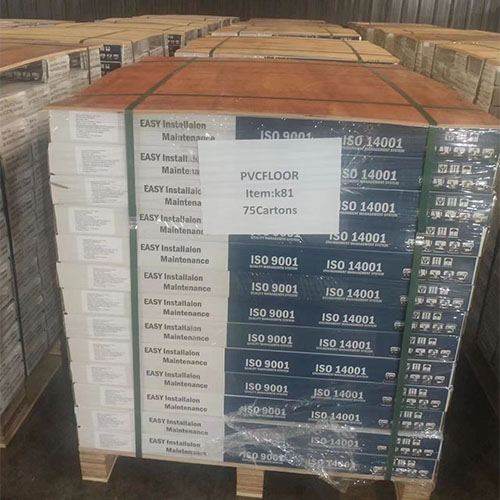
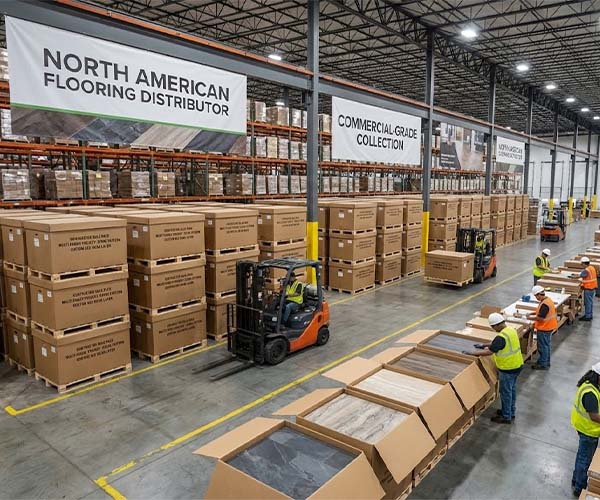
Professional Packaging and Palletization is the only way to guarantee that your Luxury Vinyl Tile (LVT) arrives at its destination without costly corner damage. For flooring distributors, receiving a container only to find the click-lock systems crushed or the aesthetic corners blunted is a logistical nightmare. This damage forces you to navigate frustrating insurance claims and strains your relationships with sub-dealers who expect pristine stock. By implementing a multi-layered Packaging and Palletization strategy, you can eliminate these profit-draining headaches and ensure a 99% damage-free arrival rate for every shipment.
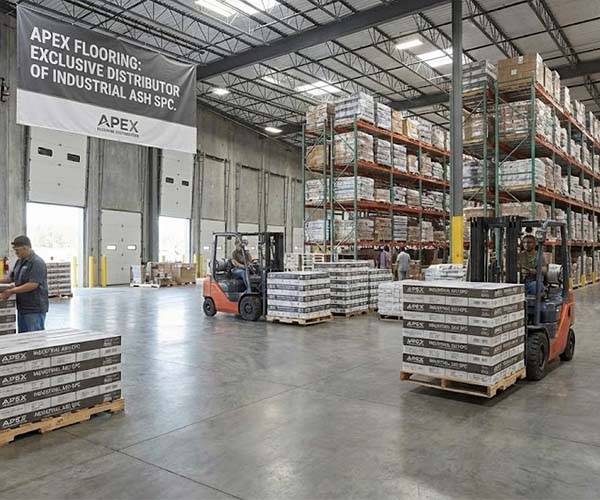
Why is professional packaging critical for LVT distributors?
Professional packaging serves as the primary barrier against mechanical stress and moisture during long-haul maritime shipping. Because LVT is dense and heavy, the cumulative pressure on the bottom layers of a container can be immense. High-quality Packaging and Palletization protocols protect the structural integrity of each plank.
Think about it: If the packaging fails, the product is effectively worthless upon arrival.
- It prevents the warping of planks during temperature fluctuations.
- It protects the delicate tongue-and-groove click systems.
- It maintains the retail-ready appearance of the outer cartons.
Does quality packaging save money?
High-burst strength cardboard acts as a shock absorber against the vibrations of the sea. Without it, the friction between planks can lead to micro-scratches that ruin a premium finish.
Look: A small investment in superior materials prevents a massive loss in unsellable inventory.
- Reduced return rates from unhappy contractors.
- Lower administrative costs for processing damage claims.
- Faster turnaround times from dock to showroom.
Key Takeaway: Investing in professional packaging is a preventative measure that safeguards your profit margins and maintains your reputation for quality in the competitive flooring market.
| Protection Level | Component Used | Primary Benefit | |
|---|---|---|---|
| Primary | Burst-Resistant Cardboard | Impact absorption and vertical strength | |
| Secondary | Internal Padding | Prevents plank-to-plank friction | |
| Tertiary | Reinforced Corners | Defends against external crushing |
Advanced packaging transforms a commodity product into a reliable asset by neutralizing the physical risks of global trade.
How does improper palletization lead to corner damage?
Improper palletization often results in “pallet overhang,” where boxes extend past the wooden base and absorb 100% of the impact during container handling. When Packaging and Palletization is not executed with precision, the structural load is transferred to the most vulnerable part of the product—the corners.
The best part? You can easily spot these errors before the container is even sealed if you know what to look for.
- Misaligned stacks that create uneven pressure points.
- Missing edge protectors that allow strapping to bite into boxes.
- Using pallets that are too small for the carton dimensions.
What happens when loads shift?
Kinetic energy is the enemy of heavy flooring during ocean freight transits. If the pallets are not secured tightly, even a two-millimeter shift can exert enough force to crush a stack of ten planks instantly.
Consider this: A single shifting pallet can trigger a domino effect across the entire container.
- Horizontal movement leads to side-wall impacts.
- Vertical vibration causes bottom-tier compression failure.
- Loose strapping allows individual cartons to slide out of alignment.
Key Takeaway: Precision in pallet alignment and sizing is non-negotiable for ensuring that the heavy weight of LVT does not become the cause of its own destruction.
| Failure Point | Cause | Result | |
|---|---|---|---|
| Overhang | Incorrect pallet size | Crushed carton corners | |
| Shifting | Inadequate strapping | Structural damage to click locks | |
| Vibration | Lack of dunnage | Surface abrasions and micro-cracks |
Strategic palletization ensures that the pallet base, rather than the product, bears the brunt of the logistical journey.
What are the key components of a secure LVT shipping box?
A secure LVT shipping box requires high-burst strength corrugated cardboard paired with internal cushioning to neutralize internal movement. When selecting LVT Flooring , the quality of the box is just as important as the wear layer of the tile itself. Effective Packaging and Palletization starts at the individual carton level.
Here is the deal: Standard boxes are rarely enough for the rigors of international shipping.
- 5-layer corrugated cardboard for maximum puncture resistance.
- Moisture-resistant coatings to prevent box softening.
- Precision-cut dimensions that leave zero room for internal sliding.
Why is internal padding necessary?
Internal foam inserts or plastic corner caps provide a final layer of defense inside the box. These components ensure that if the outer carton is bumped, the energy is dissipated before it reaches the flooring.
Wait, there’s more: Internal protection also prevents the planks from damaging each other.
- Soft foam layers prevent finish transfers.
- Reinforced end-caps protect the click-lock profiles.
- Wax-paper dividers reduce friction-induced heat.
Key Takeaway: A high-performance shipping box acts as an exoskeleton, shielding the fragile LVT planks from both external impacts and internal friction.
| Box Component | Material Standard | Function | |
|---|---|---|---|
| Outer Shell | 200 lb. Test Corrugated | Structural integrity and stacking strength | |
| Internal Caps | High-Density Polyethylene | Corner impact neutralization | |
| Coating | Water-Resistant Finish | Humidity and moisture barrier |
The synergy between the outer shell and internal padding creates a “safety cell” that preserves the product’s value.
Why do we use reinforced edge protectors for transit?
Reinforced edge protectors are vital because they distribute strap tension across the pallet surface rather than concentrating pressure on vulnerable box corners. Within our Packaging and Palletization standards, these protectors are the difference between a stable load and a crushed shipment.
Simply put: Strapping is necessary for stability, but it can be destructive without protection.
- V-board protectors prevent “strap bite” into the cardboard.
- They reinforce the vertical stacking strength of the pallet.
- They allow for higher tensioning of the plastic or steel wraps.
Multi-layered cardboard vs. plastic?
We prefer high-density compressed cardboard (V-board) because it offers superior impact absorption compared to brittle plastic alternatives. Cardboard edge protectors can deform slightly to absorb energy while maintaining their overall shape.
The result? Your pallets remain square and stable throughout multiple handling points.
- Enhanced resistance to side-impacts from forklifts.
- Improved load distribution for double-stacked pallets.
- Consistent tensioning across all four corners of the stack.
Key Takeaway: Edge protectors are an inexpensive but essential hardware component that allows for the tightest possible pallet binding without damaging the product.
| Protector Type | Material | Best For | |
|---|---|---|---|
| Heavy-Duty V-Board | Compressed Fiber | Long-haul maritime shipping | |
| Plastic Corner Guard | Molded Polymer | Short-distance local distribution | |
| Full-Length Edge | Multi-ply Kraft | Maximum vertical stacking support |
Using the right protectors ensures that the forces required to keep a pallet stable do not inadvertently destroy the product corners.
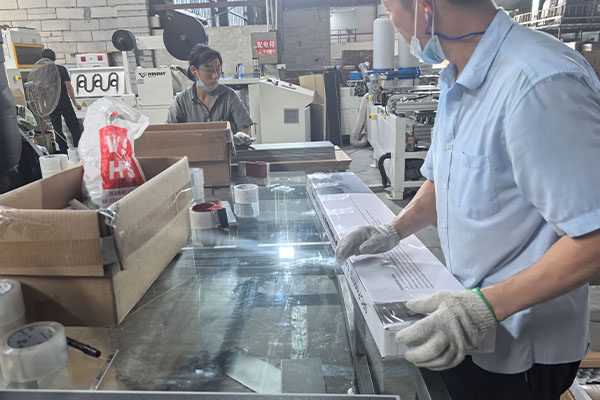
How does moisture protection play into shipping safety?
Moisture protection involves using PE stretch film to create a hermetic seal that prevents box softening in high-humidity tropical shipping routes. For products like SPC Flooring , which feature a stone-polymer core, the tiles themselves are waterproof, but the Packaging and Palletization components are not.
Bottom line: Wet cardboard is weak cardboard.
- Stretch film blocks humid salt air from reaching the cartons.
- It prevents condensation from forming inside the pallet stack.
- It protects against light rain during dockside loading.
What is the role of humidity control?
When cardboard boxes absorb moisture, their stacking strength can drop by as much as 50%. This softening leads to “pallet lean,” where the entire stack tilts, causing corners to grind against each other.
Look: A dry pallet is a stable pallet.
- Desiccant packs can be added to the container for extra safety.
- Multi-layer wrapping creates a barrier against sea spray.
- Top-sheet covers prevent dust and water from entering the core.
Key Takeaway: Maintaining a dry environment through heavy-duty wrapping is essential for preserving the structural strength of the cardboard boxes during transit.
| Humidity Guard | Method | Protection Level | |
|---|---|---|---|
| Stretch Wrap | 5+ Layers of PE Film | Primary moisture barrier | |
| Top Cap | Polyethylene Sheet | Prevents water pooling on top | |
| Container Desiccant | Silica or Calcium Chloride | Absorbs ambient container moisture |
Moisture protection is a critical secondary function of the palletization process that directly affects the mechanical safety of the floor.
What is the optimal way to stack LVT to prevent compression?
The optimal stacking method for LVT is a “brick-stack” pattern that maximizes vertical load distribution while limiting tier heights to prevent bottom-box crushing. Within our Packaging and Palletization framework, we prioritize the “Column-Stack” methodology for heavy rigid-core products to ensure every box corner is supported by the one below it.
Think about it: Weight distribution is a matter of physics.
- Perfect vertical alignment transfers weight to the pallet base.
- Staggered stacking can create “shear” forces on box walls.
- Limiting the number of tiers prevents the bottom cartons from buckling.
Why is tier height limited?
Even the strongest cardboard has a “crush point.” By strictly adhering to maximum tier counts, we ensure that the bottom layer of LVT remains in perfect condition even under the pressure of a full container.
The best part? This standardization makes your warehouse management much more predictable.
- Easier counting of inventory upon arrival.
- Safer movement within your racking systems.
- Uniform weight distribution for forklift safety.
Key Takeaway: Controlled stacking patterns and height limits prevent the massive weight of LVT from becoming a liability during the voyage.
| Stacking Method | Visual Alignment | Best Use Case | |
|---|---|---|---|
| Column-Stack | Vertical corners aligned | Heavy SPC and LVT products | |
| Brick-Stack | Staggered joints | Lighter residential vinyl planks | |
| Tier-Limit | 8-10 layers maximum | Preventing bottom-tier compression |
A disciplined stacking approach is the foundation of a damage-free supply chain for heavy flooring materials.
How does container loading density affect product safety?
High container loading density, achieved through the use of dunnage bags, eliminates empty space and prevents the catastrophic shifting of pallets during maritime maneuvers. Professional Packaging and Palletization must extend beyond the individual pallet to how those pallets interact within the steel walls of the shipping container.
Look: Empty space is the enemy of a safe shipment.
- Dunnage bags fill the gaps between pallet rows.
- Friction mats prevent pallets from sliding on the container floor.
- Proper weight balancing keeps the container stable on the vessel.
What are dunnage bags?
Dunnage bags are heavy-duty inflatable bladders that are placed in the voids between pallets. Once inflated, they lock the cargo into a single, immovable block.
Here is the deal: If the cargo cannot move, it cannot be damaged.
- They absorb shocks from rough seas.
- They maintain the vertical alignment of the pallets.
- they are easy for your team to deflate and remove upon arrival.
Key Takeaway: Securing the “last mile” of the shipping process inside the container is just as important as the quality of the boxes themselves.
| Loading Tool | Description | Benefit | |
|---|---|---|---|
| Dunnage Bags | Inflatable air pillows | Fills voids and locks pallets | |
| Friction Mats | Rubberized floor liners | Prevents sliding during transit | |
| Cargo Netting | Heavy-duty nylon mesh | Secures the doorway of the container |
A fully-secured container ensures that the precision palletization work done at the factory is not undone by a single rough wave.
Can customized branding on packaging improve your business?
Customized branding on packaging improves your business by establishing professional credibility and creating a high-end unboxing experience for your retail customers. When you combine Packaging and Palletization with private labeling, you elevate your brand in the eyes of sub-dealers and contractors. For instance, branding is often applied to high-turnover products like Loose-lay Flooring .
The best part? Professional branding serves as a marketing tool long after the product leaves our factory.
- It differentiates your product from generic wholesale stock.
- It provides clear installation instructions and QR codes.
- It builds trust with professional installers who recognize the quality.
Why does unboxing matter?
In the B2B world, the first physical interaction a client has with your brand is the pallet arriving at their warehouse. A clean, branded, and well-secured pallet signals that you care about quality at every level.
Consider this: A disorganized, damaged shipment instantly lowers the perceived value of the product inside.
- Branded pallet wraps increase visibility in the warehouse.
- Custom boxes can include specific safety and handling icons.
- Professional labeling speeds up the receiving and scanning process.
Key Takeaway: Custom packaging is an investment in brand equity that pays dividends through customer loyalty and perceived product value.
| Branding Element | Implementation | Impact | |
|---|---|---|---|
| Custom Box Print | Multi-color logo and text | High retail visibility | |
| Branded Pallet Wrap | Logo-printed stretch film | Anti-tamper and brand recognition | |
| Integrated QR Codes | Links to installation videos | Reduced support calls and errors |
Merging logistics safety with brand marketing creates a competitive advantage that generic distributors cannot match.
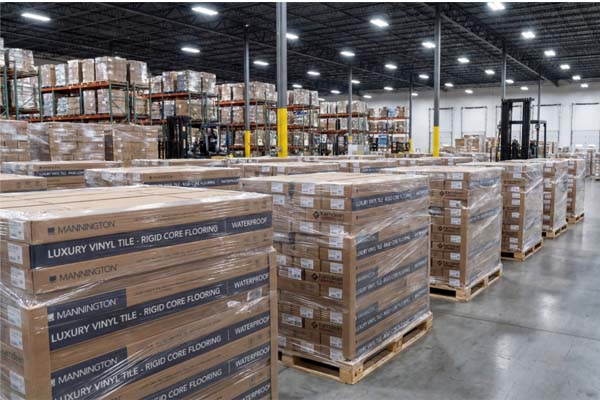
Why is the unboxing experience important for sub-dealers?
A seamless unboxing experience is important for sub-dealers because it reduces warehouse labor costs and ensures the product is immediately ready for retail display. High-quality Packaging and Palletization means that your sub-dealers spend less time sorting through damaged boxes and more time selling.
Look: Happy sub-dealers are the lifeblood of a distributor’s business.
- Easy-to-open boxes reduce the risk of accidental knife damage.
- Uniform pallet sizes fit perfectly into standard retail racking.
- Clean cartons can go straight from the pallet to the showroom floor.
Does it affect labor costs?
When pallets are delivered in perfect condition, warehouse staff can unload and scan the shipment in half the time. There is no need for “re-boxing” or sorting through crushed corners.
Think about it: Efficiency in the warehouse translates to better margins for everyone.
- Faster inventory turnover for the sub-dealer.
- Zero “dead stock” caused by shipping damage.
- Simplified waste management with recyclable materials.
Key Takeaway: Providing a clean, damage-free unboxing experience builds long-term trust and operational efficiency throughout your entire distribution network.
| Unboxing Factor | Feature | Benefit | |
|---|---|---|---|
| Box Design | Tear-strip or easy-access flaps | Rapid access without product damage | |
| Pallet Integrity | Square, non-leaning stacks | Safe and fast forklift operations | |
| Documentation | Weather-proof packing slips | Instant verification of inventory |
A professional unboxing experience is the final confirmation of quality that cements your status as a top-tier supplier.
How can you request a custom packaging quote from Adasea?
You can request a custom packaging quote by contacting our logistics team with your specific pallet dimensions and racking system requirements. We understand that every warehouse has different needs, and our Packaging and Palletization services are designed to be as flexible as our flooring solutions.
The best part? We provide detailed shipping specifications before you even place your order.
- Custom pallet heights to match your vertical racking.
- Private label box designs tailored to your brand identity.
- Specialized loading plans for mixed-product containers.
What should you include in your request?
To give you the most accurate quote, we need to know your destination port and any local handling requirements. Different regions have different standards for heat-treated pallets (ISPM 15) and weight limits.
Bottom line: The more information we have, the better we can protect your investment.
- Specify your preferred pallet material (wood vs. plastic).
- Outline any specific branding or labeling requirements.
- Mention if you require double-stacking capability for storage.
Key Takeaway: Personalized shipping consultations ensure that your LVT arrives exactly how you need it, ready for immediate sale or storage.
Conclusion
Effective packaging and palletization is not just a logistics checkbox; it is a critical component of product quality and business stability. By solving the problems of corner damage, moisture infiltration, and container shifting, Adasea Flooring ensures that your investment is protected from the factory floor to your customer’s door. We offer comprehensive solutions including reinforced edge protection, moisture-resistant barriers, and custom branding that elevate your brand and reduce your operational risks.
Our vision is to provide global distributors with the most reliable flooring supply chain in the industry, backed by 35+ years of export excellence. If you are ready to eliminate shipping damage and build a more profitable flooring business, we invite you to contact us today for a detailed logistics consultation.
FAQ
Can I customize the box design with my logo?
Yes, absolutely. Adasea offers full OEM support, including custom-printed boxes and branded pallet wraps for orders that meet our minimum volume requirements.
What is the best way to handle pallets upon arrival?
We recommend using a forklift with extended tines to ensures the pallet is lifted evenly from the center. This prevents torque on the bottom layer of boxes and protects the structural integrity of the stack.
How do I know if my supplier is using high-quality palletization?
You should check for the presence of rigid V-board corner protectors, at least five layers of high-tension stretch wrap, and the use of heat-treated (ISPM 15) pallets. If these are missing, your product is at high risk.
Can I request specific pallet dimensions for my racking?
Yes, we can customize pallet height and width to ensure they fit perfectly into your existing warehouse racking systems. Simply provide your dimensions during the quoting process.
What is the best material for corner protectors?
We recommend high-density compressed cardboard (V-board) as it provides superior impact absorption compared to brittle plastic. It is durable enough to withstand strap tension while being flexible enough to absorb shocks.