
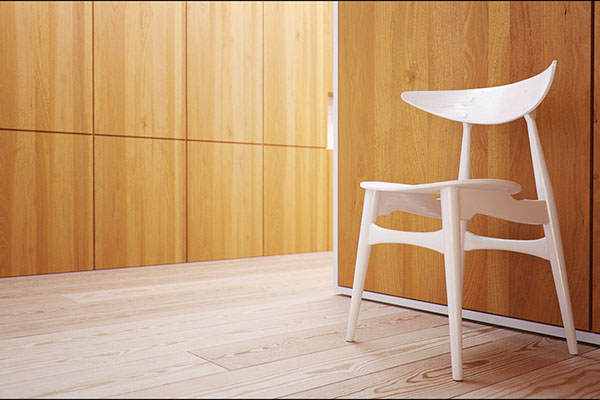
Hotels are switching to stone-look LVT because it offers vastly superior sound dampening, lower lifecycle costs, and significantly faster installation compared to traditional ceramic tiles. Imagine a guest settling in for a quiet night, only to be jolted awake by the sharp “click-clack” of high heels echoing through the corridor or the rolling thunder of a housekeeping cart on hard tile. This persistent noise issue is the number one cause of negative guest reviews and refund requests in the hospitality industry. By implementing modern Acoustic Flooring , you can eliminate these auditory pain points while maintaining the premium marble or slate aesthetic that defines luxury properties.
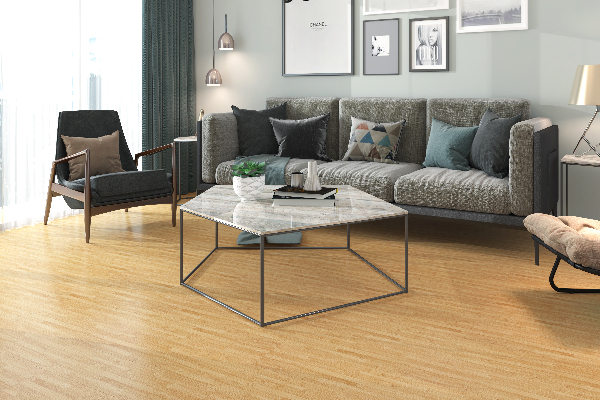
Why are hotels choosing stone-look LVT over tile?
Hotels are choosing stone-look LVT because it provides a resilient, quiet, and cost-effective alternative to brittle ceramic products. While stone has been the luxury standard for decades, its inherent flaws—coldness, noise amplification, and difficult repair—are driving developers toward high-performance vinyl.
The shift in guest expectations
Today’s travelers prioritize comfort and quiet above all else when selecting a stay. You need a floor that looks like high-end marble but performs like a high-tech insulator.
Look: The days of sacrificing guest comfort for “real” stone are over.
- Superior impact sound absorption for peaceful stays.
- Warm tactile feel for bare feet in bathrooms.
- High-definition visuals that replicate natural stone textures.
The best part? You get the prestige of stone without the maintenance nightmares.
Key Takeaway: The transition to LVT is driven by a need to balance high-end aesthetics with the practical demands of guest comfort and operational efficiency.
Does Acoustic Flooring solve the noise complaint issue?
Acoustic Flooring solves noise complaints by absorbing up to 20dB of impact sound, effectively silencing footfalls and rolling luggage. Unlike ceramic tiles that reflect sound waves and create an “echo chamber” effect, LVT is engineered to dissipate energy before it travels through the subfloor.
Reducing impact and airborne noise
Silence is often the most overlooked luxury in a hotel room. By choosing a material with integrated underlayment, you ensure that activities in one room don’t disturb the guests below or next door.
Truth be told: Noise is the silent killer of brand loyalty.
- Multi-layer construction traps sound vibrations.
- Pre-attached IXPE pads eliminate the hollow “drum” sound.
- Softened acoustics in high-traffic hallways.
You see, a quiet environment directly correlates to higher guest satisfaction scores and repeat bookings.
Engineering a peaceful environment
Acoustic performance is no longer an optional upgrade; it is a fundamental requirement for modern building codes. You can achieve these standards more easily with flexible LVT than with heavy, loud masonry.
Believe it or not: LVT can reduce impact sound transmission by nearly 50% compared to bare ceramic.
- Meets and exceeds commercial IIC (Impact Insulation Class) ratings.
- Reduces the need for additional expensive soundproofing layers.
- Creates a “soft” auditory environment in large lobbies.
Key Takeaway: Integrated acoustic layers turn every guest room into a private sanctuary, free from the disruptions of neighboring traffic.
| Feature | Stone-Look LVT | Ceramic Tile | |
|---|---|---|---|
| Sound Reduction | 18dB – 22dB | 5dB – 8dB | |
| Impact Absorption | High | Very Low | |
| Echo Control | Excellent | Poor |
This comparison highlights why LVT is the superior choice for maintaining a quiet, professional atmosphere in multi-story buildings.
How does LVT durability compare to traditional ceramics?
Stone-look LVT is more durable than ceramic because it is shatterproof and resistant to the chipping that often plagues natural stone in high-traffic areas. While ceramic is technically “harder,” its brittleness makes it susceptible to permanent damage when heavy objects like luggage or furniture are dropped.
Impact and crack resistance
Hotel floors take a beating from heavy housekeeping carts and constant guest arrivals. You need a surface that can withstand these impacts without developing unsightly “spider-web” cracks.
Think about it: One dropped iron shouldn’t result in a $500 repair bill.
- Resilient core absorbs shocks without fracturing.
- Flexible enough to handle minor subfloor movement.
- Scratch-resistant wear layers for long-term clarity.
To put it simply, LVT thrives where ceramic typically fails under pressure.
Grout-free surface protection
One of the greatest weaknesses of tile is the grout, which inevitably stains, cracks, and harbors bacteria over time. By eliminating grout lines, you remove the primary failure point of the entire flooring system.
Look: Maintaining a pristine look is much easier when there are no lines to scrub.
- Seamless-look click joints prevent water seepage.
- Uniform surface strength across the entire floor.
- No risk of grout crumbling or discoloration.
Key Takeaway: The structural flexibility of vinyl provides a longer functional lifespan in demanding hospitality environments than rigid ceramic.
| Durability Factor | Stone-Look LVT | Ceramic Tile | |
|---|---|---|---|
| Impact Resistance | Excellent (Shatterproof) | Low (Brittle) | |
| Crack Risk | Near Zero | High | |
| Stain Resistance | High (Non-porous) | Moderate (Grout stains) |
The data confirms that LVT’s resilience makes it a more reliable long-term investment for high-traffic zones.
Can Acoustic Flooring reduce your maintenance budget?
Acoustic Flooring can reduce your maintenance budget by up to 30% by eliminating the need for professional grout cleaning and periodic stone polishing. You can keep your floors looking “day-one” fresh with nothing more than a damp mop and a neutral cleaner.
Simplified cleaning protocols
In the hotel business, time is money, and labor is your biggest expense. You can speed up room turnover times by providing your housekeeping staff with a surface that cleans instantly.
The best part? There is no need for heavy-duty steam cleaners or toxic chemicals.
- 100% waterproof surface resists spills and stains.
- Quick-dry properties reduce slip-and-fall risks.
- Non-porous wear layer prevents deep-set dirt.
As it turns out, a simpler cleaning routine leads to a more efficient and productive staff.
Lowering repair and replacement costs
When a ceramic tile chips, the entire piece must be jackhammered out, creating dust and noise that can disrupt guests in adjacent rooms. With LVT, a damaged plank can be replaced in minutes without specialized tools.
Look: Repairs should be a minor task, not a major construction project.
- Easy individual plank replacement.
- No dust or debris during the repair process.
- Consistent color matching for future repairs.
Key Takeaway: Reduced labor hours and simplified repair processes translate directly into significant annual savings for your facility management budget.
| Maintenance Task | Stone-Look LVT | Ceramic Tile | |
|---|---|---|---|
| Grout Scrubbing | Not Required | Periodic | |
| Polishing/Sealing | Never Needed | Recommended | |
| Repair Difficulty | Low | High |
This breakdown illustrates the operational advantages of choosing a low-maintenance resilient surface over traditional masonry.
Why do luxury hotels prefer stone-effect LVT visuals?
Luxury hotels prefer stone-effect LVT visuals because high-definition digital printing now offers a level of realism that is indistinguishable from natural marble or slate. You can achieve the high-end “wow factor” of a five-star lobby at a fraction of the cost of real stone.
Photorealistic stone textures
Modern manufacturing allows for “Registered Embossed” technology, where the surface texture perfectly matches the visual pattern of the stone. When your guests see a grain or a mineral vein, they can actually feel it underfoot.
Believe it or not: Your guests won’t be able to tell the difference.
- High-definition 3D print films.
- Matte finishes that mimic honed stone.
- Wide variety of patterns to prevent repetition.
In fact, you get the prestige of the Italian Alps without the logistical headache of importing heavy slabs.
Brand-specific design flexibility
LVT allows for custom colors and patterns that can be tailored to match your brand’s specific aesthetic requirements. You are no longer limited by what is naturally available in a quarry.
Look: Your floor should be as unique as your brand identity.
- Custom sizing and format options.
- Ability to mix stone and wood looks seamlessly.
- Large-format tiles for an expansive, luxurious feel.
Key Takeaway: Luxury properties no longer have to compromise on style to get performance; modern LVT delivers a premium visual experience.
| Aesthetic Feature | Stone-Look LVT | Ceramic Tile | |
|---|---|---|---|
| Pattern Consistency | High (Controlled) | Low (Natural variation) | |
| Format Sizes | Flexible (Up to 1200mm) | Fixed | |
| Texture Realism | Excellent | Standard |
By selecting LVT, designers gain full control over the visual narrative of the space without the limitations of natural materials.
Will Acoustic Flooring shorten your renovation schedule?
Acoustic Flooring can shorten your renovation schedule by 50% or more because it can often be installed directly over existing hard surfaces. This eliminates the time-consuming and messy demolition phase, allowing you to get rooms back in service faster.
Eliminating demolition downtime
Every day a room is “out of order” is a day of lost revenue. By choosing an overlay-friendly solution, you can renovate an entire floor without the dust and noise of jackhammers.
Truth be told: Speed to market is the ultimate competitive advantage.
- No thin-set or grout drying times.
- Click-lock systems allow for immediate traffic.
- Minimal subfloor preparation required.
You see, a faster renovation means a faster return on your investment and less disruption for your remaining guests.
Rapid deployment systems
Modern loose-lay and click-lock systems are designed for high-speed installation by professional crews. You can often finish a standard guest room in just a few hours rather than days.
The best part? You don’t need a team of specialized masons to get a perfect finish.
- Lightweight planks are easier to transport.
- Simple tools lead to faster cutting and fitting.
- Minimal noise during the installation process.
Key Takeaway: LVT is the ideal solution for “live” hotel environments where minimizing construction impact is critical for maintaining operations.
| Renovation Step | LVT Installation | Ceramic Installation | |
|---|---|---|---|
| Demolition | Often Unnecessary | Required | |
| Drying Time | Zero | 24 – 48 Hours | |
| Occupancy | Immediate | Delayed |
This timeline comparison proves that LVT is the most efficient choice for property refreshes and full-scale renovations.
Is stone-look LVT a safer option for hotel guests?
Stone-look LVT is a safer option because it offers higher slip-resistance ratings and a slightly resilient surface that reduces the severity of injuries from accidental falls. In a hospitality environment, managing liability and ensuring guest safety is a top priority.
Advanced slip resistance
Wet ceramic tile is a major hazard in hotel lobbies and bathrooms. LVT is engineered with micro-textures that provide excellent grip even when the surface is damp.
Look: Safety should be built into every square inch of your floor.
- Meets ADA (Americans with Disabilities Act) standards.
- High COF (Coefficient of Friction) ratings.
- Consistent performance across wet and dry areas.
To be honest, preventing one slip-and-fall accident can save your hotel thousands in legal and insurance costs.
Ergonomic benefits for everyone
The slight “give” in resilient flooring is much easier on the joints of your guests and staff. For employees who are on their feet for eight-hour shifts, the difference is noticeable and appreciated.
Believe it or not: A softer floor leads to a more productive workforce.
- Reduced foot and back fatigue for staff.
- Safer for elderly guests and children.
- Energy-absorbing core for better joint health.
Key Takeaway: Transitioning to LVT is a proactive step in risk management and guest wellness, providing a safer environment for all.
| Safety Factor | Stone-Look LVT | Ceramic Tile | |
|---|---|---|---|
| Slip Resistance | High (Textured) | Low (Slick when wet) | |
| Impact Cushioning | Resilient | None (Hard) | |
| Joint Fatigue | Low | High |
The safety profile of LVT makes it an essential component of a responsible hospitality design strategy.
Does Acoustic Flooring improve the room’s thermal feel?
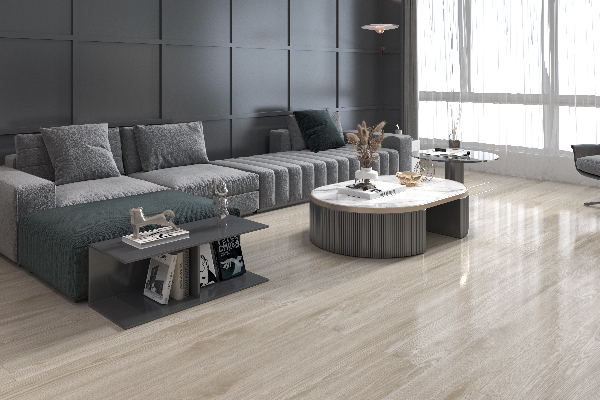
Acoustic Flooring improves thermal comfort by acting as an insulator, preventing the “ice-cold” sensation associated with stone and ceramic. This makes guest rooms feel much more inviting, especially in the early morning or in colder climates.
Thermal insulation benefits
Ceramic tile naturally leaches heat from the room, making it feel colder than it actually is. LVT maintains a temperature much closer to the ambient air, providing a cozy experience for bare feet.
Look: Comfort is a luxury that guests feel immediately.
- Reduces the “cold floor” shock in bathrooms.
- Helps maintain consistent room temperatures.
- Lowers the strain on HVAC systems.
In other words, you are creating a more welcoming atmosphere while potentially lowering your energy bills.
Creating a warmer atmosphere
The tactile warmth of vinyl contributes to the overall perception of room quality. A guest who feels physically comfortable is much more likely to leave a positive review and return in the future.
The best part? You get this warmth without the need for expensive underfloor heating systems.
- Natural warmth without electricity.
- Enhances the “home away from home” feeling.
- Perfectly suited for luxury suites and boutique rooms.
Key Takeaway: LVT provides a multi-sensory upgrade to the guest experience by addressing both auditory and thermal comfort.
| Comfort Metric | Stone-Look LVT | Ceramic Tile | |
|---|---|---|---|
| Surface Temp | Warm/Ambient | Cold | |
| Heat Retention | Good | Poor | |
| Barefoot Comfort | High | Low |
The data confirms that LVT significantly enhances the physical comfort of the guest environment compared to masonry.
Is LVT better suited for high-traffic luxury lobbies?
LVT is better suited for high-traffic luxury lobbies because its 0.7mm wear layer and rigid SPC core can withstand thousands of daily footfalls without showing signs of wear or becoming slippery. It offers the grand aesthetic of stone slabs with the industrial-grade performance required for 24/7 operations.
Handling extreme traffic loads
Lobbies are the hardest-working spaces in any hotel. You need a floor that can handle the constant movement of heavy luggage, rolling carts, and delivery equipment.
Believe it or not: LVT is engineered for the world’s busiest spaces.
- Superior scratch and scuff resistance.
- Dimensional stability under heavy rolling loads.
- UV-cured topcoat prevents fading from lobby windows.
As it turns out, LVT maintains its “new” look much longer than polished stone, which can dull and scratch within months.
Making a grand first impression
The lobby sets the tone for the entire guest stay. By using large-format stone-look LVT, you create an expansive, high-end environment that immediately communicates quality.
Look: Your lobby floor is your brand’s first handshake.
- Seamless transitions between zones.
- Ability to inlay logos and custom patterns.
- High-gloss options for a truly “marble” look.
Key Takeaway: For high-traffic public areas, LVT provides the perfect marriage of luxury design and uncompromising durability.
| Lobby Performance | Stone-Look LVT | Ceramic Tile | |
|---|---|---|---|
| Scuff Resistance | High | Moderate | |
| Rolling Load Durability | Excellent | Risky (Cracking) | |
| Visual Prestige | High | High |
This comparison underscores why LVT is the strategic choice for modern lobby design and long-term property maintenance.
How does Acoustic Flooring maximize total property ROI?
Acoustic Flooring maximizes property ROI by reducing initial capital expenditure, lowering annual maintenance costs, and increasing guest satisfaction scores. When you look at the total cost of ownership over ten years, LVT consistently outperforms ceramic tile in almost every financial category.
Lowering the cost of ownership
The bottom line is that you get more value for every dollar spent. From the lower material costs to the reduced labor hours for installation and cleaning, the savings are cumulative.
Think about it: Money saved on flooring can be reinvested in guest amenities.
- 20-30% lower installation costs.
- Reduced housekeeping labor hours.
- Fewer room “out of order” days.
To put it simply, LVT is the most financially responsible choice for a high-performing hotel.
Boosting guest satisfaction and ratings
The impact on your brand’s reputation is perhaps the most significant part of the ROI equation. Fewer noise complaints and better reviews lead directly to higher occupancy rates and premium room pricing.
The best part? A quiet hotel is a profitable hotel.
- Higher Star Ratings on travel platforms.
- Increased guest loyalty and repeat visits.
- Competitive edge in the luxury market.
Key Takeaway: The financial benefits of LVT extend far beyond the initial purchase, creating a more profitable and sustainable hospitality business.
| ROI Factor | Stone-Look LVT | Ceramic Tile | |
|---|---|---|---|
| Initial Investment | Lower | Higher | |
| Maintenance Expense | Minimal | Significant | |
| Guest Sat Impact | Positive (Quiet) | Negative (Loud) |
The final analysis shows that switching to LVT is not just a design choice, but a critical financial strategy for maximizing asset value.
Conclusion
The transition from ceramic to stone-look LVT represents a fundamental shift in how the hospitality industry approaches design and operations. By solving the persistent problem of guest noise through specialized flooring, you elevate the guest experience while protecting your bottom line. At Adasea Flooring, we are dedicated to providing the high-capacity production and custom design support needed to transform your property into a silent, luxury oasis. Let us help you bridge the gap between world-class aesthetics and industrial-grade performance. Contact us today to start your next renovation project.
Our Vision: Delivering the world’s most resilient and beautiful flooring solutions to redefine the standards of global hospitality.
FAQ
Can stone-look LVT really look as good as real marble?Yes, thanks to high-definition 3D printing and registered embossing, modern LVT replicates the depth, color, and texture of natural stone so accurately that most guests cannot tell the difference.
Is LVT waterproof enough for hotel bathrooms?Absolutely, LVT is 100% waterproof and features tight-locking joints that prevent moisture from reaching the subfloor, making it even safer for bathrooms than porous stone.
How much noise can I expect to reduce by switching from tile?You can typically expect a reduction of 18dB to 22dB in impact noise, which is the difference between hearing every footstep and enjoying near-total silence.
Can my existing staff handle the maintenance of LVT?Yes, LVT is actually easier to maintain than tile; your staff will spend less time scrubbing and will no longer need to deal with grout cleaning or stone sealing.
How do I choose between SPC and standard LVT for my lobby?For high-traffic areas like lobbies, we recommend Stone Plastic Composite (SPC) due to its rigid core and superior dimensional stability under heavy rolling loads.