
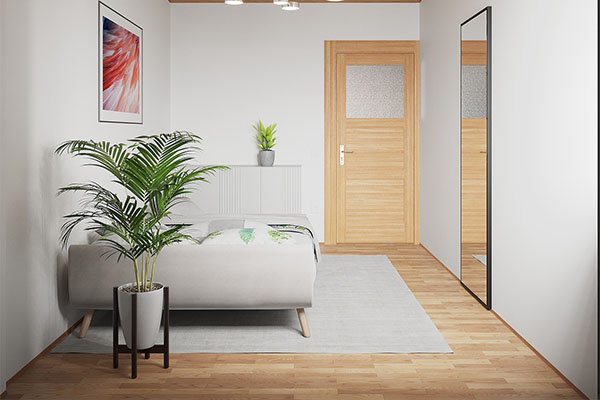
Hybrid flooring is dominating the 2026 Aussie market because it offers a perfect synthesis of aesthetic flexibility and rigid durability, specifically engineered to withstand local climate extremes. For years, Australian property developers and commercial contractors have faced the nightmare of floor failure caused by high humidity and fluctuating temperatures. This instability leads to buckling, expensive callbacks, and diminished property value, creating a significant bottleneck for growing businesses. Fortunately, modern B2B Flooring Solutions Australia provide a definitive answer with waterproof, stone-polymer composite (SPC) cores that remain dimensionally stable regardless of the environment.
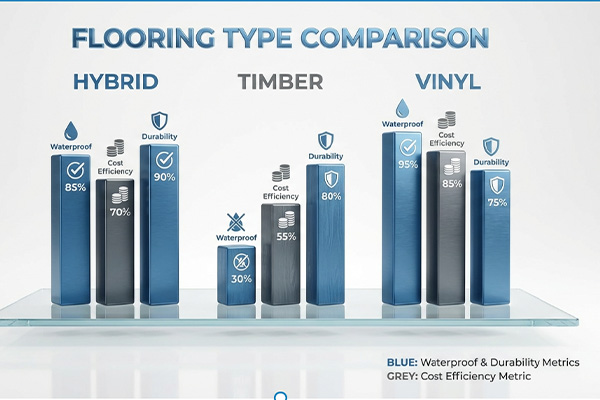
Why is Hybrid the Leading Choice for B2B Projects in Australia?
Hybrid flooring is the leading choice because it combines the waterproof properties of vinyl with the rigidity of laminate, addressing the specific stability needs of large-scale commercial layouts. When you are managing high-volume B2B Flooring Solutions Australia, the priority is always reducing the risk of expansion or contraction in varying climates. This material uses an advanced limestone-based core that ensures the planks stay flat even when exposed to direct sunlight or moisture. By choosing this solution, you ensure that your project meets the highest standards of longevity and professional finish.
What makes the Australian climate unique for flooring?
The Australian environment poses significant challenges, from the tropical humidity of the north to the dry, blistering heat of the interior. Think about it: traditional timber and low-grade laminates often swell or gap when the weather shifts. These environmental stressors require a product that doesn’t rely on organic fibers that absorb moisture. Hybrid technology provides that necessary barrier, ensuring the floor remains intact throughout the seasons.
How does hybrid solve traditional vinyl issues?
Traditional luxury vinyl tiles are often too flexible and can “telegraph” subfloor imperfections over time. Here is the thing: hybrid planks feature a rigid core that bridges minor dips and bumps in the concrete slab. This saves you significant time on subfloor preparation, which is a major cost center in B2B projects. It offers the visual appeal of wood without the maintenance headaches of softer materials.
Does it offer better value for developers?
For developers, the value lies in the reduced maintenance cycle and the increase in tenant satisfaction. Check this out: a floor that doesn’t scratch, stain, or buckle means fewer repairs during the lease period. This translates to a higher return on investment and a more attractive property portfolio for your investors. You are investing in a product that actually protects the underlying asset.
Key Takeaway: Hybrid flooring acts as a hedge against Australian climate volatility, ensuring that commercial properties maintain their structural integrity and aesthetic appeal for decades.
| Feature | Hybrid Flooring | Traditional Timber | Standard Laminate |
|---|---|---|---|
| Waterproof Rating | 100% Waterproof | Not Waterproof | Water Resistant Only |
| Core Material | Stone Polymer (SPC) | Natural Wood | Compressed Fiber |
| Sunlight Resistance | High | Low (Fades) | Moderate |
| Installation | Click-Lock | Glue/Nail | Click-Lock |
Analysis: This comparison shows that hybrid flooring is the only category that achieves a 100% waterproof rating while maintaining the rigid core benefits of premium laminate.
How Does Stone Plastic Composite (SPC) Outperform Standard Vinyl?
SPC outperforms standard vinyl by utilizing a high-density limestone core that provides superior indentation resistance and dimensional stability for heavy-traffic areas. When sourcing B2B Flooring Solutions Australia , you need to understand that not all vinyl is created equal. Standard LVT is flexible, whereas SPC is a “rigid core” product that handles heavy furniture and rolling loads without denting. This structural advantage makes it the preferred choice for showrooms, healthcare facilities, and modern office spaces across Australia.
Is rigid core technology truly necessary?
In a commercial environment, rigid core technology is non-negotiable if you want to avoid floor failure under heavy loads. Let’s dive deeper: standard flexible vinyl can stretch or deform if heavy equipment is moved across it frequently. SPC remains inert, providing a solid foundation that feels more like real stone or wood underfoot. This makes it much more suitable for the demanding environments found in Australian retail and industrial hubs.
Which option offers better heat stability?
SPC is significantly more stable under heat because the limestone composite does not expand like the PVC found in traditional vinyl. Believe it or not, Australian sun hitting a floor through a glass storefront can reach temperatures high enough to melt some adhesives or warp flexible planks. SPC thrives in these conditions, maintaining its shape and locking strength. This stability is why it has become the standard for modern “set and forget” commercial fit-outs.
What about long-term wear layers?
The wear layer on SPC is typically treated with advanced UV coatings to prevent scuffing and fading. In short, this means the floor looks new for much longer than traditional alternatives. You can specify different wear layer thicknesses depending on the specific traffic needs of your project. This customization ensures you aren’t overspending on low-traffic areas while protecting high-use zones.
Key Takeaway: The stone-polymer core of SPC provides the mechanical strength required to withstand the physical and environmental rigors of the Australian commercial landscape.
| Performance Metric | SPC Rigid Core | Standard Luxury Vinyl |
|---|---|---|
| Core Density | ~2100 kg/m³ | ~1100 kg/m³ |
| Max Temp Stability | Up to 60°C | Up to 35°C |
| Impact Resistance | Excellent | Moderate |
| Sound Reduction | High (with IXPE) | Low |
Analysis: The density of SPC is nearly double that of standard vinyl, which directly correlates to its ability to resist impacts and maintain shape under thermal stress.
What Makes Hybrid Flooring a Climate-Resilient Solution for 2026?
Hybrid flooring is climate-resilient because its composite construction is immune to the moisture and temperature fluctuations that typically cause floor failure in Australian coastal regions. As a buyer of B2B Flooring Solutions Australia, you are likely aware that 2026 standards prioritize materials that contribute to building longevity. The limestone and virgin PVC mix ensures that the material does not absorb ambient humidity. This prevents the “cupping” or “peaking” issues that have historically plagued timber installations in Queensland and New South Wales.
How does moisture resistance affect the warranty?
A 100% waterproof core allows manufacturers to offer much more robust commercial warranties than traditional materials. Here is the deal: if a pipe leaks or a window is left open during a storm, an SPC floor won’t need to be ripped out. This provides peace of mind for property managers who handle hundreds of units. It essentially “future-proofs” the interior against accidental water damage.
Can it handle the Australian sun?
Modern hybrid planks are engineered with high-grade UV protectants that prevent the decor layer from fading. Simply put, the vibrant wood-look patterns stay vivid even in North-facing rooms with floor-to-ceiling windows. This is a critical factor for Australian architects who love natural light but hate the damage it causes to interiors. You no longer have to choose between a bright office and a durable floor.
Does it assist with thermal insulation?
The dense core, often paired with an IXPE backing, helps regulate floor temperature, making it more comfortable in winter. The best part? It doesn’t get as cold as ceramic tile but also doesn’t trap heat as intensely as some synthetic carpets. This contributes to a more balanced indoor environment for your tenants. It is a subtle but effective way to improve the “liveability” of a commercial space.
Key Takeaway: Climate resilience in flooring is defined by the ability to withstand water and UV exposure, both of which are core strengths of 2026 hybrid technology.
| Climate Factor | Hybrid Solution | Impact on B2B Assets |
|---|---|---|
| High Humidity | Zero Expansion | No buckling or callbacks |
| UV Exposure | Fade-Resistant Layer | Aesthetic longevity in showrooms |
| Surface Flooding | Waterproof Core | Faster recovery after incidents |
| Temp Spikes | Rigid Core Stability | Seamless large-area installs |
Analysis: By addressing the three major climate risks—water, heat, and light—hybrid flooring minimizes the total cost of ownership for Australian developers.
Why are Commercial Fit-outs Transitioning to Rigid Core Products?
Commercial fit-outs are transitioning to rigid core products because they offer the fastest installation times and the highest durability ratings currently available in the B2B Flooring Solutions Australia market. In the fast-paced world of retail and office renovations, every day of downtime is lost revenue. Rigid core flooring can be installed directly over most existing hard surfaces, eliminating the need for costly and messy floor removal. This “fast-track” capability is why major Australian retail chains are making the switch for their 2026 rollout plans.
Is installation really that much faster?
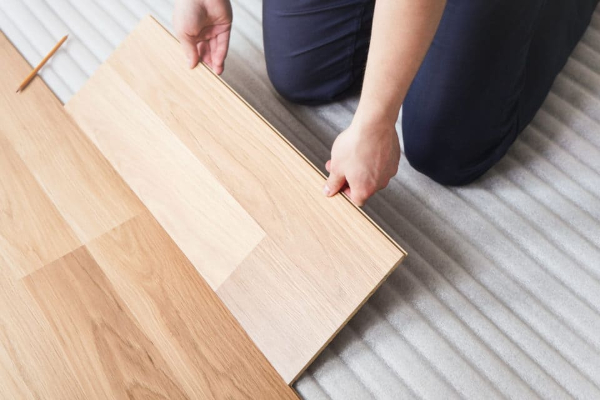
The click-lock system used in rigid core flooring is designed for rapid deployment without the need for messy adhesives. Wait, there is more: because it is a floating floor, workers can walk on it immediately after the planks are clicked together. This allows other trades to move back into the space hours rather than days later. For a 500-square-meter office, this can save you a full week of labor and rent.
How does it handle heavy foot traffic?
Rigid core floors are rated for heavy commercial use, often carrying AC4 or AC5 wear ratings. Let’s be honest: in a high-traffic lobby, you need a surface that can handle thousands of footsteps daily without showing a “path” of wear. The aluminum oxide finish on modern SPC provides an industrial-strength shield against micro-scratches. This ensures the entryway of your building always looks professional.
Can it improve the acoustics of an office?
Most premium rigid core products come with a pre-attached acoustic underlay, such as IXPE foam. Think about it: this reduces the “click-clack” sound of high heels, which is a common complaint in corporate environments. Improving the acoustic rating of a space makes it more productive and less stressful for employees. It’s an all-in-one solution that solves both visual and auditory design challenges.
Key Takeaway: The transition to rigid core is driven by the triple benefit of installation speed, extreme durability, and integrated acoustic performance.
| Sector | Primary Driver | Specific Benefit |
|---|---|---|
| Retail | Rapid Rollout | Overnight installation with no glue |
| Healthcare | Hygiene | Seamless surfaces with no grout |
| Office | Acoustics | Reduced footfall noise for focus |
| Hospitality | Maintenance | Easy cleaning and spill resistance |
Analysis: Different sectors prioritize different features, but rigid core flooring is versatile enough to provide a competitive advantage across all commercial categories.
How Does Advanced Waterproofing Benefit Australian Business Owners?
Advanced waterproofing benefits business owners by eliminating the risk of permanent floor damage from spills, leaks, or cleaning processes common in B2B Flooring Solutions Australia. For a business owner, a floor is a significant capital expenditure that needs to be protected from daily operational hazards. Whether it is a spilled coffee in a breakroom or a heavy-duty mopping schedule in a clinic, a waterproof floor ensures the material won’t swell or delaminate. This reliability allows you to focus on your core business rather than worrying about facility maintenance.
Is it suitable for wet areas like kitchenettes?
Hybrid flooring is perfectly suited for kitchenettes and break areas because it does not absorb moisture at the seams. Best of all, unlike laminate which can “blow out” at the joints when wet, SPC remains completely stable. This allows you to have a consistent flooring look throughout an entire office suite, including the kitchen area. It creates a seamless aesthetic that makes small spaces feel much larger and more cohesive.
Does waterproofing simplify the cleaning process?
Because the surface is non-porous and waterproof, you can use wet-mopping techniques that would ruin traditional wood floors. Simply put, this makes sanitization much easier and more effective, which is vital in the post-pandemic commercial world. You can maintain a high level of hygiene without the fear of damaging your investment. This is particularly valuable for gyms, cafes, and childcare centers.
How does it protect the subfloor?
A waterproof floor acts as a secondary barrier, preventing minor spills from seeping into the concrete or timber subfloor below. Check this out: this prevents the growth of mold or mildew under the flooring, which can be a major health hazard. By keeping the subfloor dry, you are protecting the structural health of the entire building. It’s a smart way to manage long-term property risk.
Key Takeaway: Waterproofing is not just about the surface; it is a comprehensive risk management strategy for the long-term health of commercial interiors.
| Hazard | Hybrid Response | Long-term Result |
|---|---|---|
| Plumbing Leaks | 100% Core Stability | No material replacement needed |
| Wet Mopping | Moisture Barrier | High hygiene standards maintained |
| Accidental Spills | Non-porous Surface | Zero staining or odor retention |
| High Humidity | Dimensionally Inert | No cupping or joint failure |
Analysis: The move toward 100% waterproof standards in B2B flooring is a direct response to the need for higher hygiene and lower maintenance in commercial assets.
What Role Does Installation Speed Play in B2B Flooring ROI?
Installation speed is a critical factor in ROI because it reduces labor costs and allows businesses to resume operations faster, a core advantage of modern B2B Flooring Solutions Australia . In the commercial sector, time is literally money. If a project is delayed due to complex floor preparation or long curing times for adhesives, the costs spiral. Hybrid floors with advanced click systems eliminate these bottlenecks, offering a “plug-and-play” solution that fits perfectly into tight construction schedules.
Can it be installed over existing tiles?
Yes, the rigid nature of hybrid flooring allows it to bridge grout lines, meaning it can often be installed directly over old ceramic tiles. Here is the deal: this saves you the massive cost and mess of jackhammering out old floors. In a retail environment, this could mean the difference between a 24-hour renovation and a week-long closure. It is the ultimate solution for “refresh” projects where budget and time are limited.
How does “no-glue” installation reduce costs?
By eliminating the need for expensive adhesives and the labor required to apply them, you significantly lower the total cost per square meter. The best part? You also eliminate the VOC (Volatile Organic Compound) smells associated with glues, allowing for immediate occupancy. This is a huge benefit for offices and healthcare facilities where air quality is a priority. Your project stays green while your budget stays lean.
Does it require specialized tools?
While professional installation is recommended, the system is designed to be straightforward and fast with standard tools. In short, this means a larger pool of contractors can handle the job, which can help keep bidding competitive. You aren’t tied to a small niche of specialists who might have long lead times. It’s about making the entire supply chain more efficient.
Key Takeaway: High-speed installation isn’t just a convenience; it is a financial strategy that maximizes the utility and profitability of commercial real estate.
| Installation Phase | Hybrid Timeframe | Traditional Timeframe |
|---|---|---|
| Subfloor Prep | Minimal (Bridges gaps) | Extensive (Levelling required) |
| Laying Process | Fast (Click-lock) | Slow (Glue & Trowel) |
| Curing / Drying | Instant (Walk-on) | 24 – 48 Hours |
| Clean Up | Low (No adhesive mess) | High (Solvents needed) |
Analysis: The cumulative time savings from prep to occupancy can reduce total project timelines by up to 50% compared to traditional glue-down methods.
Is Sustainable Manufacturing Driving the Shift Toward Hybrid Tech?
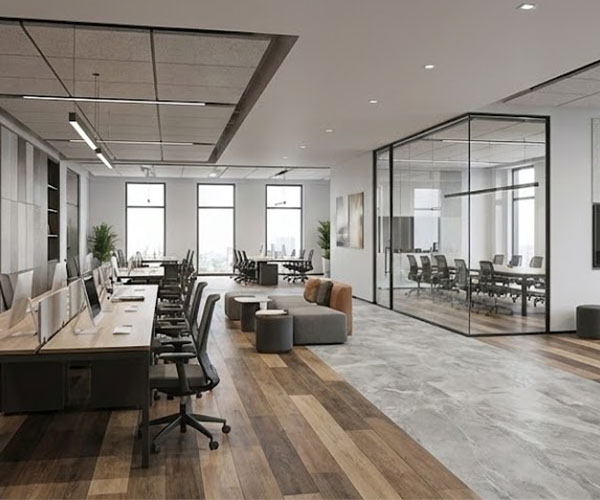
Sustainable manufacturing is driving the shift because 2026 buyers prioritize B2B Flooring Solutions Australia that offer low environmental impact and healthy indoor air quality. Modern consumers and corporate tenants are demanding “green” credentials for the spaces they occupy. Leading hybrid manufacturers have responded by using virgin PVC and natural limestone, ensuring the products are 100% recyclable. This shift is not just about ethics; it’s about meeting the strict environmental criteria required for government tenders and green-star rated buildings.
Are these floors phthalate-free?
Premium hybrid flooring is now manufactured without harmful phthalates or formaldehyde, making it safe for schools and hospitals. Here is the thing: cheap imports of the past often off-gassed chemicals, but modern Australian standards have pushed the market toward much cleaner chemistry. When you specify a high-quality SPC, you are ensuring a healthy environment for the building’s occupants. It’s a commitment to safety that pays off in tenant longevity.
How does durability contribute to sustainability?
The most sustainable product is the one that doesn’t need to be replaced every five years. Check this out: because hybrid flooring can last 20+ years in a commercial setting, it significantly reduces the waste sent to landfills. By choosing a durable product, you are reducing the carbon footprint associated with manufacturing, shipping, and installing replacement floors. It is a long-term view of environmental responsibility.
Is the core material eco-friendly?
The core of SPC is primarily made of calcium carbonate (limestone), which is an abundant natural resource. The best part? This makes the floor incredibly stable without relying on heavy chemical stabilizers. This natural base is a key selling point for developers aiming for LEED or Green Star certifications. You are essentially using stone in a more flexible, modern format.
Key Takeaway: Sustainability in 2026 is measured by the combination of non-toxic materials and an extended product lifecycle, both of which are inherent to hybrid flooring.
| Sustainable Feature | Benefit to Project | Certification Target |
|---|---|---|
| Low VOC Emissions | Improved air quality | FloorScore / Greenguard |
| Recyclable Content | Circular economy support | ISO 14001 |
| Phthalate-Free | Safe for sensitive users | Health & Safety Standards |
| Long Lifespan | Reduced waste | Green Star Credits |
Analysis: Sustainability is no longer a niche requirement; it is a primary driver for B2B procurement in the Australian building sector.
Why is Underlayment Integration Essential for Modern Office Spaces?
Underlayment integration is essential because it provides a “ready-to-go” solution for acoustic and comfort requirements in B2B Flooring Solutions Australia . In the past, underlay was a separate, often forgotten cost that complicated the installation process. Modern hybrid planks feature pre-attached IXPE (Cross-linked Polyethylene) backing, which serves multiple functions simultaneously. This integration ensures that every square meter of your floor meets building code requirements for sound transfer without any extra labor.
Does it really help with noise?
The pre-attached IXPE foam is specifically designed to absorb impact sound, such as footfalls or dropped objects. Believe it or not, this can reduce noise transfer between floors by up to 20 decibels. In a multi-story office building, this is the difference between a peaceful work environment and a constant distraction. It is a built-in acoustic shield that adds immense value to the property.
Can it improve the feel underfoot?
While SPC is a rigid core product, the integrated underlay provides a subtle “cushion” that makes standing for long periods more comfortable. Think about it: in a retail environment where staff are on their feet all day, this can reduce fatigue and improve morale. It gives the floor a more premium, substantial feel that mimics the density of traditional hardwood. You get the strength of stone with a touch of comfort.
How does it affect moisture protection?
The IXPE backing also acts as a secondary moisture barrier, protecting the underside of the floor from any rising damp in the concrete slab. Simply put, this prevents the growth of mold and ensures the locking system remains dry and stable. It is an added layer of protection that standard vinyl simply doesn’t offer. You are protecting the floor from both the top and the bottom.
Key Takeaway: Integrated underlayment simplifies the supply chain, guarantees acoustic performance, and enhances the overall “walk-on” quality of commercial spaces.
| Underlay Type | Sound Reduction (dB) | Key Advantage |
|---|---|---|
| Integrated IXPE | 18 – 22 dB | Moisture resistant & fast install |
| Cork Backing | 15 – 18 dB | Sustainable & antimicrobial |
| Separate Rubber | 20 – 25 dB | High-performance (Extra cost) |
| No Underlay | < 5 dB | Loud & uncomfortable |
Analysis: Integrated IXPE is the current market standard for B2B projects because it offers the best balance of acoustic performance, moisture resistance, and cost-efficiency.
How Do Hybrid Solutions Address Large-Scale Property Risk Factors?
Hybrid solutions address property risk by providing a dimensionally stable, fire-rated, and slip-resistant surface that meets the strict compliance needs of B2B Flooring Solutions Australia. For property owners, risk management is about more than just insurance; it is about selecting materials that minimize accidents and damage. Hybrid floors are engineered to pass rigorous Australian standards for fire safety and slip resistance (often rated P3 or P4). This protects you from liability and ensures the safety of everyone who enters the building.
What are the fire safety ratings?
Most commercial-grade SPC floors are tested for critical radiant flux, ensuring they do not contribute to the spread of fire. Here is the deal: this is a mandatory requirement for high-rise buildings and aged-care facilities in Australia. By choosing a certified product, you are ensuring your building remains compliant with the latest National Construction Code (NCC) updates. It is one less thing to worry about during a safety audit.
How does slip resistance work?
The surface texture of hybrid flooring is designed to provide grip even when wet, which is vital for entryways and corridors. The best part? These ratings are verified by independent labs, giving you the documentation you need for your risk assessment. Whether it’s a rainy day in Sydney or a spill in a Melbourne cafe, a slip-resistant floor is your first line of defense against injury. You are investing in safety as much as style.
Is the dimensional stability a risk reducer?
Because the floor doesn’t expand significantly, you can install large areas without the need for unsightly transition strips. In short, this eliminates trip hazards that often occur when floors buckle or lift at the seams. It creates a smooth, continuous surface that is safe for wheelchairs, trolleys, and high-heeled shoes. It’s a cleaner look that is also functionally safer.
Key Takeaway: Compliance and safety are built into the DNA of modern hybrid flooring, making it a low-risk choice for institutional and commercial property owners.
| Risk Factor | Hybrid Solution | Compliance Standard |
|---|---|---|
| Fire Spread | High Radiant Flux Rating | AS/ISO 9239.1 |
| Slip & Fall | P3/P4 Textured Surface | AS 4586 |
| Trip Hazards | Seamless Transitions | NCC Standards |
| Structural Failure | Rigid Core Stability | ASTM Standards |
Analysis: By meeting multiple Australian standards in a single product, hybrid flooring simplifies the compliance process for developers and architects.
What Should B2B Buyers Look for in a Global Flooring Partner?
B2B buyers should look for a partner that offers direct factory pricing, consistent quality control, and a proven track record of shipping to B2B Flooring Solutions Australia . When you are sourcing thousands of square meters, the reliability of the supplier is just as important as the product itself. You need a manufacturer that understands the nuances of the Australian market, including our specific logistics needs and certification requirements. A true partner provides more than just planks; they provide the technical support and supply chain stability your business needs to grow.
Is factory-direct pricing a major advantage?
Buying directly from a manufacturer eliminates the 20-30% markup typically added by local distributors. Wait, there’s more: it also gives you direct access to the people making your floor, allowing for better communication and customization. For large-scale projects, these savings can be the difference between a profitable project and a loss. You are taking control of your supply chain and your margins.
How important is OEM customization?
If you are building a brand, having the ability to specify custom colors or wear layers can set you apart from the competition. Think about it: you can create a signature look that is exclusive to your developments, increasing their perceived value. A flexible manufacturer will work with you to develop unique patterns that meet your specific design vision. It’s about moving from a commodity buyer to a strategic partner.
What about logistics and shipping reliability?
A partner with extensive experience in the Australian market will have optimized their shipping routes to ensure on-time delivery. Let’s be honest: a late container can stall an entire construction site, costing thousands in liquidated damages. You need a supplier with a 95%+ on-time shipment rate and clear communication throughout the process. Reliability is the foundation of any successful B2B relationship.
Key Takeaway: The ideal flooring partner is a high-capacity manufacturer that combines technical excellence with the logistical expertise to support large Australian projects.
| Partnership Factor | Why it Matters | ROI Impact |
|---|---|---|
| Direct Sourcing | Lower material costs | 20 – 30% Savings |
| Quality Control | Fewer returns & complaints | Brand protection |
| Customization | Market differentiation | Higher rental yields |
| Logistics Exp | Reduced downtime | On-time project completion |
Analysis: Selecting a manufacturer with specific expertise in the Australian market ensures that the product arrives on time and meets all local regulatory requirements.
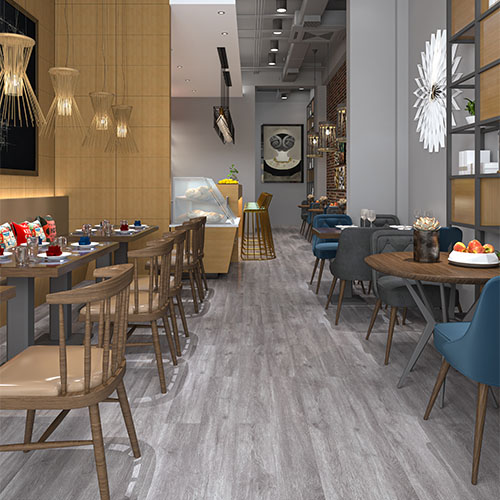
Hybrid flooring has cemented its place as the dominant solution for the 2026 Australian B2B market by solving the core issues of durability, installation speed, and climate resilience. By choosing a rigid core SPC or advanced hybrid product, you are investing in an asset that resists water, sun, and heavy traffic while providing a premium aesthetic for your tenants. Whether you are managing a retail rollout, an office fit-out, or a large residential development, these innovative solutions provide the reliability and ROI that modern businesses demand. To ensure your next project benefits from these advancements, contact us today to discuss your specific requirements and get a customized quote.
FAQ
Can I install hybrid flooring in multi-story apartments?
Yes, hybrid flooring is ideal for multi-story buildings when specified with a high-performance acoustic backing like IXPE. This ensures compliance with strata noise regulations while providing a waterproof and durable surface.
How do I maintain hybrid floors in a high-traffic shop?
Directly mop or vacuum the floor as needed; because the surface is non-porous and waterproof, it does not require specialized waxes or polishes. This makes it one of the easiest floors to maintain in a busy retail environment.
Can I get custom colors for a large corporate project?
Certainly, we offer full OEM and customization services for orders over a specific volume, allowing you to match your floor to your brand’s specific color palette. This is a popular option for national retail chains and franchise groups.
How do I know if the floor is truly 100% waterproof?
Look for the SPC (Stone Plastic Composite) core certification; because this core contains no wood fibers, it cannot absorb water or swell. We provide full technical data sheets to confirm these properties for every shipment.
Can I install this over underfloor heating?
Yes, most modern hybrid products are rated for use with underfloor heating systems due to their excellent thermal stability. Always check the specific temperature limits provided in our installation guide to ensure long-term performance.