
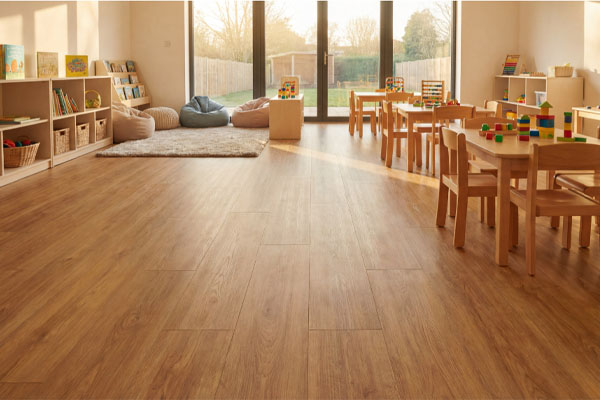
LVT handles thousands of shopping carts daily by utilizing a high-density, ceramic-bead-infused wear layer and a resilient multi-layer core that absorbs heavy impact rather than cracking under pressure.
Imagine your retail facility on a busy Saturday afternoon where the floor looks pristine, but beneath the surface, a battle is raging. Every heavy shopping cart and pallet jack exerts massive point-load pressure that can shatter ceramic tiles or cause traditional vinyl to peel and scuff. When your Supermarket Flooring fails, you face not only the high cost of replacement but also the risk of slip-and-fall lawsuits and a diminished brand image that drives customers away.
The solution lies in high-performance LVT flooring , which provides the industrial-grade durability required for modern retail environments. By combining aesthetic flexibility with advanced material science, this flooring ensures your store remains safe, quiet, and visually appealing for years.
Why is supermarket flooring a unique challenge?
Supermarket Flooring faces a unique combination of high-frequency foot traffic and extreme point-load pressure from hard shopping cart wheels. While residential floors might deal with occasional spills, a commercial grocery floor must withstand the constant “sandpaper effect” of dirt and grit tracked in from the parking lot.
How do rolling loads affect floor integrity?
The pressure exerted by a fully loaded cart is concentrated on four tiny contact points, creating intense stress on the material. If the floor is too brittle, it will crack; if it is too soft, it will permanent-indent.
Think about it.
- Metal wheels generate heat through friction.
- Concentrated weight can cause “telegraphing” from the subfloor.
- Constant vibration can loosen adhesive bonds over time.
Why is impact resistance critical in grocery aisles?
Beyond the carts, you must account for dropped cans, heavy restock crates, and the daily movement of pallet jacks in the back-of-house areas. A resilient surface prevents the catastrophic cracking often seen with ceramic or natural stone.
Key Takeaway: High-performance floors must balance rigidity to support weight with flexibility to absorb impact.
| Stress Factor | Impact on Material | LVT Performance |
|---|---|---|
| Point Loads | Surface indentation | High Resistance |
| Abrasive Grit | Scratches and dulling | Protected by Wear Layer |
| Impact | Cracking/Chipping | Resilient Absorption |
The following analysis explores how multi-layer engineering prevents common structural failures in high-traffic retail zones.
How does LVT withstand heavy cart traffic?
Supermarket Flooring achieves its durability through a multi-layer construction where each layer serves a specific protective function. The secret is the top wear layer, typically 0.5mm to 0.7mm thick, which acts as a transparent shield against the friction of cart wheels.
What role does the wear layer play?
The wear layer is often reinforced with microscopic ceramic beads or aluminum oxide to provide a scratch-resistant finish. This ensures that even after millions of wheel rotations, the underlying design remains vibrant and clear.
The truth is:
- Thicker wear layers extend the floor’s lifecycle.
- UV-cured coatings prevent yellowing from bright store lights.
- Texture patterns help hide micro-scratches from daily use.
Why is the core stability so important?
While the top protects against scratches, the core provides the structural integrity to support the weight of thousands of pounds of inventory. The high-density PVC or hybrid cores prevent the planks from shifting or buckling under the stress of turning cart wheels.
Key Takeaway: Engineering at the molecular level allows the floor to dissipate energy and weight across a wider surface area.
| Layer Component | Primary Function | Retail Benefit |
|---|---|---|
| Wear Layer | Abrasion Resistance | No scuffs from wheels |
| Print Film | Aesthetic Realism | Premium store image |
| Core Layer | Dimensional Stability | No gapping or buckling |
This data highlights why material composition is the most significant factor in determining the long-term ROI of retail floor installations.
What makes LVT better than traditional tile?
Supermarket Flooring has shifted toward LVT because it offers a significantly lower total cost of ownership compared to brittle ceramic or high-maintenance VCT. While SPC flooring is known for its rigid core, LVT provides better acoustic dampening and a more cushioned feel for employees standing all day.
Is maintenance truly simplified?
Unlike ceramic tile which requires deep grout cleaning, or VCT which needs periodic stripping and waxing, LVT only requires a neutral cleaner. This reduction in chemical and labor costs can save a supermarket chain thousands of dollars annually per location.
But here is the kicker:
- No waxing means zero downtime for maintenance.
- Smooth surfaces prevent bacteria from hiding in grout lines.
- Damaged planks can be replaced individually without heavy machinery.
How does LVT handle acoustic challenges?
Hard surfaces like polished concrete or tile create an echo-chamber effect that amplifies the clatter of carts, creating a stressful environment. LVT absorbs sound, contributing to a more relaxed shopping experience that encourages longer dwell times.
Key Takeaway: Transitioning from brittle materials to resilient LVT reduces both physical maintenance and environmental noise pollution.
| Feature | LVT Flooring | Ceramic Tile | VCT |
|---|---|---|---|
| Maintenance | Low (No Wax) | High (Grout) | Very High (Wax) |
| Sound Dampening | Excellent | Poor | Moderate |
| Crack Resistance | High | Low | Moderate |
Reviewing these comparisons demonstrates that modern vinyl solutions outperform traditional materials in nearly every operational metric.
Can LVT handle liquid spills and moisture?
Supermarket Flooring must be 100% waterproof to manage the inevitable spills in produce, dairy, and floral departments. LVT is inherently non-porous, meaning liquids stay on the surface where they can be easily cleaned rather than seeping into the subfloor.
How does the material prevent subfloor damage?
Because the planks are made of high-quality PVC and minerals, they do not swell or warp when exposed to standing water. This moisture resistance prevents the growth of mold and mildew, which is essential for maintaining food safety standards.
Wait, there’s more.
- Waterproof adhesives create a seamless barrier.
- Slip-resistant textures provide safety even when wet.
- Resistant to acidic spills like juice or vinegar.
What about slip and fall safety?
Safety is the top priority for any retail manager, and LVT surfaces are engineered with specific friction ratings. Even in high-moisture zones, the textured surface provides the grip necessary for both shoes and cart wheels.

Key Takeaway: Integrated waterproofing and slip resistance reduce liability and protect the building’s structural integrity.
| Protection Type | Mechanism | Outcome |
|---|---|---|
| Top Coating | Hydrophobic Finish | Easy spill cleanup |
| Core Material | PVC/Mineral Mix | Zero swelling/warping |
| Installation | Waterproof Adhesive | Subfloor protection |
The integration of moisture-proof technology ensures that the flooring remains a hygienic and safe foundation for grocery operations.
How does LVT improve the shopping experience?
Supermarket Flooring is a powerful psychological tool that influences how customers perceive your brand and how long they choose to browse. By utilizing loose lay flooring in specialized zones like wine cellars or organic produce, you can create a high-end atmosphere without the high-end cost.
Can flooring affect customer dwell time?
Visual warmth from wood-look or stone-look LVT makes a store feel more inviting and less industrial. When customers feel comfortable and the environment is quiet, they are statistically more likely to spend more time in the aisles.
Believe it or not:
- Warm colors can stimulate appetite in food sections.
- Reduced noise levels lower shopper fatigue.
- Consistent flooring design improves store navigation.
How does it support branding and aesthetics?
High-definition printing allows LVT to mimic expensive natural materials with incredible accuracy. This allows supermarkets to maintain a premium “boutique” aesthetic while benefiting from the durability of industrial-grade vinyl.
Key Takeaway: Superior aesthetics and acoustics directly correlate with increased customer satisfaction and potential sales growth.
| Design Element | Psychological Impact | Retail Result |
|---|---|---|
| Wood Texture | Warmth and Trust | Higher Dwell Time |
| Quiet Surface | Calm and Focus | Reduced Stress |
| Matte Finish | Clean and Modern | Premium Brand Perception |
Understanding the sensory impact of flooring helps facility managers design spaces that are as profitable as they are durable.
Is glue-down LVT the best for heavy loads?
Supermarket Flooring in high-traffic corridors almost always requires a glue-down (dryback) installation to ensure maximum stability. This method prevents the planks from shifting or “peaking” when heavy carts make sharp turns or pallet jacks move across the surface.
Why is permanent bonding necessary?
While click-lock systems are popular for residential use, the permanent bond of a commercial adhesive ensures that there is no movement within the floor system. This is critical for maintaining slip resistance and preventing tripping hazards over time.
You see:
- Adhesives distribute weight more evenly.
- No gapping occurs during temperature fluctuations.
- The floor remains flush with transition strips.
How does this affect long-term durability?
A glue-down floor is essentially integrated into the subfloor, creating a single, solid unit. This prevents the “clack-clack” noise of hollow spaces and ensures the floor can handle the extreme shear forces of turning wheels.
Key Takeaway: Permanent glue-down installation is the gold standard for areas subjected to heavy rolling loads and high-velocity traffic.
| Installation Type | Stability Rating | Ideal Use Case |
|---|---|---|
| Glue-Down | Excellent | Main Grocery Aisles |
| Click-Lock | Moderate | Back Offices |
| Loose Lay | High (Friction) | Seasonal Displays |
Choosing the correct installation method is just as vital as selecting the product itself for ensuring a long-lasting retail surface.
What wear layer thickness is required?
Supermarket Flooring must be specified with a minimum 0.5mm (20 mil) wear layer, though 0.7mm (28 mil) is highly recommended for main entrances. Using a residential-grade product with a thinner wear layer will result in premature failure and costly repairs within months.
Does thickness equate to longevity?
Yes, the thickness of the wear layer determines how much abuse the floor can take before the printed design is compromised. In a 24-hour supermarket, the wear layer is the only thing standing between a pristine floor and an eyesore.
Consider this:
- 0.5mm is standard for medium commercial use.
- 0.7mm is designed for extreme traffic zones.
- Quality matters more than just thickness; additives are key.
What finish is best for supermarket lighting?
Most supermarkets utilize bright LED lighting, which can cause harsh glare on high-gloss floors. A matte or satin finish is preferred because it hides scuffs, reduces glare, and maintains a clean look even between professional cleanings.
Key Takeaway: Investing in a thicker, high-quality wear layer significantly extends the replacement cycle and reduces visible aging.
| Traffic Level | Recommended Thickness | Application |
|---|---|---|
| Low | 0.3mm | Breakrooms |
| Medium | 0.5mm | Produce/Dairy |
| High/Extreme | 0.7mm | Main Entrances |
Specifying the correct thickness ensures that the floor survives the specific demands of each zone within the retail environment.
How do maintenance costs compare?
Supermarket Flooring selection should be based on the Total Cost of Ownership (TCO) rather than just the initial purchase price. While LVT flooring may have a higher upfront cost than basic vinyl tile, the lack of waxing and buffing makes it far more economical over a ten-year period.
Is the daily routine more efficient?
Store staff can maintain LVT using standard auto-scrubbers and neutral cleaners, which eliminates the need for expensive third-party floor crews. This streamlined process ensures the floor is always clean without interrupting the shopping experience.
Let’s look at the numbers.
- No wax equals 30% lower annual labor costs.
- Fewer chemicals mean a safer environment for staff.
- Faster cleaning cycles improve store operational efficiency.
How does LVT handle repair and replacement?
If a section is damaged by a heavy impact, individual planks can be removed and replaced without tearing up the entire floor. This modularity is a massive advantage for retailers who cannot afford to close sections of the store for repairs.
Key Takeaway: Lower labor, chemical, and repair costs make LVT the most cost-effective long-term solution for high-traffic retail.
| Cost Component | LVT (10 Years) | VCT (10 Years) |
|---|---|---|
| Initial Purchase | Moderate | Low |
| Wax/Buffing | $0 | High |
| Daily Cleaning | Low | Moderate |
This financial breakdown proves that initial savings on cheaper materials are quickly erased by ongoing maintenance expenses.
Is LVT a sustainable choice for retailers?
Supermarket Flooring today must meet strict environmental standards to comply with modern ESG goals. High-quality LVT is often made with virgin materials that are 100% recyclable, and its long lifespan reduces the amount of waste sent to landfills.
What certifications should you look for?
You should prioritize products with FloorScore or Greenguard Gold certifications, which guarantee low VOC (Volatile Organic Compound) emissions. This ensures that the indoor air quality remains healthy for both your employees and your customers.
And the best part?
- Recycled content can contribute to LEED points.
- Long durability means fewer resources used over time.
- Phthalate-free formulations protect consumer health.
Can LVT be part of a circular economy?
Leading manufacturers are implementing take-back programs where old vinyl flooring is ground down and repurposed into new products. This closed-loop system makes LVT one of the most eco-responsible choices in the resilient flooring category.
Key Takeaway: Sustainable flooring choices support corporate social responsibility while providing a safer indoor environment.
| Sustainability Metric | LVT Performance | Benefit |
|---|---|---|
| VOC Emissions | Low / FloorScore | Clean Air Quality |
| Lifespan | 10-20 Years | Less Waste |
| Recyclability | 100% (Virgin PVC) | Circular Economy |
These environmental advantages allow retail chains to market their sustainability efforts directly to eco-conscious consumers.
How do you choose the right manufacturer?
Supermarket Flooring projects require a manufacturer that can handle massive scale and provide consistent quality across thousands of square meters. When sourcing for a retail rollout, you need a partner with high production capacity and specialized OEM capabilities to meet your specific brand standards.
Why is factory capacity important?
Large-scale renovations or new builds operate on tight timelines; any delay in flooring delivery can push back the entire store opening. A manufacturer with multiple dedicated production lines ensures that your project stays on schedule regardless of order size.
Make no mistake:
- OEM services allow for custom color matching.
- Strict quality control prevents batch inconsistencies.
- Bulk shipping capabilities reduce overall logistics costs.
Can you get technical support for large projects?
Working directly with a manufacturer provides access to technical data sheets and installation guides tailored for commercial environments. This expert guidance ensures that the product specified is perfectly matched to the traffic patterns of your specific store layout.
Key Takeaway: Selecting a high-capacity manufacturer ensures project consistency, on-time delivery, and technical reliability.
| Manufacturer Feature | Importance | Value |
|---|---|---|
| 5+ Production Lines | High | Guaranteed Timeline |
| OEM Capability | High | Brand Consistency |
| SGS/CE Certified | Critical | Verified Quality |
Choosing a proven manufacturing partner is the final step in ensuring your facility’s foundation is built to last for decades.
Final Insights for Retail Managers
Selecting the right Supermarket Flooring is a strategic investment in your store’s operational efficiency and brand reputation. By choosing high-performance LVT, you ensure your facility can withstand thousands of shopping carts daily while providing a safe, quiet, and beautiful environment for your customers. If you are ready to secure a floor that balances durability with low maintenance, contact us today to discuss your project requirements. We are committed to providing the resilient flooring solutions that solve your most difficult retail challenges.
Frequently Asked Questions
Can I install LVT over existing supermarket flooring?Yes, LVT can often be installed over existing ceramic tile or VCT if the subfloor is flat and stable, though a leveling compound is usually required to prevent telegraphing.
What’s the best way to prevent cart scratches on LVT?Specifying a 0.7mm wear layer with a matte, textured finish and ceramic bead reinforcement is the most effective way to resist surface scratches from cart wheels and grit.
Can LVT handle heavy pallet jacks in the stockroom?While LVT is resilient, we recommend the 0.7mm dryback version for areas with frequent pallet jack traffic to ensure the highest indentation resistance and structural stability.
What is the typical lifespan of LVT in a high-traffic store?In a standard grocery environment, a properly installed 0.5mm or 0.7mm wear layer LVT floor will typically provide 10 to 15 years of service life.
Can I get a custom logo embedded into the LVT floor?Yes, high-precision water-jet cutting allows manufacturers to embed custom brand logos or wayfinding signage directly into the flooring layout for a professional, integrated look.