
Choosing the right Slip Resistance Hybrid Flooring depends on whether your space is prone to occasional spills or constant moisture exposure. Slip-and-fall accidents are a major liability for commercial property owners and facility managers. If you ignore the friction requirements of your specific zone, you risk costly litigation and insurance hikes. Adasea offers high-performance Slip Resistance Hybrid Flooring designed to meet stringent P3 and P4 standards for any public environment.
1. Why is slip resistance critical for public spaces?
Slip resistance is essential because it directly impacts the safety of your visitors and the legal compliance of your facility. Public areas see diverse foot traffic, ranging from children to the elderly, making a stable surface mandatory. Using high-quality Slip Resistance Hybrid Flooring ensures that you minimize the risk of accidents even during peak hours.
But that’s not all.
- Reduces insurance premiums by demonstrating proactive risk management.
- Ensures compliance with local building codes and safety regulations.
- Protects your brand reputation from the fallout of public accidents.
How does flooring impact liability?
When an accident occurs, investigators look for “duty of care” in your material selection. If the surface does not meet the required friction levels, you could be held liable for negligence. Selecting the correct P-rating shows you prioritized safety in your procurement process.
What are the costs of ignoring safety?
Beyond legal fees, a single slip incident can lead to significant operational downtime. You may face mandatory inspections or be forced to retrofit your existing floors with anti-slip coatings. This is why getting the specification right the first time is so vital.
Key Takeaway: Prioritizing slip resistance is a strategic business decision that protects both your visitors and your bottom line.
| Sector | Primary Safety Goal | Risk Level | |
|---|---|---|---|
| Healthcare | Patient stability | High | |
| Retail | Customer flow safety | Moderate | |
| Corporate | Employee wellness | Low |
Analysis: Selecting flooring based on sector-specific risk levels ensures you don’t under-specify safety in high-stakes environments.
2. What exactly do P3 and P4 ratings signify?
The P3 and P4 ratings signify the amount of friction provided by the floor surface as measured by a Pendulum Test. These ratings determine how safe a floor remains when it becomes wet or contaminated. You need to understand these numbers to match the flooring to the environmental conditions of your space.
Think about it.
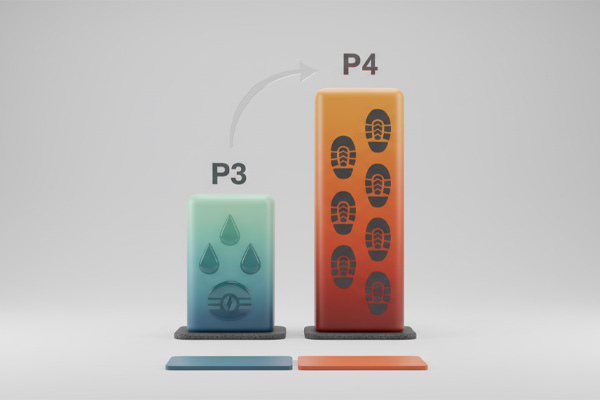
- P3 ratings are for areas with a low risk of wetness.
- P4 ratings are designed for areas with a higher risk of water exposure.
- Both ratings use the Wet Pendulum Test method for classification.
How is the Pendulum Test conducted?
The test uses a swinging “slider” that mimics a human heel striking the floor. The friction encountered by the slider is recorded as a British Pendulum Number (BPN). A higher BPN results in a higher “P” rating, indicating better slip resistance.
What is the difference in friction levels?
A P3 rating corresponds to a BPN of 35-44, which is suitable for standard indoor commercial use. A P4 rating moves into the 45-54 BPN range, offering significantly more grip for transition zones. You will feel a noticeable difference in “bite” between the two surfaces.
Key Takeaway: P-ratings provide a standardized metric that allows you to compare the safety performance of different hybrid products accurately.
| Rating | BPN Range | Typical Surface Feel | |
|---|---|---|---|
| P3 | 35 – 44 | Smooth but matte | |
| P4 | 45 – 54 | Textured and grippy |
Analysis: The jump from P3 to P4 represents a measurable increase in friction that is crucial for wet-area safety.
3. Where is P3 hybrid flooring most effective?
P3 hybrid flooring is most effective in internal dry areas where moisture is only an occasional or accidental occurrence. If your project focuses on main office floors, boutiques, or hotel corridors, this rating provides excellent safety without excessive surface roughness. Utilizing Slip Resistance Hybrid Flooring with a P3 rating allows for easier cleaning while maintaining standard safety benchmarks.
The best part?
- Ideal for open-plan offices and breakout rooms.
- Perfect for high-end retail where aesthetics are paramount.
- Offers lower maintenance costs due to a smoother surface profile.
Why choose P3 for standard offices?
In an office environment, the primary slip risks are spilled coffee or tracked-in moisture from the lobby. P3 provides ample protection for these scenarios while allowing for a more refined visual finish. You don’t need the aggressive texture of a P4 floor for a cubicle farm.
Is P3 suitable for residential-style common areas?
For apartment lobbies or retirement village lounges, P3 is often the preferred choice. It feels comfortable underfoot and doesn’t trap dirt as easily as more textured floors. You get a safe surface that looks like authentic timber without the industrial feel.
Key Takeaway: P3 is the versatile choice for “dry zone” commercial applications where safety and maintenance must be balanced.
| Area Type | Suitability | Contamination Risk | |
|---|---|---|---|
| Boardrooms | Excellent | Very Low | |
| Clothing Stores | High | Low | |
| Internal Hallways | Recommended | Low |
Analysis: P3 flooring excels in controlled environments where liquid spills are rare and easily managed.
4. When is a P4 rating mandatory for safety?
A P4 rating is mandatory for safety in areas where water, oil, or grease are frequently present on the floor surface. When you are specifying floors for transition zones between the outdoors and indoors, P4 becomes a non-negotiable safety requirement. You cannot afford to compromise in zones where the floor is expected to be wet during rainy seasons or cleaning cycles.
Here is the kicker.
- Mandatory for external entrance mats and covered walkways.
- Essential for commercial kitchens and public restrooms.
- Required for sloped ramps and stairs to prevent falls.
Does P4 prevent hydroplaning?
Yes, the micro-texture of a P4 surface breaks the surface tension of water. This allows a pedestrian’s shoe to make direct contact with the floor even when a thin film of liquid is present. You need this aggressive profile in zones where drainage is a constant challenge.
Why is P4 required for healthcare?
In hospitals and aged care facilities, mobility is often compromised. A P4 floor provides the extra stability needed for patients using walkers or crutches in wet areas like bathrooms. You are investing in the dignity and safety of vulnerable populations by choosing P4.
Key Takeaway: P4 is a specialized safety solution that should be reserved for high-risk, high-moisture zones to ensure absolute compliance.
| Zone | Recommended Rating | Contaminant Type | |
|---|---|---|---|
| Entrance Ramp | P4 | Rainwater/Mud | |
| Public Kitchenette | P4 | Food/Water Spills | |
| Locker Rooms | P4 | Steam/Moisture |
Analysis: The P4 rating is an insurance policy for your highest-risk transition zones and wet areas.
5. How does the pendulum test measure friction?
The pendulum test measures friction by simulating the sliding motion of a foot across the floor’s surface. This test is widely recognized by architects and engineers as the most reliable indicator of real-world slip risk. By choosing Slip Resistance Hybrid Flooring that has been independently pendulum tested, you can be certain of its performance.
Don’t miss this.
- Simulates the dynamic “heel strike” of a walking person.
- Conducted in wet conditions to reveal the true safety profile.
- Provides a numerical BPN score that translates to P-ratings.
Why is wet testing more important?
Most floors are safe when dry, but their performance drops drastically when wet. The pendulum test specifically evaluates how the floor performs with a layer of water between the slider and the surface. You must insist on wet test results during your procurement process.
Can the test be performed on-site?
Yes, one of the benefits of the pendulum test is its portability. You can have your installed floors tested periodically to ensure they still meet the original specification. This proactive step helps you identify wear and tear before it becomes a hazard.
Key Takeaway: The pendulum test is the gold standard for verifying that your flooring meets the safety claims made by the manufacturer.
| Test Component | Function | Value | |
|---|---|---|---|
| Slider | Mimics shoe sole | Accuracy | |
| Swing Arm | Mimics gait motion | Realism | |
| Scale | Records friction | Standardized Data |
Analysis: Understanding the mechanics of the pendulum test helps you trust the validity of P3 and P4 safety ratings.
6. Can hybrid flooring maintain safety in high-traffic retail?
Hybrid flooring can maintain safety in high-traffic retail environments because its wear layer is specifically designed to resist the polishing effect of thousands of footsteps. In a busy shopping mall, the texture of a floor can wear down over time, potentially lowering its slip resistance. You need a product that maintains its “tooth” even after years of heavy commercial use.
You’ll love this.
- High-density cores prevent surface deformation under heavy loads.
- Advanced wear layers protect the micro-texture from abrasion.
- Consistent friction levels are maintained across the entire floor area.
How does foot traffic affect slip resistance?
Constant walking acts like sandpaper, slowly smoothing out the embossing on the floor’s surface. A high-quality hybrid floor uses ceramic bead technology in the wear layer to resist this smoothing. You can rely on the floor to remain safe long after the initial installation.
What about rolling loads like shopping carts?
Retail spaces often deal with heavy carts or pallet jacks during restocking. Hybrid flooring’s rigid core ensures that these heavy loads don’t create “flat spots” that could compromise traction. You get a surface that stays level and safe for both customers and staff.
Key Takeaway: The durability of modern hybrid floors ensures that your safety rating remains stable throughout the life of the product.
| Traffic Type | Daily Volume | Recommended Wear Layer | |
|---|---|---|---|
| Boutique | 100+ people | 0.3mm – 0.5mm | |
| Supermarket | 1000+ people | 0.5mm – 0.7mm | |
| Mall Corridor | 5000+ people | 0.7mm+ |
Analysis: Matching the wear layer thickness to foot traffic volume is essential for preserving long-term slip resistance.
7. Why does subfloor preparation impact slip ratings?
Subfloor preparation impacts slip ratings because an uneven surface can lead to “pooling” where water collects in low spots. If you install even the best Slip Resistance Hybrid Flooring over a bumpy subfloor, you create hidden hazards that a safety rating alone cannot fix. You must ensure the substrate is flat and dry before the first plank is laid.
But wait, there’s more.
- Prevents water from accumulating in “hollows.”
- Ensures the locking system stays tight and moisture-proof.
- Maintains a uniform friction profile across the entire room.
Can subfloor issues cause “hydroplaning”?
If water pools in a low spot, a P4 floor might still allow a foot to “float” over the surface. You need the water to disperse evenly or drain away to let the micro-texture do its job. A perfectly level subfloor is the foundation of a safe walking surface.
Why is professional leveling necessary?
Professional installers use self-leveling compounds to iron out imperfections in concrete slabs. This ensures that every square meter of your hybrid floor is making full contact with the subfloor. You avoid the “trampoline effect” which can cause planks to shift and open up gaps.
Key Takeaway: Never skip subfloor preparation; it is the most critical step in ensuring your flooring’s safety features work as intended.
| Prep Step | Safety Benefit | Risk of Skipping | |
|---|---|---|---|
| Grinding | Flatness | Trip Hazards | |
| Moisture Barrier | Stability | Core Swelling | |
| Leveling | Uniformity | Water Pooling |
Analysis: A high-quality installation is just as important as the flooring material itself when it comes to public safety.
8. What role does UV coating play in slip resistance?
UV coating plays a vital role in slip resistance by providing the final protective layer that houses the anti-slip particles. Adasea’s specialized UV coatings are engineered to be matte and non-reflective, which helps in identifying spills quickly. You benefit from a surface that is both tough against scratches and engineered for maximum grip.
The best part?
- Contains microscopic anti-slip additives for enhanced friction.
- Resists yellowing and fading from direct sunlight in lobbies.
- Provides a chemical-resistant barrier against harsh cleaning agents.
Does the coating wear off over time?
While all coatings eventually show wear, commercial-grade UV layers are designed for longevity. The anti-slip particles are embedded throughout the coating, not just on the surface. You get consistent safety performance even as the floor naturally ages.
How does the coating help with maintenance?
A high-quality UV coating prevents dirt and oils from bonding with the floor’s texture. This makes it easier for your cleaning crew to remove contaminants that could otherwise create a slippery film. You can keep the floor clean and safe with standard neutral detergents.
Key Takeaway: The UV coating is the “invisible shield” that maintains both the appearance and the safety of your hybrid floor.
| Coating Feature | Safety Impact | Benefit | |
|---|---|---|---|
| Matte Finish | Reduces glare | Spills are visible | |
| Ceramic Infusion | Adds friction | Prevents slips | |
| UV Inhibitors | Prevents brittleness | Long-term integrity |
Analysis: Advanced UV coatings ensure that slip resistance is a permanent feature of the floor, not just a temporary finish.
9. How do you balance safety with high-end aesthetics?
You balance safety with aesthetics by choosing hybrid floors that use advanced digital printing and synchronous embossing. You no longer have to settle for the “plastic” look of traditional safety floors to get a P4 rating. With modern Slip Resistance Hybrid Flooring , you can specify the exact look of Nordic Oak or Urban Grey while meeting safety codes.
Think about it.
- Embossing follows the wood grain for a natural look and feel.
- Wide color palettes allow for seamless design across different safety zones.
- Custom textures can be applied to match your specific interior vision.
Can you use P3 and P4 in the same design?
Yes, many designers use the same color and pattern but switch the rating between zones. You can have a P3 floor in the main showroom and transition to a P4 in the entrance area without a visible seam. You maintain a cohesive brand image while maximizing safety where it counts.
Does a P4 floor look “rougher” than a P3?
While a P4 floor has more micro-texture, it is often indistinguishable from P3 to the naked eye. The friction is provided at a microscopic level, meaning your “luxury” aesthetic remains intact. You get the tactile warmth of wood with the grip of an industrial floor.
Key Takeaway: Modern manufacturing allows safety to be a hidden feature, letting your design take center stage without compromise.
| Design Goal | Hybrid Solution | Result | |
|---|---|---|---|
| High-End Look | Nordic Oak Print | Visual Warmth | |
| Public Safety | P3/P4 Embossing | Friction | |
| Durability | SPC Core | Performance |
Analysis: The marriage of safety and style is the primary reason hybrid flooring has become the top choice for commercial designers.
10. Why is the SPC core vital for slip stability?
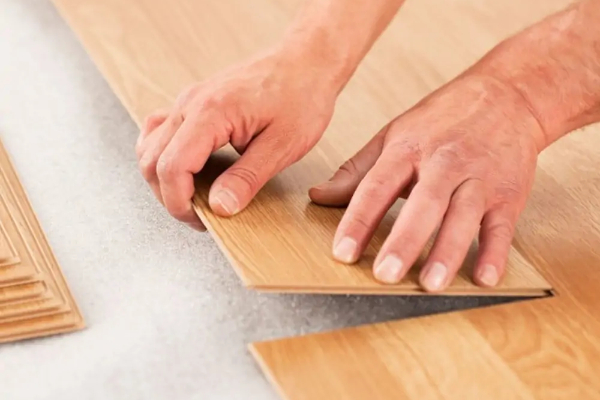
The SPC (Stone Plastic Composite) core is vital for slip stability because it provides the rigid foundation that keeps the floor perfectly flat. If a floor expands or buckles due to temperature changes, it creates uneven surfaces and trip hazards. You need the dimensional stability of SPC to ensure that your slip-resistant surface remains in the correct plane for safe walking.
Here is the kicker.
- 100% waterproof core prevents swelling and edge-peaking.
- High stone content ensures the floor doesn’t soften in the sun.
- Superior density provides a solid feel that aids pedestrian balance.
Does core stability affect the locking system?
A stable SPC core prevents the planks from pulling apart under heavy foot traffic. When gaps open up between planks, moisture can seep in, leading to subfloor damage and slippery edges. You get a tightly locked, water-resistant surface that stays safe year after year.
Why is SPC better than traditional LVT for safety?
Traditional LVT is flexible and can “telegraph” subfloor imperfections, creating small bumps. SPC is rigid and bridges minor gaps, providing a smoother and safer walking surface. You are choosing a more structurally sound product that enhances the overall safety of your facility.
Key Takeaway: The “hidden” technology of the SPC core is what makes the surface safety features of your hybrid floor actually effective in the real world.
| Core Property | Impact on Safety | Benefit | |
|---|---|---|---|
| Rigid Construction | No telegraphing | Flat surface | |
| Stone Composite | Heat resistance | No warping | |
| Waterproof | Spill protection | No delamination |
Analysis: The SPC core is the silent partner of slip resistance, providing the structural integrity required for large-scale public safety.
Conclusion
Navigating the complexities of commercial safety doesn’t have to be a challenge. By understanding the critical differences between P3 and P4 slip resistance ratings, you can protect your facility from liability while maintaining a world-class aesthetic. Adasea Flooring is committed to providing the technical expertise and high-performance hybrid solutions needed for today’s demanding public spaces. Whether you are specifying for a high-traffic retail mall or a specialized healthcare facility, our 35+ years of manufacturing experience ensure you receive the quality and compliance your project deserves. Ready to elevate the safety of your next project? Please contact us today for a custom quote or to request technical samples.
FAQ
Can I install P3 flooring in a public restroom?
It is generally not recommended. Public restrooms are considered high-moisture zones where liquid spills are common, making a P4 rating the safer and more compliant choice.
How do I maintain the slip rating of my hybrid floor?
You must use manufacturer-recommended neutral cleaners. Avoid wax-based products or high-pH detergents that can leave a slippery residue and “clog” the micro-texture of the floor.
Can P4 hybrid flooring be used on outdoor stairs?
While P4 has excellent slip resistance, hybrid flooring is primarily designed for indoor or covered semi-outdoor use. For fully exposed outdoor stairs, you should consult with our technical team about specialized external products.
Does a higher P-rating make the floor harder to clean?
Slightly. Because a P4 floor has more micro-texture to provide grip, it may require more frequent deep scrubbing than a P3 floor. However, with the right equipment, the difference is manageable.
How often should I re-test the slip resistance of my commercial floors?
For high-traffic public spaces, it is best practice to perform a professional pendulum test annually. This ensures that the floor still meets its original safety specifications after significant wear.