
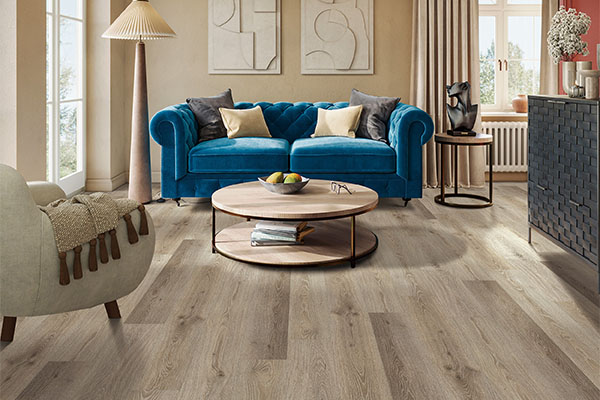
Beveled edges create a distinct architectural depth in Dry Back Vinyl Planks that transforms a standard commercial floor into a premium interior showcase. Many B2B clients find that square-edge flooring can appear “plastic” or overly uniform, leading to a loss of perceived value in high-end projects. By introducing beveled edges, you resolve this “flat” aesthetic, offering a sophisticated solution that mimics the traditional craftsmanship of hand-laid timber.
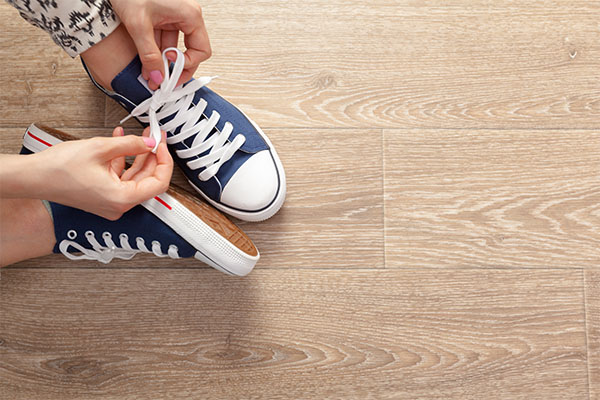
Why does edge definition matter in dry back vinyl planks?
Edge definition is the primary visual cue that separates high-quality Dry Back Vinyl Planks from lower-end, monolithic-style flooring. Without this definition, the floor can look like a single sheet of printed material rather than individual, artisanal boards.
Distributors often face resistance from contractors who worry about “fake-looking” floors. Utilizing beveled edges creates a break in the visual field, which establishes a more authentic rhythmic pattern throughout the room.
Overcoming the “Flat Sheet” Perception
Think about it. A floor without edge definition often lacks the character needed for luxury spaces.
- Individual plank boundaries are more visible.
- It provides a sense of craftsmanship and deliberate design.
- The visual break prevents a “plastic” sheen across large areas. You can easily elevate a project’s status by simply selecting a plank with the right edge profile.
The Psychology of Visual Depth
The truth is, humans perceive quality through texture and shadow.
- Shadow lines create a three-dimensional effect.
- Depth helps ground the room’s overall aesthetic.
- Visual interest is maintained even in neutrally colored spaces. Key Takeaway: Edge definition converts a commodity product into a high-value design element by adding rhythmic depth.
| Feature | Impact on Design | Perceived Value |
|---|---|---|
| Plank Definition | Creates authentic wood-look | High |
| Shadow Lines | Adds 3D architectural depth | Very High |
| Rhythmic Pattern | Breaks up visual monotony | High |
This data confirms that visual depth is a non-negotiable requirement for designers aiming to replicate the organic feel of natural materials in commercial settings.
What are the different bevel types available for projects?
There are several bevel types for Dry Back Vinyl Planks, ranging from subtle micro-bevels to deep, high-contrast painted grooves. Each type serves a specific aesthetic and functional purpose depending on the project’s scale and design intent.
Manufacturers provide these variations to ensure distributors can meet the diverse needs of both residential and commercial sectors. Whether you need a sleek, modern finish or a rustic, weathered look, there is an edge profile that fits the bill.
Micro-Bevel vs. Painted Bevel
Here is the deal. The choice between a micro-bevel and a painted bevel changes the entire mood of the space.
- Micro-bevels offer a subtle, clean transition between planks.
- Painted bevels use a darker lacquer to emphasize the “V” groove.
- Deep bevels provide the most dramatic, rustic appearance. You should choose the profile that aligns with your client’s desired level of “pop” or subtlety.
The Innovation of Pressed Bevels
Let’s look at the premium end. Pressed bevels are where the decorative film actually wraps into the groove.
- Provides superior moisture protection at the seams.
- Creates the most realistic transition possible in vinyl.
- Ensures the wear layer covers the entire edge of the plank. Key Takeaway: Understanding the nuances between micro, painted, and pressed bevels allows you to tailor your inventory to specific market demands.
| Bevel Type | Visual Intensity | Best Use Case |
|---|---|---|
| Micro-Bevel | Low / Subtle | Modern Minimalist |
| Painted Bevel | High / Defined | Traditional Wood-Look |
| Pressed Bevel | Natural / Realistic | Luxury Residential |
This comparison highlights that bevel selection is a strategic tool for matching flooring products to specific architectural styles.
How do beveled edges enhance visual realism?
Beveled edges enhance the realism of Dry Back Vinyl Planks by replicating the natural gaps and shadow lines found in authentic hardwood floors. Natural wood boards are rarely perfectly flush, so a beveled edge mimics this organic “imperfection” that our eyes associate with quality timber.
When light hits a floor with beveled edges, it creates a series of micro-shadows that define each board. This interaction prevents the floor from appearing “washed out” under harsh commercial lighting or direct sunlight.
Mimicking Natural Hardwood Gaps
Believe it or not, the “flaws” of wood are what make it look real.
- Bevels simulate the expansion gaps of solid wood.
- They hide the “too-perfect” look of synthetic materials.
- The separation makes each plank stand out as a unique piece. By embracing these subtle gaps, your flooring installation gains an immediate boost in perceived authenticity.
Interaction with Light and Shadow
Light is your best friend when it comes to bevels.
- Overhead lights catch the edge of the bevel for added sparkle.
- Shadow lines define the floor’s geometry in large rooms.
- It reduces glare that often plagues flat, square-edge floors. Key Takeaway: Beveled edges use light and shadow to trick the eye into seeing the depth and texture of genuine wood.
| Visual Element | Realism Boost | Commercial Benefit |
|---|---|---|
| Shadow Detail | +40% Realism | Hides “plastic” appearance |
| Plank Separation | Authentic spacing | Mimics traditional installs |
| Glare Reduction | Softens lighting | Improves occupant comfort |
Analytical research suggests that light-interacting surfaces like beveled edges are significantly more effective at masking the synthetic nature of LVT.
Can beveled edges hide subfloor imperfections?
Yes, beveled edges in Dry Back Vinyl Planks are exceptionally effective at masking minor subfloor irregularities and “lippage” during installation. In commercial renovations, subfloors are rarely perfectly level, which can cause square-edge planks to show slight height differences.
The bevel acts as a visual buffer, absorbing these minor height variations so they are not visible to the naked eye. This makes the installation look much more professional and seamless, even if the foundation isn’t flawless.
The “Tolerance” Factor in Glue-Down
Here is the reality of job sites. Subfloors are almost never perfect.
- Bevels hide “telegraphing” of minor bumps.
- They reduce the appearance of lippage between planks.
- Contractors save time on extensive floor prep. You can reduce your callback rate by specifying beveled planks for older buildings or uneven concrete.
Reducing Visual Telegraphing
Think about the finish. Flat floors show every single undulation beneath them.
- Bevels break the continuous surface that reveals flaws.
- The eye follows the groove rather than the subfloor wave.
- It provides a more forgiving installation experience. Key Takeaway: Beveled edges provide a critical safety net for contractors, masking subfloor flaws that would ruin a square-edge install.
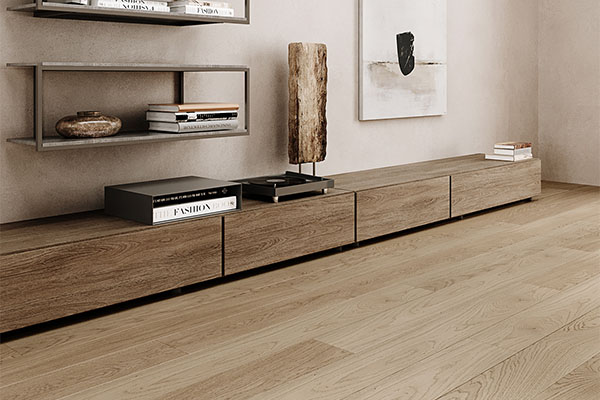
| Subfloor Issue | Bevel Impact | Contractor Value |
|---|---|---|
| Lippage | Masks height gaps | Fewer client complaints |
| Minor Undulations | Distracts the eye | Less leveling required |
| Subfloor Gaps | Prevents visual peaking | Faster installation |
This data emphasizes that beveled edges are not just an aesthetic choice, but a functional solution for real-world installation challenges.
Why should commercial distributors prioritize beveled edges?
Commercial distributors should prioritize Dry Back Vinyl Planks with beveled edges because they command higher margins and meet the rising demand for high-end aesthetics. In the B2B world, offering a product that looks and feels premium allows you to move away from price-driven competition.
Clients in the hospitality and multi-family sectors are increasingly looking for flooring that mimics engineered wood. Beveled edges provide that luxury look without the luxury price tag, making them an easy sell for your sales team.
Increasing Average Order Value
The bottom line is simple. Premium features allow for premium pricing.
- Bevels are perceived as a luxury upgrade.
- They allow you to compete with engineered wood.
- Customers are willing to pay more for the “real wood” look. By shifting your focus to beveled products, you can significantly increase your profit per square foot.
Competitive Positioning in LVT
You need to stand out. The market is flooded with cheap, square-edge vinyl.
- Beveled edges signal high-quality manufacturing.
- They offer a unique selling point for designer clients.
- It positions your brand as a leader in flooring trends. Key Takeaway: Prioritizing beveled edges allows distributors to capture the high-end market segment and improve overall profitability.
| Market Segment | Bevel Preference | Revenue Potential |
|---|---|---|
| Hospitality | Very High | Premium Margins |
| Multi-Family | High | Consistent Volume |
| Entry-Level Retail | Low | Price-Sensitive |
Strategically stocking beveled options ensures that your portfolio caters to the most profitable sectors of the construction industry.
Do beveled edges affect maintenance and cleaning?
Modern Dry Back Vinyl Planks with beveled edges are designed to be just as easy to maintain as their square-edge counterparts. A common myth is that bevels act as “dust traps,” but advanced manufacturing has solved this issue through specialized coatings.
The bevels are typically shallow and treated with the same UV-cured wear layer as the rest of the plank. This means dirt and debris can be easily removed with standard vacuuming or damp mopping.
Clearing the “Dust Trap” Myth
Don’t let myths fool you. Cleaning technology has come a long way.
- Modern bevels are shallow and easy to sweep.
- UV coatings prevent dirt from bonding to the groove.
- Specialized mop heads reach into the bevel easily. Your clients will find that maintenance is virtually identical to flat floors, but with much better aesthetics.
Wear Layer Protection in the Groove
The protection doesn’t stop at the surface.
- The wear layer often extends into the bevel.
- It prevents moisture from seeping into the core.
- The edge remains protected from impact and chipping. Key Takeaway: Advanced coatings ensure that beveled edges do not compromise the cleanliness or durability of the floor.
| Maintenance Task | Ease Level | Recommended Tool |
|---|---|---|
| Daily Sweeping | High | Microfiber Dust Mop |
| Deep Cleaning | High | pH-Neutral Cleaner |
| Stain Removal | High | Soft Damp Cloth |
The technical reality is that beveled edges provide a high-end look without adding any significant burden to the end-user’s maintenance routine.
Which bevel profiles are best for high-traffic areas?
For high-traffic environments, micro-beveled Dry Back Vinyl Planks are often the best choice because they balance aesthetics with extreme durability. These subtle edges provide enough definition to look premium but remain shallow enough to resist impact from rolling loads.
In retail or healthcare settings, you want an edge that won’t chip or collect bacteria. A micro-bevel or a pressed bevel provides a tight, protected seam that stands up to the rigors of heavy foot traffic.
Durability of Micro-Bevels
Retail spaces need toughness. Micro-bevels are built for the grind.
- They are less prone to “edge-crushing” from heavy carts.
- The subtle slope protects the wear layer from peeling.
- They maintain a clean look even after years of use. You should recommend micro-bevels for projects where longevity is the primary concern.
Hygiene in Healthcare Settings
Sanitation is king in clinics.
- Micro-bevels are shallow enough for easy disinfection.
- They don’t provide a deep enough pocket for microbial growth.
- The visual definition still creates a calming, wood-like atmosphere. Key Takeaway: Micro-beveled profiles offer the perfect intersection of durability and high-end design for demanding commercial spaces.
| Environment | Recommended Bevel | Key Benefit |
|---|---|---|
| Retail Mall | Micro-Bevel | Impact resistance |
| Hospital / Clinic | Micro or Pressed | Easy sanitation |
| Luxury Office | Painted Bevel | Maximum visual impact |
Choosing the right profile based on traffic levels ensures the floor remains both beautiful and functional for the duration of its lifespan.
How does precision manufacturing impact edge quality?
The quality of beveled edges in Dry Back Vinyl Planks depends entirely on the precision of the milling process. High-end manufacturers use diamond-tipped cutting tools to ensure that every bevel is cut at the exact same angle and depth.
Consistency is vital for B2B distributors who handle large-scale orders. If the bevels are inconsistent, the planks won’t line up correctly, leading to “gapping” and a failed inspection.
The Importance of Milling Consistency
Precision is not optional. It is the hallmark of a professional product.
- Diamond cutters ensure clean, sharp edges.
- Consistent depth prevents visible gaps during install.
- Every plank in a 50,000 sq. ft. order must match perfectly. When you buy from a reputable manufacturer, you are buying the peace of mind that comes with perfect milling.
Protective Lacquers and Coatings
The finish matters just as much as the cut.
- Bevels are often sealed with a matching lacquer.
- This protects the decorative film from moisture.
- It adds an extra layer of scratch resistance to the edge. Key Takeaway: High-precision manufacturing ensures that beveled edges are a structural asset rather than a point of weakness.
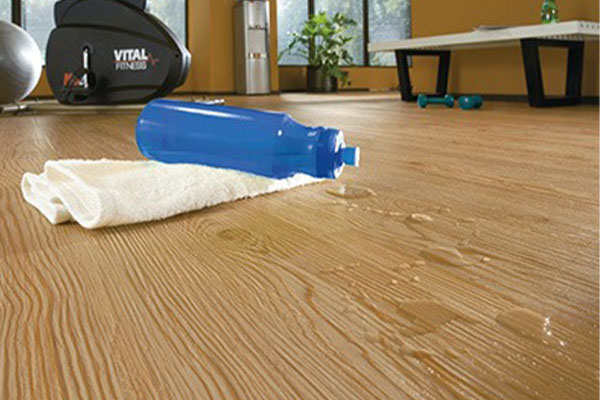
| Manufacturing Step | Quality Impact | Potential Risk (Low Quality) |
|---|---|---|
| Diamond Milling | Perfect alignment | Uneven gaps / Lippage |
| Lacquer Coating | Seams are protected | Edge delamination |
| QA Inspection | Batch consistency | Mismatched bevel depths |
This analytical breakdown shows that the visual success of a beveled floor is rooted in the technical excellence of the production line.
Is consumer preference shifting toward specific edge styles?
Current market data shows a strong shift toward beveled Dry Back Vinyl Planks in both residential and commercial sectors. While square-edge planks remain popular for minimalist, “poured floor” looks, the majority of high-end projects now demand the realism of a bevel.
The “Modern Farmhouse” and “Organic Modern” trends have fueled a massive surge in demand for deep, painted bevels. These styles emphasize natural textures and clear plank definition, making beveled edges a must-have for modern inventories.
The Rise of the “Organic Modern” Look
Natural is the new standard. Consumers want floors that feel grounded.
- Beveled edges provide the organic “break” people crave.
- They pair perfectly with matte finishes and EIR textures.
- The trend is moving away from shiny, flat surfaces. You can stay ahead of the curve by focusing your marketing on these natural, beveled aesthetics.
Square Edges in Minimalist Design
Don’t ignore the niche. There is still a place for square edges.
- Used in ultra-modern, seamless commercial designs.
- Creates a “continuous surface” feel like concrete.
- Best for industrial or high-concept architectural spaces. Key Takeaway: While square edges have their place in minimalism, beveled profiles are the dominant preference for most premium wood-look projects.
| Design Trend | Preferred Edge | Growth Rate |
|---|---|---|
| Modern Farmhouse | Painted Bevel | High |
| Industrial Minimalist | Square Edge | Stable |
| Scandi-Chic | Micro-Bevel | Increasing |
Understanding these shifts allows you to adjust your stock levels to meet the evolving tastes of designers and end-users.
How do you specify the right edge for your project?
Choosing the right edge for Dry Back Vinyl Planks requires a balance of project budget, traffic requirements, and design goals. For a “Good, Better, Best” strategy, you should offer square-edge for budget projects, micro-beveled for standard commercial, and painted or pressed bevels for high-end luxury.
Always consider the lighting of the space; if the room has floor-to-ceiling windows, a beveled edge will help manage glare and add necessary texture. Consulting with your manufacturer on bevel depth can also ensure the floor meets the specific cleaning protocols of the facility.
Balancing Cost and Perceived Value
Value engineering is key. You want the best look for the best price.
- Square edges are the most cost-effective for mass housing.
- Micro-bevels offer the best “bang for buck” in offices.
- Painted bevels are the go-to for luxury retail and hospitality. By categorizing your products this way, you make the decision process much easier for your clients.
Final Specification Checklist
Before you sign off. Make sure the edge fits the environment.
- Check if the bevel depth matches the cleaning equipment.
- Verify that the bevel color complements the plank print.
- Ensure the wear layer coverage meets the traffic specs. Key Takeaway: A strategic selection matrix helps you pitch the right edge profile for every project, ensuring maximum client satisfaction.
| Selection Criteria | Best Choice | Why? |
|---|---|---|
| Budget Project | Square Edge | Lowest production cost |
| High Traffic | Micro-Bevel | Durable and easy to clean |
| Luxury Design | Painted Bevel | Maximum realism and depth |
Following this logical selection path guarantees that the visual impact of the floor aligns perfectly with the functional requirements of the space.
Ready to Elevate Your Next Project?
The visual impact of beveled edges is the difference between a standard floor and a stunning architectural statement. Whether you are specifying for a high-traffic retail space or a luxury multi-family development, choosing the right edge profile is essential for project success. contact us today to explore our full range of beveled Dry Back Vinyl Planks and find the perfect match for your inventory.
FAQ: Beveled Edges in Dry Back Vinyl Planks
1. Can I use beveled Dry Back Vinyl Planks in a kitchen?Yes. Beveled planks are perfectly suited for kitchens because the high-quality wear layer and UV coatings prevent moisture and food particles from damaging the edges.
2. Does a beveled edge make the floor harder to mop?No. Most modern bevels are micro-sized and shallow, allowing standard microfiber mops to glide over and clean the grooves without any extra effort compared to a flat floor.
3. Will the paint on a painted bevel wear off over time?In professional-grade flooring, the paint is a specialized, hardened lacquer that is designed to last as long as the wear layer itself, so it will not flake or wear away under normal traffic.
4. Are beveled edges more expensive than square edges?Typically, yes. The additional milling and painting processes add a marginal cost to production, but this is usually offset by the significantly higher retail price the product can command.
5. Which edge is best for hiding subfloor “telegraphing”?Beveled edges are the best choice. They break up the visual plane, which distracts the eye from seeing minor bumps or waves in the subfloor that would be obvious on a square-edge floor.