
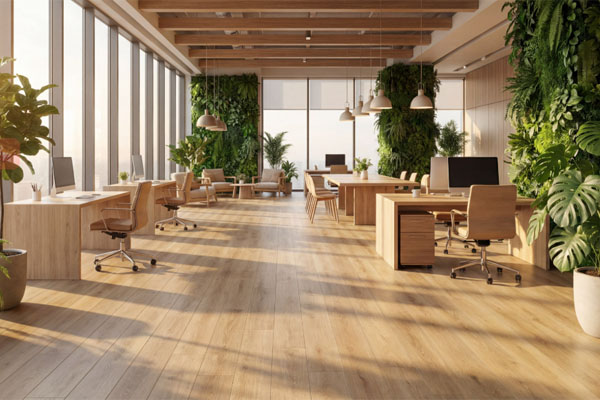
spc rigid core flooring is the definitive solution for architects and contractors who require a surface that is 100% waterproof, exceptionally durable, and visually indistinguishable from natural materials. You often face the struggle of materials that expand in humidity or dent under heavy commercial traffic, leading to costly replacements in “wet zones.” Imagine the reputational damage when a high-end project buckles within six months due to moisture. Adasea Flooring solves these issues by providing high-performance planks that withstand the most demanding environments without sacrificing aesthetic appeal.
Key Takeaway: SPC flooring eliminates the risks of moisture damage and heavy-wear failure in commercial settings.
| Benefit | Impact |
|---|---|
| Waterproofing | Zero swelling in high-humidity areas |
| Impact Resistance | No denting from heavy furniture or foot traffic |
| Maintenance | Significant reduction in long-term cleaning costs |
This table highlights how the technical advantages of SPC translate directly into lower operational risks for developers.
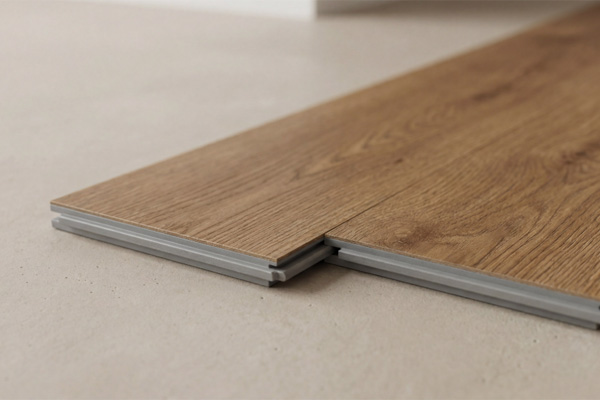
What Exactly Is the Composition of SPC Rigid Core Flooring?
The core of spc rigid core flooring is a stone-plastic composite made from natural limestone powder, polyvinyl chloride, and specialized stabilizers. This unique blend creates a rock-solid, dense material that does not expand or contract like traditional wood-based products. Because the core is inorganic, it provides a stable foundation that remains perfectly flat even in variable temperatures.
Understanding the Stone Plastic Composite Core
The limestone-rich core is what separates this material from flexible luxury vinyl tiles.
- Natural limestone powder provides structural rigidity.
- PVC acts as a binding agent for flexibility and strength.
- Stabilizers ensure the material remains non-toxic and durable.
Think about it: having a floor that is essentially a stone plank makes it nearly indestructible.
The Evolution of Vinyl Technology
Modern manufacturing has transitioned from basic sheet vinyl to high-density engineered planks designed for wholesale markets. These advancements allow for a thinner profile that actually offers higher density than thicker, foamed-core alternatives.
Key Takeaway: The limestone core ensures maximum dimensional stability and density for any environment.
| Component | Function |
|---|---|
| Limestone Powder | Provides extreme rigidity |
| PVC Resin | Ensures bonding and durability |
| Stabilizers | Protects against structural degradation |
The synergy between these components creates a core that is significantly more stable than traditional LVT.
What Are the Essential Layers Found in SPC Rigid Core Flooring?
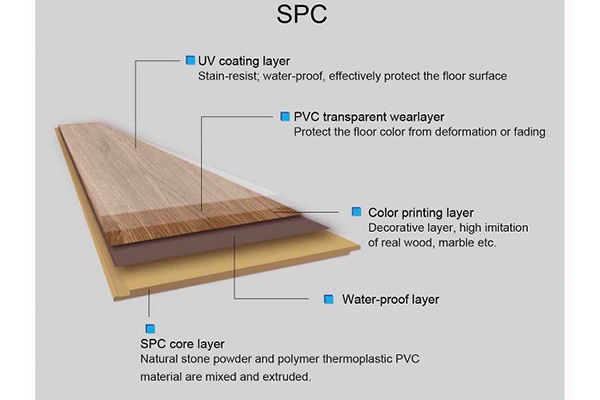
Modern spc rigid core flooring is constructed using a multi-layered system designed to provide protection, aesthetics, and comfort in a single plank. Each layer serves a specific engineering purpose, from the top protective shield to the acoustic underlayment at the base. You can customize these layers based on the specific traffic requirements of your B2B project.
The Protective Wear Layer and UV Coating
The wear layer is your first line of defense against scratches and daily commercial use.
- 0.3mm is ideal for standard residential apartments.
- 0.5mm is the industry standard for commercial offices.
- 0.7mm provides maximum protection for retail and healthcare.
Believe it or not, the UV coating is what prevents the sun from fading your beautiful floor over time.
The High-Definition Decorative Film
This layer is where the aesthetic magic happens, mimicking the world’s finest wood and stone species.
- Advanced printing captures realistic grain patterns.
- Embossed-in-register (EIR) technology aligns texture with the visual image.
- Multiple patterns reduce “repeat” look across large floor areas.
The Integrated IXPE/EVA Underlayment
Pre-attached padding simplifies the installation process and enhances the user experience.
- Reduces noise transmission between floors.
- Adds a layer of warmth and cushion underfoot.
- Masks minor subfloor imperfections.
Key Takeaway: A multi-layered construction ensures that the floor performs as well as it looks.
| Layer | Primary Purpose |
|---|---|
| UV Coating | Stain and fade resistance |
| Wear Layer | Scratch and scuff protection |
| Decorative Film | Visual authenticity |
By optimizing each layer, manufacturers can balance cost and performance for large-scale developments.
Why Is SPC Rigid Core Flooring Considered Completely Waterproof?
The waterproof nature of this flooring is due to its inorganic limestone core which cannot absorb liquid or support mold growth. Unlike laminate or hardwood, which rely on wood fibers that swell when wet, SPC remains completely inert. This makes it the perfect candidate for kitchens, bathrooms, and basements where moisture is a constant threat.
Inorganic Composition and Moisture Resistance
Because there are no wood fibers in the core, the planks will never rot or delaminate.
- Limestone does not react to water molecules.
- The tight click-lock system prevents water from seeping to the subfloor.
- Spills can sit on the surface without causing structural damage.
The best part? You never have to worry about a leaky dishwasher ruining an entire floor.
Dimensional Stability in High-Humidity Environments
SPC maintains its shape even when humidity levels fluctuate wildly throughout the seasons.
- Expansion and contraction are virtually non-existent.
- Gap-free installation remains tight over time.
- It is suitable for tropical climates and seaside properties.
Key Takeaway: Total moisture resistance makes SPC the safest choice for any room prone to spills or humidity.
| Material | Reaction to Water | Stability Score |
|---|---|---|
| SPC Flooring | None / 100% Waterproof | High |
| Hardwood | Swells and warps | Low |
| Laminate | Absorbs and delaminates | Medium |
The technical comparison proves that SPC is the only viable option for long-term “wet zone” applications.
How Does spc rigid core flooring Compare to WPC and LVT?
SPC is distinguished from WPC and LVT by its extreme density and rigid structure which prevents the telegraphing of subfloor imperfections. While WPC uses a foamed core for a softer feel, SPC uses a solid core for maximum impact resistance. Traditional LVT is flexible and thin, making it susceptible to showing every bump in the concrete underneath.
Density and Impact Resistance
SPC’s rock-solid core provides superior protection against heavy loads and dropped objects.
- High density prevents indentations from heavy furniture.
- It withstands high-heeled traffic and rolling carts.
- The core is significantly harder than WPC’s air-infused core.
Here is the deal: if your project has heavy traffic, you need the rigidity of SPC.
The Pliability vs. Rigidity Debate
Rigid core planks bridge small gaps in the subfloor, saving you money on surface preparation.
- Flexible LVT requires a perfectly smooth subfloor to avoid “ghosting.”
- SPC can be installed over many existing hard surfaces.
- The rigidity allows for larger installation areas without transition strips.
Key Takeaway: SPC offers the highest level of durability and installation flexibility among vinyl products.
| Feature | SPC (Rigid) | WPC (Foamed) | LVT (Flexible) |
|---|---|---|---|
| Density | Very High | Medium | Low |
| Dent Resistance | Excellent | Good | Poor |
| Subfloor Prep | Minimal | Moderate | Intensive |
Choosing SPC over other vinyl types ensures a more forgiving installation and a longer-lasting surface.
Is SPC Rigid Core Flooring Superior to Hardwood and Laminate?
In commercial environments, SPC is considered superior because it offers the look of wood with a much higher Janka-equivalent hardness and zero maintenance requirements. Hardwood requires periodic sanding and refinishing, while laminate is vulnerable to moisture damage at the seams. SPC provides the best of both worlds: authentic beauty and industrial-grade resilience.
Durability in High-Traffic Commercial Zones
The stone-based core provides a level of toughness that natural timber simply cannot match.
- It resists scratches from pets and heavy footwear.
- The surface does not yellow or fade under UV light.
- Fire resistance ratings are typically much higher than wood products.
Make no mistake, this is the toughest flooring option for modern retail spaces.
Lifecycle Cost and Maintenance Comparison
You will save significant money over the life of the floor because it never needs waxing or buffing.
- Cleaning only requires a damp mop and neutral cleaner.
- No specialized chemicals are needed for daily upkeep.
- The long lifespan reduces the frequency of total floor replacements.
Key Takeaway: Lower maintenance costs and higher durability result in a much better ROI for B2B buyers.
| Metric | SPC Flooring | Real Hardwood |
|---|---|---|
| Water Resistance | 100% | Low |
| Refinishing Required | Never | Every 5-10 Years |
| Installation Cost | Low | High |
This comparison clarifies why developers are moving away from traditional wood in favor of engineered SPC.
How Do You Properly Install spc rigid core flooring Planks?
Installing SPC is a fast and efficient process thanks to the click-lock system which allows for a floating floor installation without messy glues or nails. This method drastically reduces labor costs and allows for immediate foot traffic once the job is finished. You can complete large commercial spaces in a fraction of the time required for tile or glued-down vinyl.
The Click-Lock System
Modern systems like Uniclic or Valinge make it easy for contractors to snap planks together securely.
- The joints are engineered for a watertight fit.
- No adhesive is required, which keeps VOC levels low.
- Planks can be easily replaced if one becomes damaged.
Want to know the best part? The installation is so simple that it minimizes mistakes on the job site.
Subfloor Requirements and Preparation
While SPC is forgiving, you must ensure the subfloor is clean, dry, and relatively level.
- Ensure the surface is within 3mm of level over a 3-meter radius.
- Concrete subfloors should be checked for moisture vapor.
- Large cracks should be filled to prevent clicking sounds when walked upon.
Key Takeaway: Floating installation saves time and money while providing a professional, seamless finish.
| Step | Action | Benefit |
|---|---|---|
| Preparation | Level the subfloor | Prevents joint stress |
| Layout | Stagger the seams | Enhances visual appeal |
| Locking | Click together | Faster project completion |
Following these standard steps ensures the floor remains stable and attractive for decades.
What Is the Best Maintenance Routine for SPC Rigid Core Flooring?
The best maintenance routine involves regular dust mopping and the occasional use of a pH-neutral damp mop to keep the UV coating pristine. Because the surface is non-porous, dirt and bacteria cannot penetrate the floor, making it highly hygienic for healthcare and hospitality sectors. You don’t need expensive equipment or harsh chemicals to maintain its original luster.
Routine Cleaning for Large Commercial Spaces
A simple daily sweep is usually all that is required to remove abrasive grit.
- Use a microfiber mop to trap fine dust.
- Apply a pH-neutral cleaner for wet mopping.
- Avoid steam cleaners, which can force moisture into the joints.
Keep it simple: a clean floor is a long-lasting floor.
Long-Term Protection Against Scuffs
While the wear layer is tough, taking small precautions will extend the life of your investment.
- Place felt pads under all heavy furniture legs.
- Use walk-off mats at entryways to catch dirt.
- Lift furniture rather than sliding it across the surface.
Key Takeaway: Minimal maintenance requirements make SPC the most user-friendly flooring for busy commercial tenants.
| Frequency | Task | Tools |
|---|---|---|
| Daily | Dust Removal | Microfiber Mop |
| Weekly | Damp Mop | pH-Neutral Cleaner |
| As Needed | Spot Clean | Soft Cloth |
A consistent, simple routine is the secret to keeping commercial SPC floors looking brand new.
How Much Does spc rigid core flooring Cost for Bulk Buyers?
Bulk pricing for SPC generally ranges from 2.50 per square foot depending on the wear layer thickness, core density, and integrated underlayment quality. As a wholesale buyer, you benefit from significant economies of scale when sourcing directly from large-scale manufacturers. These costs are highly competitive when compared to the total installed cost of laminate or ceramic tile.
Factors Influencing Bulk Pricing
The technical specifications you choose will be the primary drivers of your final quote.
- Thicker wear layers (0.5mm+) increase the price but add years of life.
- Integrated IXPE underlayment adds cost but removes the need for separate padding.
- Custom textures or EIR finishes carry a slight premium over standard prints.
The bottom line? You get exactly what you pay for in terms of durability.
Calculating the ROI for Developers
When you factor in low installation labor and zero maintenance, SPC is the most cost-effective long-term choice.
- Reduced downtime means tenants move in faster.
- Fewer repairs mean lower property management costs.
- The durability ensures the floor doesn’t need replacing for 15-20 years.
Key Takeaway: Wholesale SPC offers the best balance of low upfront cost and high long-term value.
| Factor | Low End | High End |
|---|---|---|
| Wear Layer | 0.3mm | 0.7mm |
| Underlayment | None | 1.5mm IXPE |
| Design | Standard Print | EIR Texture |
Understanding these variables helps you negotiate the best possible rates for your specific project needs.
Why Should You Source SPC Rigid Core Flooring from a Chinese Manufacturer?
Chinese manufacturers like Adasea Flooring offer unparalleled production scale, advanced R&D, and the ability to customize designs to meet global brand standards. By sourcing directly, you bypass middleman markups and gain access to the latest innovations in flooring technology. Furthermore, large-scale factories ensure batch consistency, which is vital for multi-phase commercial developments.
Production Scale and Customization
The massive manufacturing capacity in China allows for rapid fulfillment of even the largest bulk orders.
- Factories can produce millions of square meters annually.
- You can request custom colors and textures to match branding.
- OEM and private labeling options are readily available for wholesalers.
It’s no secret: the most advanced SPC production lines are currently located in China.
Quality Control Standards
Reputable exporters adhere to strict international certifications to ensure product safety and performance.
- FloorScore and CE certifications guarantee low VOC emissions.
- Strict testing for fire safety and slip resistance is standard.
- Rigid packaging protocols prevent damage during international shipping.
Key Takeaway: Sourcing from China provides the best combination of technical innovation, scale, and competitive pricing.
| Advantage | Benefit to B2B Buyer |
|---|---|
| Direct Sourcing | Higher profit margins |
| R&D Focus | Access to the newest EIR technology |
| Logistics | Experienced in global shipping and compliance |
Partnering with a major manufacturer ensures you have a stable and reliable supply chain for all your future projects.
Conclusion
Selecting the right flooring is a pivotable decision for any commercial developer or wholesaler. Adasea Flooring provides the manufacturing excellence and technical support needed to ensure your projects are durable, beautiful, and cost-effective. If you are ready to discuss your wholesale requirements or need a sample of our latest collections, contact us today to speak with one of our specialists.
Frequently Asked Questions
- Can I install SPC flooring over existing tiles?Yes, as long as the tiles are level and well-adhered, the rigid core will prevent the telegraphing of grout lines.
- Does SPC flooring require a separate underlayment?No, most Adasea SPC products come with a pre-attached IXPE pad, though a moisture barrier is recommended on concrete.
- Is SPC flooring suitable for underfloor heating?Absolutely, SPC has excellent heat conduction properties and remains stable under temperature fluctuations.
- How do I handle heavy furniture on SPC planks?Direct judgment: use felt protectors. While SPC is highly dent-resistant, felt pads prevent surface scratches during movement.
- What is the typical lifespan of commercial-grade SPC?Yes, it is built for longevity. With a 0.5mm wear layer, you can expect 15-25 years of service in commercial settings.